Understanding the difference between a pacemaker vs defibrillator is essential for anyone dealing with heart rhythm issues. Both devices are implanted to regulate heart function, but they serve distinct purposes.
A pacemaker keeps a person’s heartbeat steady when it is too slow or not regular, while a defibrillator checks for fast, dangerous heartbeats and can give an electric shock to bring the heart back to a normal rhythm.
Consulting a cardiologist in Dhantoli, Nagpur ensures you get the right device based on your condition. Getting help from a heart specialist in Nagpur early on can stop problems and help keep the heart healthy over time.
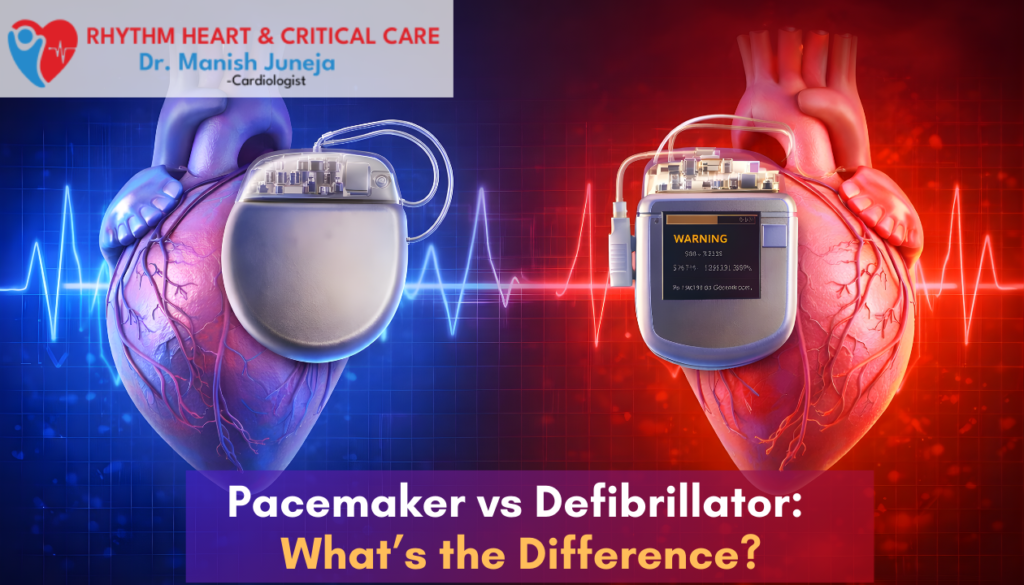
How Pacemaker vs Defibrillator Work
The main difference between a pacemaker and a defibrillator is how they handle irregular heartbeats. A pacemaker gives mild electrical signals to keep the heart beating steadily, which helps when the heart is too slow, like in bradycardia.
A defibrillator, also called an ICD, keeps watching the heart and gives strong electric shocks if it detects a dangerous fast heartbeat that could be life threatening.
Choosing the right device requires evaluation by a heart specialist doctor in Nagpur. Accurate diagnosis and timely intervention are critical to protect your heart and overall well being.
Key Points to Know About Pacemaker vs Defibrillator
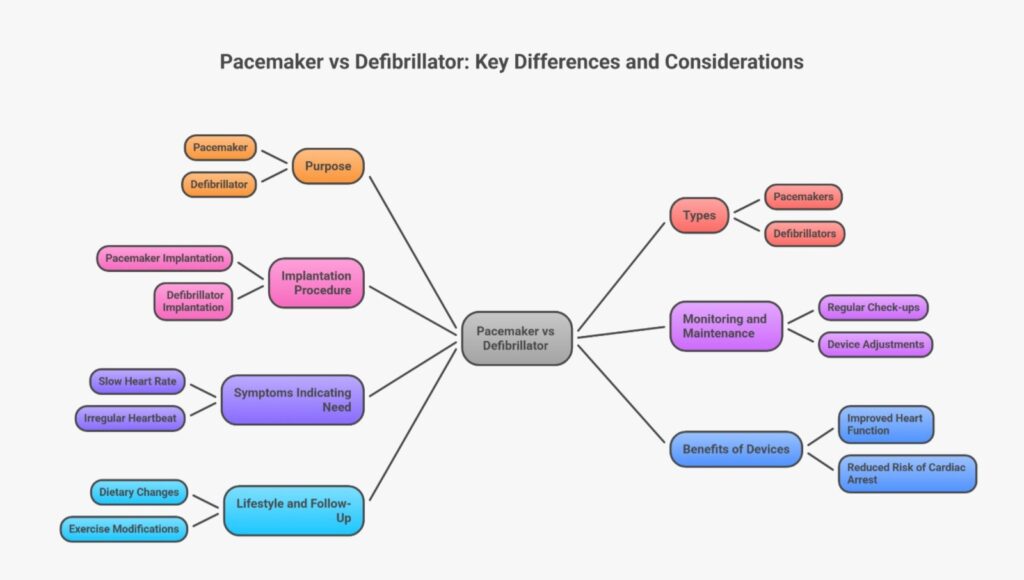
1. Purpose of Each Device
A pacemaker and a defibrillator serve different purposes in heart care. A pacemaker regulates slow or irregular heartbeats, helping maintain a steady rhythm for patients with bradycardia.
A defibrillator stops sudden cardiac arrest by sensing very fast heartbeats and giving an electric shock when needed.
Talking to a cardiologist in Dhantoli, Nagpur helps you find the right device for your health and daily life, which can keep your heart safe and improve your overall health.
2. Types of Pacemakers and Defibrillators
Pacemakers come in two types: single chamber and dual chamber. Each type is made for different heart problems. Defibrillators, also called ICDs, can also help control the heart’s rhythm and stop sudden heart attacks.
Selecting the appropriate type requires detailed assessment by a heart specialist in Nagpur, who evaluates your heart health, risk factors, and lifestyle needs. Choosing the right device ensures optimal function and long term protection for your heart.
3. Implantation Procedure
The implantation of a pacemaker or defibrillator is a minimally invasive procedure performed under local anesthesia, typically under the guidance of a heart specialist doctor in Nagpur.
The device is put just under the skin near the chest, and wires are connected to the heart. The recovery is usually fast, but patients need to go to check-ups regularly to make sure the device is working properly and gives the right kind of pacing or shock when needed.
4. Monitoring and Maintenance
Both pacemakers and defibrillators require routine monitoring to ensure proper functionality. Regular check-ups with a Nagpur heart specialist doctor are crucial for tracking device performance, battery life, and heart rhythm.
Adjustments can be made remotely or during visits to optimize therapy. Maintaining scheduled appointments ensures the device works efficiently, preventing complications, and supports long term heart health, providing peace of mind for patients and their families.
5. Symptoms Indicating Need
Some signs might show that you need a pacemaker or defibrillator, like feeling dizzy, fainting, having a fast or irregular heartbeat, or feeling very tired for no reason.
If you experience these symptoms, it’s important to see the best heart doctor in Nagpur right away.
Getting checked by a skilled heart specialist in Nagpur early can help find out why you’re feeling this way and whether a pacemaker or defibrillator is needed. This can lower the risk of serious heart problems and help you live a better life in the long run.
6. Benefits of Devices
Pacemakers help stabilize heart rates and improve blood circulation, while defibrillators protect against sudden cardiac arrest. Both devices significantly enhance a patient’s quality of life by reducing symptoms and providing life saving intervention when needed.
Regular guidance from a heart specialist in Nagpur ensures the device functions optimally. With proper monitoring and care, patients can enjoy increased activity levels, improved heart health, and reassurance knowing their heart is supported effectively.
7. Lifestyle and Follow-Up
After receiving a pacemaker or defibrillator, maintaining a heart healthy lifestyle is essential for long term success. Your cardiologist in Dhantoli, Nagpur will provide guidance on activity limitations, diet, and habits that support device function.
You should check in regularly to keep track of how well the device is working and make any necessary changes. Following these suggestions helps the device keep your heart safe, improves your general health, and lets you enjoy a more active and self-assured lifestyle.
Choosing the Right Device for You
Selecting between a pacemaker vs defibrillator depends on your heart condition, lifestyle, and risk factors. A detailed assessment by a heart specialist doctor in Nagpur ensures the correct device is implanted.
The best cardiologist in Nagpur for heart treatment can create custom plans and keep track of your heart health. Acting quickly can help your heart work better and lower the chances of problems, helping you live a healthier and more lively life.
Conclusion
If you or a loved one are experiencing irregular heartbeats, dizziness, or fainting spells, don’t wait. Consult a heart specialist in Nagpur today.
Visit Dr. Manish Juneja to schedule an appointment with a cardiologist in Dhantoli, Nagpur and get expert guidance on whether a pacemaker or defibrillator is right for you.
Early consultation can save lives and improve your heart health.
FAQ’s
- What is the difference between a pacemaker and a defibrillator?
A pacemaker regulates slow or irregular heartbeats, while a defibrillator monitors the heart for dangerous fast rhythms and delivers shocks if needed. Both are essential devices for managing heart rhythm disorders. - How do pacemakers and defibrillators work?
Pacemakers send gentle electrical signals to maintain a steady heartbeat. Defibrillators detect abnormal rapid rhythms and deliver an electric shock to restore a normal heartbeat. - Can I get a defibrillator if I already have a pacemaker?
Yes, in some cases, patients may require both devices. A heart specialist doctor in Nagpur can evaluate your condition and recommend the best treatment plan. - What are the symptoms that indicate the need for these devices?
Symptoms like dizziness, fainting, irregular heartbeat, or palpitations may indicate the need for a pacemaker or defibrillator. Early consultation with a cardiologist in Dhantoli, Nagpur is crucial. - What is the recovery time after pacemaker or defibrillator implantation?
Recovery is usually quick, but regular follow ups with a heart specialist in Nagpur are required to ensure proper device function and monitor heart health. - Can a pacemaker or defibrillator be seen on an X-ray?
Yes, both devices are visible on X-rays, which helps doctors monitor their placement and function. - What lifestyle changes are needed after implantation?
Patients need to follow heart-healthy habits, avoid strenuous activity initially, and attend routine check-ups with a Nagpur heart specialist doctor. - Are there any risks associated with these devices?
While generally safe, risks may include infection, lead displacement, or device malfunction. Regular monitoring by a heart specialist doctor in Nagpur helps minimize risks. - How long do pacemakers and defibrillators last?
Battery life varies, typically ranging from 5–10 years. Your best cardiologist in Nagpur for heart treatment will advise on timely replacement. - Who should I consult to determine which device is right for me?
Always consult a heart specialist in Nagpur or cardiologist in Dhantoli, Nagpur for evaluation and personalized recommendations regarding pacemaker vs defibrillator.
Reference:
https://columbiasurgery.org/conditions-and-treatments/pacemakers-and-defibrillators
https://cvrti.utah.edu/what-is-the-difference-between-pacemakers-and-defibrillators/