In modern cardiology, precision and early diagnosis play a crucial role in saving lives. One of the most advanced tools transforming heart treatment is IVUS Technology (Intravascular Ultrasound). It allows cardiologists to see inside blood vessels in real-time, helping detect blockages more accurately than traditional imaging methods.
Today, IVUS is widely used in procedures like angioplasty and even alongside transcatheter aortic valve replacement TAVR surgery for better outcomes. Under the expert care of Dr. Manish Juneja – The Heart Specialist, patients receive cutting edge cardiac care with advanced diagnostics and personalized treatment plans for improved heart health and faster recovery.
What is IVUS Technology and How It Works?
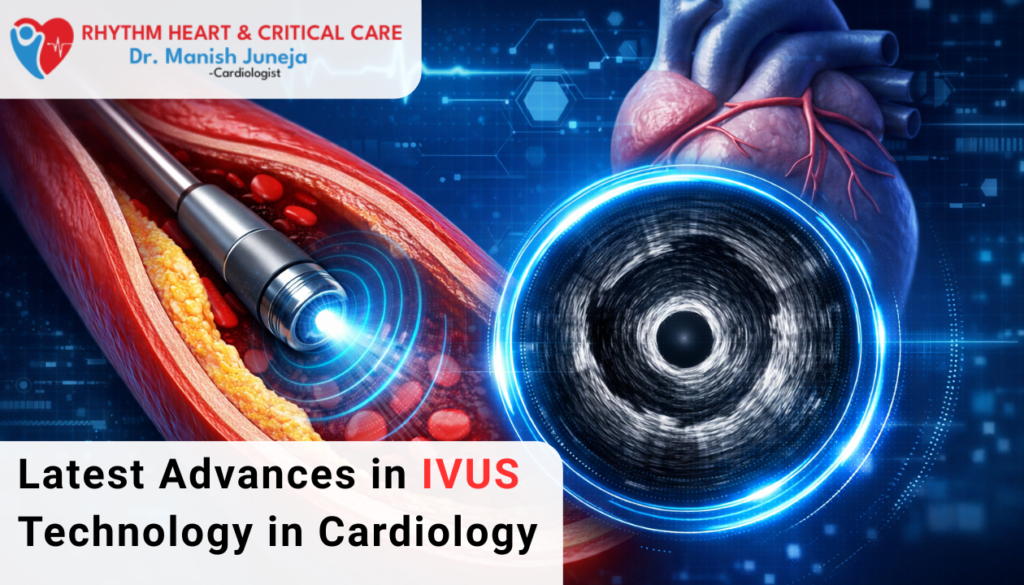
Intravascular ultrasound (IVUS) is an advanced imaging technique that employs a small ultrasound probe mounted on a catheter to visualize the interior of coronary arteries. This allows cardiologists to closely examine plaque formation, the size of blood vessels, and how blood flows with great accuracy. Unlike regular angiography, IVUS gives clear cross-sectional images, which helps make treatments more accurate.
It is especially useful during complex procedures like angioplasty and even supports better planning in transcatheter aortic valve replacement TAVR surgery. Patients treated by Trusted Cardiologists in Nagpur benefit from this modern approach, ensuring safer procedures and improved long-term cardiac outcomes.
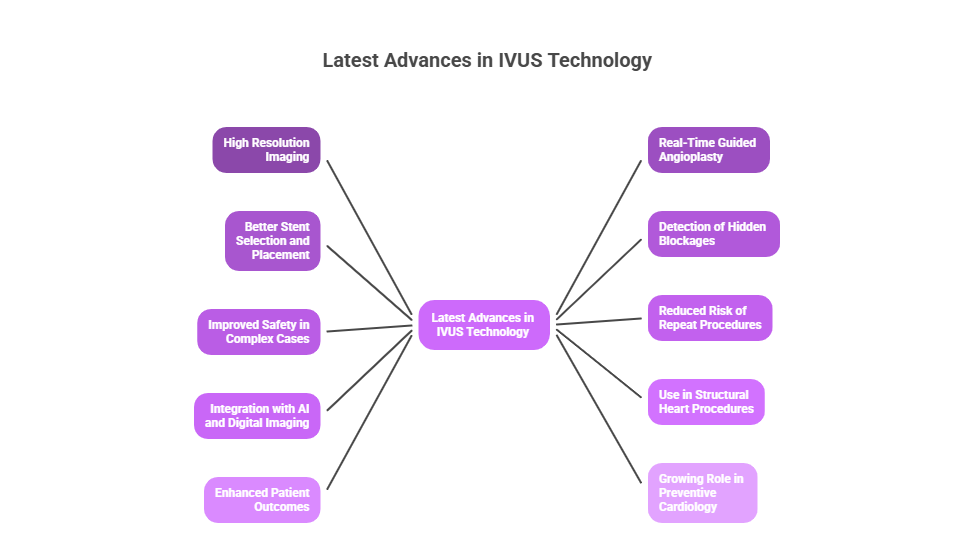
Latest Advances in IVUS Technology
1. High Resolution Imaging
Modern IVUS Technology now offers high resolution imaging that allows cardiologists to visualize even the smallest plaque deposits inside arteries. This improved clarity helps in accurate diagnosis and better treatment planning.
Doctors can precisely identify the severity and type of blockage, reducing the chances of complications during procedures. This advancement ensures safer angioplasty and improved success rates, especially in complex coronary artery disease cases.
2. Real-Time Guided Angioplasty
One of the major advancements is the ability of IVUS to guide angioplasty procedures in real time. Cardiologists can see exactly where the blockage is and how the stent is placed inside the artery.
This reduces the chances of incorrect stent placement and improves patient outcomes. Real-time guidance ensures that the artery is properly opened, restoring normal blood flow efficiently and safely.
3. Better Stent Selection and Placement
IVUS allows doctors to pick the right size and type of stent by precisely measuring the size of the artery. Putting the stent in the right place is very important for good results over time, because if it’s not the right size, it can cause problems like the artery narrowing again.
Cardiologists use IVUS imaging to make sure stents expand properly and are placed correctly, which helps them last longer and helps patients recover better after angioplasty.
4. Detection of Hidden Blockages
Traditional angiography may sometimes miss hidden or complex blockages. IVUS Technology provides detailed internal images of blood vessels, helping detect plaques that are not visible through standard imaging techniques.
This allows early diagnosis and timely treatment, preventing serious complications such as heart attacks or sudden cardiac events.
5. Improved Safety in Complex Cases
In cases of multiple blockages or complex coronary anatomy, IVUS significantly enhances procedural safety. It allows cardiologists to carefully move through tough parts of the artery with accuracy.
This lowers the chance of harming the vessel and helps achieve better results for patients who are at higher risk and need complex heart treatments.
6. Reduced Risk of Repeat Procedures
With more accurate diagnosis and precise treatment, IVUS significantly lowers the chances of incomplete treatment.
This reduces the need for repeat angioplasty or additional interventions. Patients benefit from long-term results, improved heart health, and fewer hospital visits, making it a cost-effective and reliable solution in cardiology.
7. Integration with AI and Digital Imaging
The latest advancement in IVUS includes integration with artificial intelligence and digital imaging software. These technologies help analyze artery conditions quickly and accurately.
AI-assisted IVUS can predict potential risks and assist cardiologists in making better clinical decisions, improving overall treatment success rates.
8. Use in Structural Heart Procedures
IVUS is not limited to coronary arteries; it is now being used in structural heart procedures as well. It supports complex interventions by providing detailed anatomical insights.
This advancement enhances precision in treatments and improves outcomes in procedures involving heart valves and large blood vessels.
9. Enhanced Patient Outcomes
Patients undergoing procedures with IVUS guidance often experience better results compared to traditional methods.
Improved accuracy leads to fewer complications, faster recovery, and better long-term heart function. This technology has become a valuable tool in delivering high-quality cardiac care.
10. Growing Role in Preventive Cardiology
IVUS Technology is increasingly being used for early detection and prevention of heart disease. By identifying plaque buildup at an early stage, cardiologists can recommend lifestyle changes and medications before serious complications occur.
This proactive approach helps patients maintain long-term heart health and avoid major cardiac events.
Why IVUS Technology is Important for Heart Patients
IVUS Technology has revolutionized the way cardiologists diagnose and treat heart diseases. It provides unmatched accuracy, improves procedural safety, and enhances patient outcomes. For individuals suffering from coronary artery disease or undergoing procedures like angioplasty, IVUS ensures better treatment planning and long-term success.
Conclusion
The newest improvements in IVUS technology are changing how modern cardiology works by providing safer, more accurate, and better ways to treat heart conditions. From precise diagnosis to targeted interventions, IVUS is essential in enhancing heart health and minimizing complications. Finding problems with the heart early and getting proper care from specialists can help stop serious heart issues from happening.
If you are experiencing symptoms of heart disease or need advanced cardiac evaluation, consult Dr. Manish Juneja – The Heart Specialist today.
FAQ’s
1. What is IVUS technology in cardiology?
IVUS (Intravascular Ultrasound) is an advanced imaging technique that uses a tiny ultrasound probe inside blood vessels to provide detailed images of arteries, helping cardiologists diagnose and treat blockages accurately.
2. How does IVUS technology improve angioplasty outcomes?
IVUS Technology allows precise visualization of artery blockages, helping doctors choose the correct stent size and placement, leading to better success rates and reduced complications.
3. What are the latest advances in IVUS technology in 2026?
Recent innovations include AI-assisted imaging, high-resolution ultrasound, real-time 3D visualization, and improved catheter designs for more accurate diagnosis and safer procedures.
4. Is IVUS better than angiography?
Yes, IVUS provides more detailed images from inside the artery, while angiography only shows a 2D outline. IVUS helps in better decision-making during complex heart procedures.
5. Who should undergo IVUS-guided procedures?
Patients with complex coronary artery disease, unclear angiography results, or those undergoing angioplasty can benefit from IVUS-guided treatment.
6. Is IVUS technology safe?
IVUS is considered a safe and minimally invasive procedure when performed by experienced cardiologists, with very low risk of complications.
7. What is an IVUS catheter?
An IVUS catheter is a thin, flexible tube with an ultrasound probe that is inserted into the artery to capture real-time images from inside blood vessels.
8. How long does an IVUS procedure take?
The IVUS procedure usually takes 30–60 minutes and is often performed along with angiography or angioplasty.
9. What is the cost of IVUS technology in India?
The cost varies depending on the hospital and procedure but is generally added to angioplasty costs. It is an investment for more accurate and safer treatment.
10. Where can I get IVUS-guided treatment in Nagpur?
You can consult Dr. Manish Juneja – The Heart Specialist, known as one of the Trusted Cardiologists in Nagpur and a Top Rated Cardiologist by Google, for advanced IVUS guided cardiac care.
Reference:
https://pmc.ncbi.nlm.nih.gov/articles/PMC12254063/
https://www.jscai.org/article/S2772-9303(24)02209-9/fulltext