Orbital Atherectomy is an advanced, minimally invasive procedure that removes calcium buildup in arteries, improving blood flow and enhancing the success of angioplasty for better heart health outcomes.”
Heart diseases are getting more complicated, especially because of hard deposits in the arteries that block the blood flow. One of the most advanced treatments available now is Orbital Atherectomy, a modern method made to safely take out calcium buildup from the coronary arteries. This process helps blood flow better and makes angioplasty work more efficiently.
At Dr. Manish Juneja, The Heart Specialist, patients receive advanced cardiac care using the latest technology. Known among the Best Cardiologists in Nagpur Dr. Juneja ensures accurate diagnosis and personalized treatment for better heart health outcomes.
What is Orbital Atherectomy and How It Works
Orbital Atherectomy is an advanced minimally invasive procedure used to treat heavily calcified coronary artery disease. In this technique, a tiny diamond coated device rotates inside the artery to sand away hardened calcium deposits.
This helps to open up the artery and get it ready for placing a stent during angioplasty. Orbital Atherectomy leads to better procedure outcomes and fewer problems compared to older techniques.
At leading cardiac centers, including care under the best angioplasty doctor, this technology plays a crucial role in treating complex heart blockages effectively and safely.
Key Benefits of Orbital Atherectomy in Cardiology
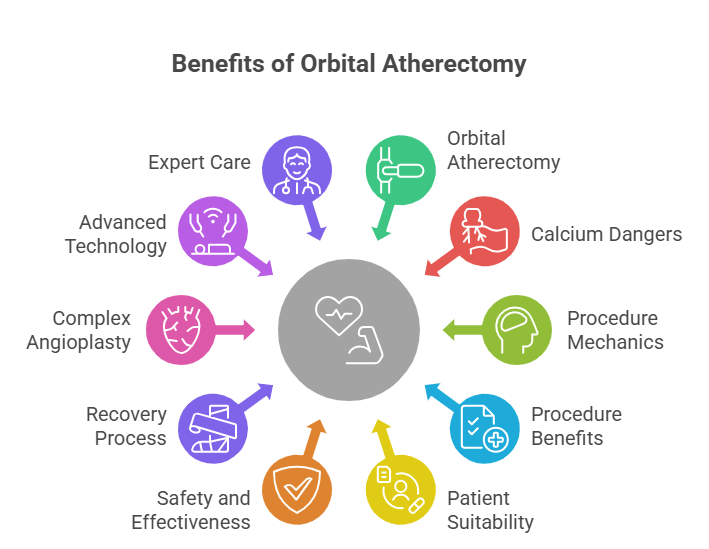
1. What is Orbital Atherectomy
Orbital Atherectomy is an advanced heart procedure used to remove hard calcium deposits from blocked coronary arteries. It uses a tiny rotating device that sands down calcified plaque, improving blood flow.
This technique is especially useful in patients where traditional angioplasty becomes difficult due to rigid artery walls. It helps prepare the artery for stent placement and ensures better long-term treatment success with fewer complications.
2. Why Calcium in Arteries is Dangerous
Calcium buildup in arteries makes them stiff and narrow, restricting proper blood flow to the heart. This condition increases the risk of chest pain, heart attack, and poor outcomes during angioplasty.
Hard plaque is difficult to treat with regular balloons or stents. Orbital Atherectomy helps break down these calcified deposits, making arteries more flexible and improving the effectiveness of further cardiac procedures.
3. How the Procedure Works
During Orbital Atherectomy, a small catheter with a rotating crown is inserted into the artery. This device spins at high speed, gently sanding away calcium deposits while preserving healthy tissue.
The tiny particles are washed away safely through the bloodstream. This process improves artery flexibility and allows cardiologists to place stents more effectively, reducing the chances of complications during angioplasty procedures.
4. Benefits of Orbital Atherectomy
One of the biggest benefits of Orbital Atherectomy is its ability to treat heavily calcified arteries safely. It improves stent expansion, reduces the risk of artery damage, and enhances overall treatment outcomes.
Patients experience better blood flow, fewer complications, and improved long-term heart health. This procedure is particularly beneficial for complex cases where traditional angioplasty techniques may not be sufficient.
5. Who Needs This Procedure
Patients who have serious blockages in their coronary arteries, diabetes, or heart problems that have been present for a long time are often considered for Orbital Atherectomy. It is suggested when standard angioplasty isn’t able to properly open blocked arteries.
Older patients or those with several blockages can get a lot of help from this advanced method, because it offers a safer and better way to clear the arteries before more heart procedures.
6. Safety and Effectiveness
Orbital Atherectomy is considered a safe and effective procedure when performed by experienced cardiologists. It reduces the risk of artery rupture and improves procedural success in complex cases.
Advanced imaging techniques like IVUS are often used alongside it to ensure precise treatment. With proper care, patients undergoing this procedure achieve excellent outcomes and reduced chances of repeat blockages.
7. Recovery After the Procedure
Recovery after Orbital Atherectomy is usually quick, as it is a minimally invasive procedure. Most patients can walk within a day and return to normal activities within a few days.
Doctors may recommend medications, lifestyle changes, and follow-up visits to ensure long term heart health. Compared to traditional surgeries, recovery time is significantly shorter, making it a preferred option for many patients.
8. Role in Complex Angioplasty
Orbital Atherectomy is important in tough angioplasty cases where the arteries have a lot of calcium buildup. It gets ready by clearing out the hard buildup in the artery, so that balloons and stents can stretch out properly.
If you skip this step, the stents might not work properly. This method helps increase the chances of successful procedures and lowers the risk of problems, which makes it a key improvement in today’s heart treatments.
9. Advanced Technology in Cardiology
Modern cardiology has evolved with technologies like Orbital Atherectomy, which offers precise and controlled plaque removal. Combined with imaging tools, it allows cardiologists to treat difficult cases with higher accuracy.
This innovation has significantly improved patient outcomes and made complex heart procedures safer. It represents a major advancement in minimally invasive heart care.
10. Expert Care Matters
The success of Orbital Atherectomy largely depends on the expertise of the cardiologist. Skilled specialists ensure proper diagnosis, safe execution, and effective post-procedure care.
Under expert guidance, patients receive personalized treatment plans that improve outcomes and reduce risks. Choosing an experienced heart specialist plays a vital role in achieving long-term heart health and successful recovery.
Who Needs Orbital Atherectomy?
Patients who have severely hardened arteries due to calcium buildup, have not been successful with angioplasty, or have complicated blockages in their heart are best suited for Orbital Atherectomy.
If you’re having symptoms such as chest pain, trouble breathing, or difficulty exercising, you should see a specialist. Getting diagnosed early and receiving advanced treatment from a top angioplasty doctor can stop serious problems and help you live a better life.
Conclusion
Advanced treatments like Orbital Atherectomy are transforming the way complex heart blockages are managed. With the right expertise and technology, patients can achieve safer procedures and faster recovery.
If you or your loved one is facing heart-related symptoms, don’t delay treatment. Consult Dr. Manish Juneja – The Heart Specialist, recognized as one of the Best Cardiologists in Nagpur.
Reference:
https://pmc.ncbi.nlm.nih.gov/articles/PMC12471242/
FAQ’s
1. What is Orbital Atherectomy?
Orbital Atherectomy is a minimally invasive cardiac procedure used to remove hardened calcium deposits from coronary arteries, improving blood flow and preparing the artery for stent placement.
2. Why is Orbital Atherectomy needed?
It is needed when arteries have severe calcium buildup that cannot be treated effectively with standard angioplasty or balloon techniques.
3. Is Orbital Atherectomy safe?
Yes, Orbital Atherectomy is considered safe when performed by an experienced cardiologist. It reduces complications in complex blocked arteries.
4. How is Orbital Atherectomy different from angioplasty?
While angioplasty uses a balloon to open blocked arteries, Orbital Atherectomy removes hard calcium deposits, making angioplasty and stenting more effective.
5. Who is a candidate for Orbital Atherectomy?
Patients with heavily calcified coronary arteries, diabetes, or complex heart blockages are ideal candidates for this procedure.
6. How long does the procedure take?
Orbital Atherectomy usually takes about 1–2 hours, depending on the complexity of the blockage and patient condition.
7. What is the recovery time after Orbital Atherectomy?
Recovery is generally quick, with most patients resuming normal activities within a few days after the procedure.
8. Are there any risks involved?
Like any medical procedure, there are minor risks such as bleeding or artery injury, but serious complications are rare when performed by skilled specialists.
9. Does Orbital Atherectomy improve long-term heart health?
Yes, it improves blood flow, enhances stent success, and reduces the risk of future heart complications when combined with proper lifestyle changes.
10. Where can I get Orbital Atherectomy treatment?
You can consult experienced specialists like Dr. Manish Juneja – The Heart Specialist, known as one of the Best Cardiologists in Nagpur and a Best Rated Cardiologist by Google, for advanced cardiac care and personalized treatment.