Rotablation is an advanced, minimally invasive procedure for treating calcified coronary arteries, with a 1–2 hour duration and quick recovery, ensuring improved blood flow and better heart health outcomes.”
Rotation is an advanced cardiac procedure used to treat heavily calcified coronary arteries that cannot be treated with regular angioplasty.
It uses a rapidly rotating device to break down calcium deposits, improve blood flow and allow the stent to be positioned correctly. With modern technology, rotation has become safer and more effective.
What is Rotablation and How It Works
Rotablation is a minimally invasive procedure performed using a specialized catheter with a rotating burr that grinds calcium deposits inside the arteries. This helps restore artery flexibility and improves the success of angioplasty.
The procedure is usually recommended for patients with severe calcified blockages where traditional methods may fail. With expert guidance from a top angioplasty doctor, Rotablation ensures better blood flow, fewer complications and long-term improvement in heart health.
Rotablation Procedure Time
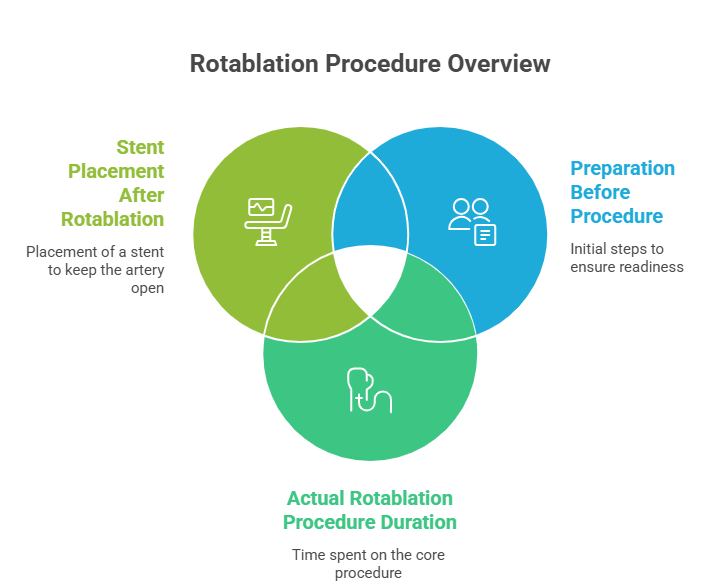
1. Preparation Before Procedure
Before starting the rotation, doctors will perform tests such as an EKG, blood tests and angiography to determine the severity of the blockage.
Patients are prepared under local anesthesia and the surgical site (wrist or groin) is cleaned and sterilized. Proper preparation ensures a smooth and safe process while minimizing risks.
2. Actual Rotablation Procedure Duration
The actual Rotablation procedure usually takes 60 to 120 minutes, depending on the complexity of the blockage. A catheter is inserted into the artery, and a rotating burr is used to break down calcium deposits.
In complex cases with multiple blockages, the procedure may take longer, but experienced cardiologists ensure efficiency and safety.
3. Stent Placement After Rotablation
After calcium removal, angioplasty and stent placement are performed to keep the artery open. This step is crucial for restoring proper blood flow.
The time required depends on the number of blockages and patient condition, but it is usually completed within the same procedure session.
Recovery After Rotablation
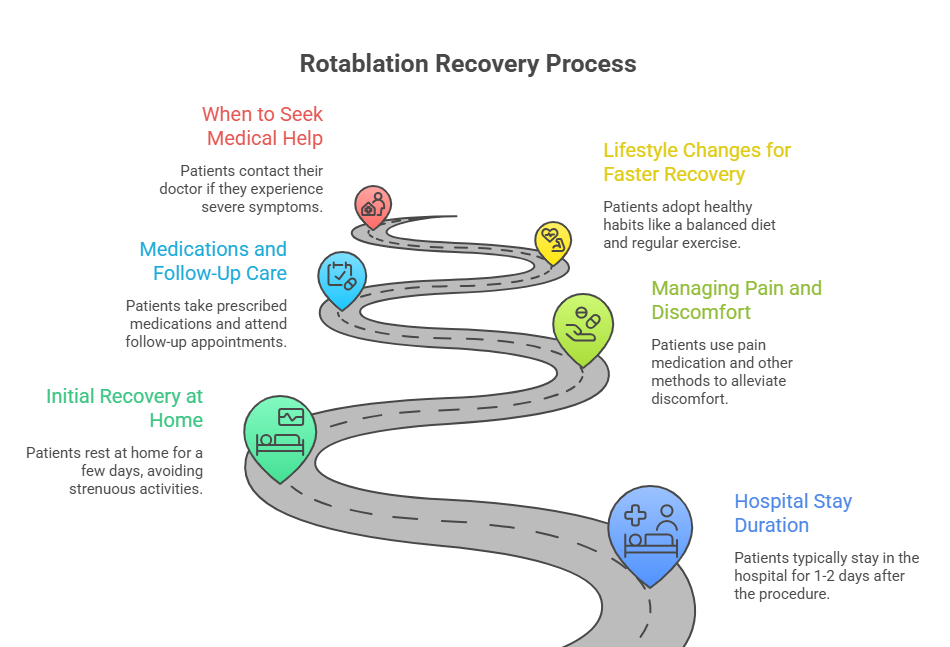
1. Hospital Stay Duration
After Rotablation, most patients remain in the hospital for 1 to 3 days for observation. Doctors closely monitor heart function, blood pressure, and overall recovery.
If the patient remains stable, discharge is planned early with proper medical instructions to ensure a safe and smooth transition to home recovery.
2. Initial Recovery at Home
After discharge, patients are advised to get enough rest for a few days. Light activities can usually be resumed within 2 to 3 days, while full recovery may take 1 to 2 weeks.
Due to the minimally invasive nature of Rotablation, healing is quicker and more comfortable than traditional surgeries.
3. Managing Pain and Discomfort
Patients may feel mild pain or tenderness at the catheter insertion site after the procedure. This discomfort is usually temporary and manageable with prescribed medications.
Proper care and rest help reduce symptoms quickly, allowing patients to recover without pain or significant complications.
4. Medications and Follow-Up Care
After the rotation, patients must take prescribed medications, including blood thinners, to prevent blood clots.
Regular follow-up visits with a cardiologist are essential to monitor progress, ensure proper healing, and maintain long-term heart health after surgery.
5. Lifestyle Changes for Faster Recovery
Adopting a healthy lifestyle is crucial after Rotablation. Patients should avoid smoking, eat a balanced diet, exercise regularly, and manage stress effectively.
These changes support faster recovery, improve heart function, and significantly reduce the risk of future cardiac problems.
6. When to Seek Medical Help
Patients should seek medical attention immediately if they experience symptoms such as chest pain, swelling, bleeding, dizziness, or unusual discomfort after the procedure.
An early consultation helps prevent complications and ensures timely treatment, leading to a safer and smoother recovery process.
Who Should Consider Rotablation Procedure?
Rotation is recommended primarily for patients with heavily calcified coronary arteries for whom standard angioplasty may not be effective. Individuals who experience symptoms such as chest pain, shortness of breath, or reduced exercise tolerance due to blocked arteries may benefit from this advanced procedure.
It is especially useful for elderly patients, diabetics, or those with complex heart conditions. A detailed evaluation by an experienced cardiologist like Dr. Manish Juneja – The Heart Specialist helps determine whether Rotablation is the right treatment option for long-term heart health and better outcomes.
Conclusion
Rotation is a highly effective, minimally invasive procedure for treating complex calcified artery blockages. With a procedure duration of approximately 1 to 2 hours and a short recovery period, it offers a safe solution for patients who cannot undergo traditional treatments.
Proper post procedure care, medications, and lifestyle changes play a key role in long-term success.
If you are experiencing heart-related symptoms or have been advised advanced treatment, consult Dr. Manish Juneja – The Heart Specialist, known among the Best Cardiologists in Nagpur and a Best Rated Cardiologist by Google.
Reference:
https://www.medanta.org/patient-education-blog/rotablation-angioplasty-advanced-stent-procedure
https://pmc.ncbi.nlm.nih.gov/articles/PMC3796693/
FAQ’s
1. What is a Rotablation procedure?
Rotablation is a minimally invasive cardiac procedure used to treat heavily calcified coronary arteries by breaking down calcium deposits using a rotating burr.
2. How long does a Rotablation procedure take?
The Rotablation procedure typically takes 60 to 120 minutes, depending on the severity and number of blockages.
3. Is Rotablation a safe procedure?
Yes, Rotablation is considered safe when performed by an experienced cardiologist like Dr. Manish Juneja – The Heart Specialist, ensuring precision and minimal complications.
4. What is the recovery time after Rotablation?
Most patients recover within 1 to 2 weeks, with light activities resuming in 2–3 days after discharge.
5. How long do patients stay in the hospital after Rotablation?
Patients usually stay in the hospital for 1 to 3 days for monitoring after the procedure.
6. Does Rotablation require stent placement?
Yes, in most cases, angioplasty and stent placement are performed after Rotablation to keep the artery open.
7. Who is the best candidate for Rotablation?
Patients with severely calcified arteries, elderly individuals, diabetics, or those unsuitable for regular angioplasty are ideal candidates.
8. Is Rotablation painful?
The procedure is done under local anesthesia, so patients feel minimal discomfort. Mild soreness at the insertion site may occur after the procedure.
9. What precautions should be taken after Rotablation?
Patients should take prescribed medications, avoid heavy activities initially, follow a healthy lifestyle, and attend regular follow-ups with Dr. Manish Juneja.
10. When should I consult a doctor after Rotablation?
Seek immediate medical help if you experience chest pain, bleeding, swelling, dizziness, or unusual discomfort after the procedure.