TAVI is a minimally invasive heart valve procedure offering faster recovery, fewer risks, and high success rates for patients with severe aortic stenosis.”
Heart valve diseases, especially aortic stenosis, can greatly affect how well a person feels and can be dangerous to their health if not treated soon enough.
In this blog, we’ll explain everything you need to know about TAVI – its benefits, risks, and success rate, so you can make an informed decision.
What is the TAVI Procedure?
TAVI (also known as TAVR – Transcatheter Aortic Valve Replacement) is a minimally invasive heart procedure used to replace a damaged or narrowed aortic valve without open-heart surgery.
Instead of cutting open the chest, doctors put a thin tube called a catheter into a blood vessel, often in the leg, and slowly move it up to the heart. A new valve is then put into the damaged valve.
Who Needs TAVI?
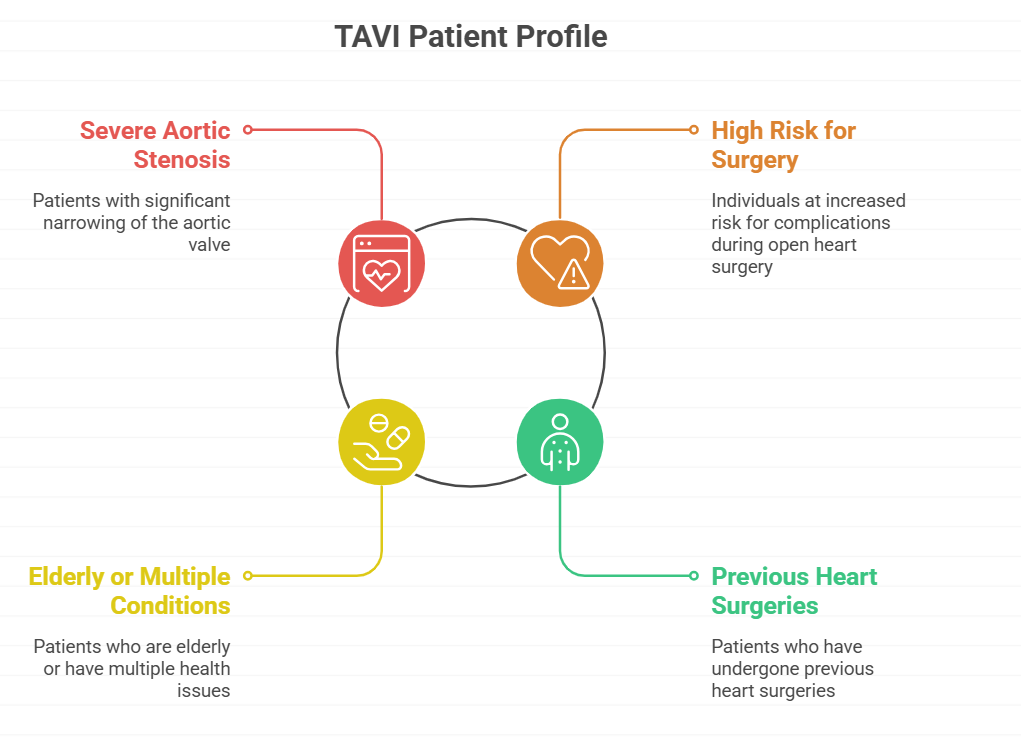
The TAVI procedure is suggested for patients with serious narrowing of the aortic valve who might not be good candidates for regular open heart surgery.
It’s especially useful for people whose general health or age makes regular surgery too dangerous. TAVI offers a less invasive treatment choice that helps patients recover more quickly and enjoy a better quality of life.
- Patients with severe aortic stenosis.
- Individuals at high risk for open heart surgery.
- Elderly patients or those with multiple health conditions.
- Patients with a history of previous heart surgeries.
Benefits of TAVI Procedure
1. Minimally Invasive
The TAVI procedure is performed without opening the chest, using a small catheter inserted through a blood vessel.
This approach reduces surgical trauma, minimizes pain, lowers complication risks, and makes it a safer alternative for high-risk and elderly patients.
2. Faster Recovery
Compared to regular open-heart surgery, TAVI lets patients get better quicker.
Most people can begin walking a day or two after the procedure and get back to their usual activities in a few weeks, which makes their everyday life more comfortable and easier.
3. Short Hospital Stay
Patients undergoing TAVI typically require a shorter hospital stay, usually around 3 to 5 days.
This reduces medical costs, lowers the risk of hospital-acquired infections, and allows patients to return home and recover in a familiar environment sooner.
4. Improved Quality of Life
TAVI significantly reduces symptoms caused by aortic stenosis, such as shortness of breath, fatigue, and chest discomfort.
After the procedure, patients often report improved heart function, increased energy levels, and a noticeable improvement in their overall quality of life.
5. Lower Risk for High-Risk Patients
TAVI is especially beneficial for patients who are considered high risk for open-heart surgery due to age or other medical conditions.
It offers a safer treatment option with fewer complications, making life-saving valve replacement accessible to more patients
Risks of TAVI Procedure
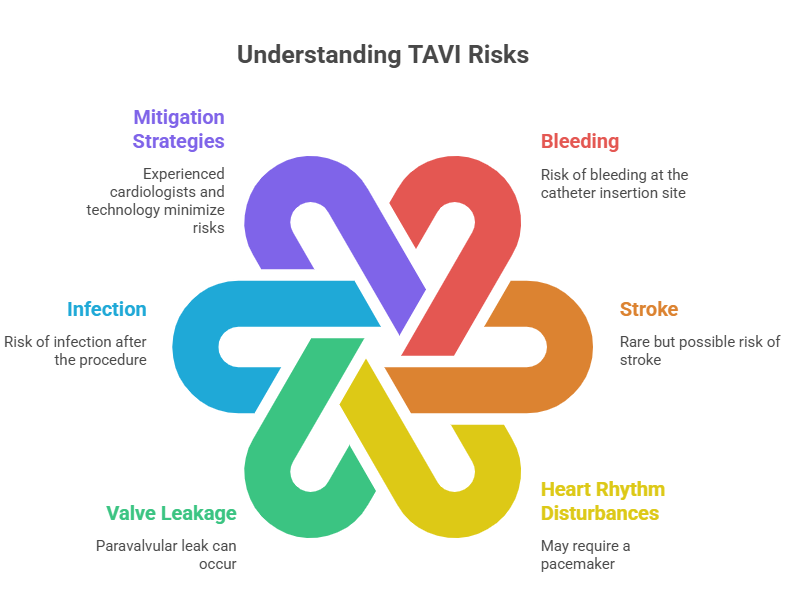
While TAVI is generally safe, like any medical procedure, it carries some risks:
- Bleeding at the catheter insertion site
- Stroke (rare but possible)
- Heart rhythm disturbances (may require pacemaker)
- Valve leakage (paravalvular leak)
- Infection
However, with experienced cardiologists and advanced technology, these risks are significantly minimized.
Success Rate of TAVI in India
The TAVI procedure has shown excellent outcomes in India, making it a highly reliable treatment for aortic valve disease. In experienced cardiac centers, the success rate typically ranges between 95% and 98%, with most patients experiencing significant relief from symptoms such as breathlessness, fatigue, and chest pain.
Additionally, TAVI improves heart function and increases life expectancy. India has emerged as a leading destination for safe and effective TAVI surgery due to the availability of advanced technology and highly qualified cardiologists.
TAVI Recovery Time
Recovery after TAVI is relatively quick:
- Walking within 24–48 hours
- Discharge in 3–5 days
- Resume normal activities within 1–2 weeks
Regular follow-ups and medications are essential for long-term success.
TAVI vs Open Heart Surgery
| Feature | TAVI | Open Heart Surgery |
| Procedure Type | Minimally invasive | Major surgery |
| Recovery Time | 1–2 weeks | 6–8 weeks |
| Hospital Stay | 3–5 days | 7–10 days |
| Risk Level | Lower (for high-risk patients) | Higher in elderly |
Why Choose Dr. Manish Juneja for TAVI?
At Dr. Manish Juneja’s Heart Care Center, patients receive world class treatment for TAVI with a strong focus on safety, precision, and personalized care. The center is equipped with advanced technology to perform minimally invasive procedures effectively, ensuring better outcomes and faster recovery.
Known for its high success rate and patient centered approach, the center is committed to providing compassionate cardiac care you can trust.
Conclusion
The TAVI procedure has revolutionized the treatment of aortic valve disease, especially for patients who are not candidates for open heart surgery. High success rates, rapid recovery, and minimal complications provide a safer and more effective solution.
If you or your loved one is experiencing symptoms of aortic stenosis, consult a heart specialist today and explore whether TAVI is the right option.
https://www.medanta.org/patient-education-blog/tavi-tavr-procedure-risks-benefits-and-recovery.
FAQ’s
1. What is a TAVI procedure?
TAVI (Transcatheter Aortic Valve Implantation) is a minimally invasive procedure used to replace a damaged aortic valve without open-heart surgery.
2. Who is eligible for TAVI?
Patients with severe aortic stenosis, especially elderly individuals or those at high risk for open-heart surgery, are ideal candidates for TAVI.
3. What is the success rate of TAVI in India?
The success rate of TAVI in India is very high, typically ranging between 95% and 98% in experienced cardiac centers.
4. Is TAVI better than open heart surgery?
TAVI is a safer option for high risk and elderly patients, offering faster recovery and fewer complications compared to traditional open heart surgery.
5. How long does the TAVI procedure take?
The TAVI procedure usually takes about 1 to 2 hours, depending on the patient’s condition and complexity of the case.
6. What are the risks associated with TAVI?
Possible risks include bleeding, stroke, infection, valve leakage, and heart rhythm problems, although complications are relatively rare.
7. How long is the recovery after TAVI?
Most patients recover quickly, with hospital discharge in 3 – 5 days and return to normal activities within 1– 2 weeks.
8. Is TAVI a permanent solution?
Yes, the valve used in TAVI is designed to last many years, but regular follow-ups are necessary to monitor heart health.
9. What is the cost of TAVI procedure in India?
The cost of TAVI in India varies depending on the hospital and patient condition but is generally more affordable compared to many other countries.
10. Where can I get the best TAVI treatment in India?
You can consult experienced cardiologists like Dr. Manish Juneja, who provides advanced TAVI procedures with high success rates and personalized care.