ECG vs EKG both refer to the same heart test that measures electrical activity, helping diagnose heart conditions accurately and early.
Cardiac tests play a vital role in the early detection of cardiovascular problems, and one of the most commonly recommended tests is an EKG or EKG. Many patients often wonder if ECG and EKG are different procedures or if one is better than the other.
The truth is that both terms refer to the same heart test used to monitor the electrical activity of the heart. Knowing ECG vs EKG: What’s the Difference and Why It Matters can help patients make informed healthcare decisions and reduce confusion during heart diagnosis.
At Dr. Manish Juneja – The Heart Specialist, recognized among the Trusted Cardiologists in Nagpur and Top Rated Cardiologist by Google, advanced ECG testing supports accurate diagnosis and timely treatment.
What is ECG or EKG?
An electrocardiogram (ECG or EKG) is a quick, painless, non-invasive heart test that records the electrical signals produced by the heart. Doctors use this test to detect irregular heartbeats, heart attacks, conduction problems, and other cardiovascular problems. This test is performed by placing electrodes on your chest, arms, and legs that pick up electrical impulses and display them as signals.
Knowing ECG vs EKG: What’s the Difference and Why It Matters begins with knowing that ECG and EKG are simply two names for the same diagnostic procedure. Modern cardiac centers use ECG testing as a first-line evaluation for patients experiencing chest pain, palpitations, dizziness, or breathlessness.
ECG vs EKG: Why Are There Two Names?
The difference between ECG and EKG is mainly linguistic rather than medical.
1. ECG Means Electrocardiogram
ECG stands for Electrocardiogram, derived from the English language. It combines “electro” meaning electricity, “cardio” meaning heart, and “gram” meaning recording.
Most hospitals and cardiologists commonly use the term ECG during diagnosis and treatment discussions.
2. EKG Comes from German Terminology
EKG originates from the German word Elektrokardiogramm. The letter “K” was retained to avoid confusion with EEG, which refers to brain activity testing.
Some doctors and hospitals still prefer the term EKG, particularly in international or older medical settings.
Why ECG/EKG Test Matters for Heart Health
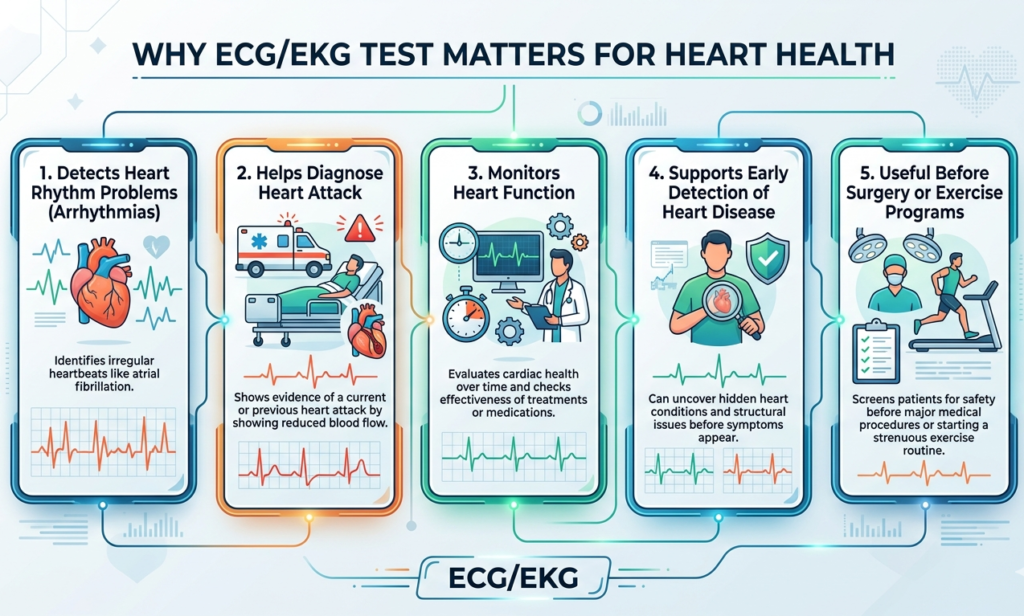
1. Detects Heart Rhythm Problems
An ECG helps detect irregular heart rhythms called arrhythmias. This simple test can help detect symptoms such as atrial fibrillation and abnormal heart rhythms early.
Early diagnosis prevents serious complications and allows doctors to begin treatment quickly.
2. Helps Diagnose Heart Attack
ECG plays a major role in detecting ongoing or previous heart attacks.
Changes in the electrical pattern of the heart help cardiologists identify damage to heart muscles and plan emergency treatment when needed.
3. Monitors Heart Function
Patients with hypertension, diabetes, or existing heart disease often require routine ECG monitoring.
The test helps evaluate whether the heart is functioning normally and whether medications or treatment plans are working effectively.
4. Supports Early Detection of Heart Disease
Many heart diseases may have no symptoms at first.
ECG testing can detect electrical abnormalities early, before serious complications develop, improving treatment success and long-term heart health.
5. Useful Before Surgery or Exercise Programs
Doctors often recommend ECG before major surgeries or intensive exercise programs.
This helps assess whether the heart can safely handle physical stress and medical procedures.
How ECG/EKG Test is Performed
The ECG/EKG test is a quick, simple, and completely painless procedure that usually takes around 5 to 10 minutes to complete. During the test, small adhesive electrodes are placed on the chest, arms, and legs to detect the heart’s electrical activity.
These electrodes are connected to an ECG machine, which records the electrical signals generated by each heartbeat. The recorded signals appear as waveforms on a monitor or printed report.
A qualified cardiologist carefully examines these waveforms to identify abnormalities such as irregular heartbeats, signs of a heart attack, and conduction problems. The procedure is non-invasive and safe, allowing patients to return to normal activities immediately with no recovery period.
Who Should Consider ECG Testing?
An ECG test may be recommended for individuals who experience:
- Chest pain
- Palpitations
- Shortness of breath
- Dizziness or fainting
- High blood pressure
- Family history of heart disease
Early testing can help prevent serious cardiovascular complications.
ECG Testing at Dr. Manish Juneja Clinic
With experience in interventional cardiology, angioplasty, and advanced cardiac diagnostics, our clinic places a special emphasis on early diagnosis and effective treatment. This website offers expertise in ECG, 2D Echo, TMT, Rotation and Advanced Cardiac Therapy.
Conclusion
ECG vs. EKG: What’s the Difference and Why It Matters highlights that both terms refer to the same important heart test. Whether called an ECG or EKG, this diagnostic tool plays a vital role in the early detection of heart problems and helps cardiologists provide timely diagnosis and appropriate treatment.
Early testing can support better heart health outcomes and guide effective medical care for patients experiencing cardiac symptomsTimely heart screening can save lives and improve long-term cardiovascular health.
If you are experiencing chest pain, irregular heartbeat, or other cardiac symptoms, consult Dr. Manish Juneja – The Heart Specialist for expert diagnosis and advanced heart care.
FAQ’s
1. What is the difference between ECG and EKG?
There is no medical difference between ECG and EKG. Both terms refer to the same heart test called an electrocardiogram, used to record the electrical activity of the heart.
2. Why do some doctors say EKG instead of ECG?
EKG comes from the German word Elektrokardiogramm. Many doctors use EKG to avoid confusion with EEG, which is a brain activity test.
3. What is an ECG/EKG test used for?
An ECG or EKG test helps detect heart rhythm problems, heart attacks, abnormal heartbeats, and other heart-related conditions.
4. Is ECG or EKG a painful test?
No, the ECG/EKG test is completely painless and non invasive. Electrodes are simply placed on the skin to record heart signals.
5. How long does an ECG or EKG test take?
The ECG/EKG procedure usually takes around 5 to 10 minutes, making it a quick and convenient heart diagnostic test.
6. Can ECG/EKG detect a heart attack?
Yes, ECG/EKG can identify signs of an ongoing or previous heart attack by analyzing electrical changes in the heart.
7. Can ECG/EKG detect irregular heartbeat?
Yes, one of the main purposes of ECG/EKG is to detect arrhythmias or abnormal heart rhythms.
8. Who should get an ECG or EKG test?
People with chest pain, palpitations, dizziness, breathlessness, high blood pressure, or a family history of heart disease may need ECG testing.
9. Is there any preparation needed before an ECG/EKG test?
Usually, no special preparation is required. Patients may simply be advised to wear comfortable clothing and stay relaxed during the test.
10. Where can I get ECG/EKG testing in Nagpur?
For accurate heart diagnosis and ECG testing, consult Dr. Manish Juneja – The Heart Specialist, known among the Trusted Cardiologists in Nagpur and Top Rated Cardiologist by Google.
Reference:
https://my.clevelandclinic.org/health/diagnostics/16953-electrocardiogram-ekg
https://www.mayoclinic.org/tests-procedures/ekg/about/pac-20384983