Heart attacks are one of the leading causes of death worldwide. The good news is that recognizing the heart attack symptoms early and seeking immediate medical attention can significantly improve survival and reduce heart damage.
Many people believe a heart attack always causes severe chest pain, but that’s not always true.
Some symptoms are mild, while others may appear gradually over several hours or even days. Knowing these warning signs can help save your life or the life of someone you love.
What Is a Heart Attack?
A heart attack, medically known as myocardial infarction, occurs when blood flow to a part of the heart muscle is blocked.
This blockage is usually caused by the buildup of fatty deposits (plaque) inside the coronary arteries.
If blood flow is not restored quickly, the affected heart muscle begins to die.Immediate treatment is essential to minimize damage and improve recovery.
Common Heart Attack Symptoms
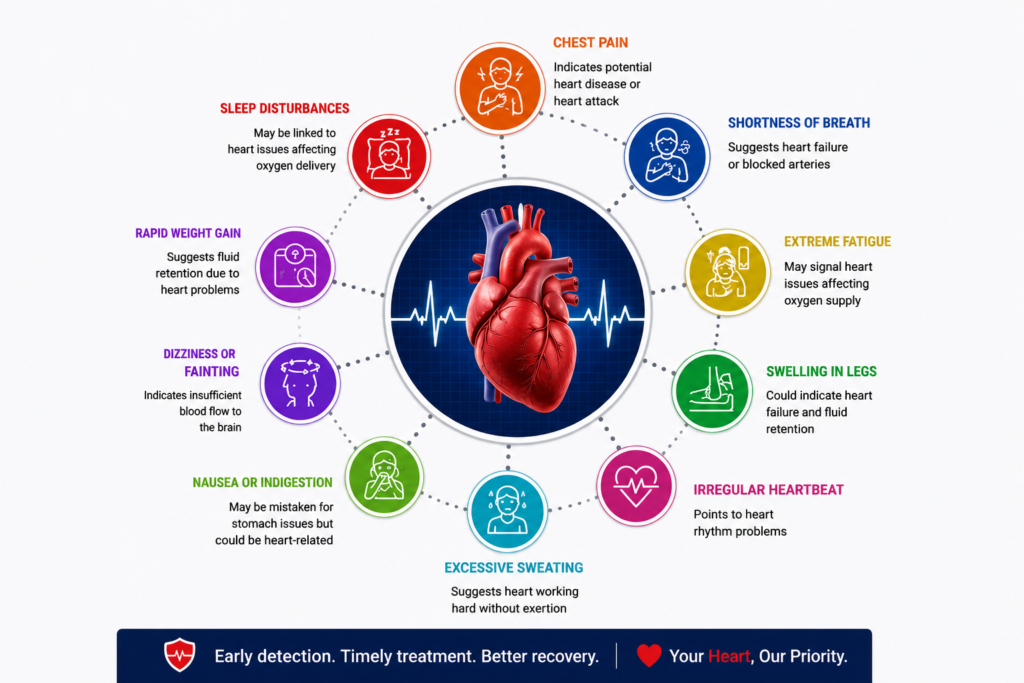
Heart attack symptoms can vary from person to person. While some individuals experience sudden, severe symptoms, others may notice mild warning signs that gradually worsen over several hours or even days.
The intensity and combination of symptoms often depend on factors such as age, gender, overall health, and the extent of the blockage in the coronary arteries.
1. Chest Pain or Chest Discomfort
Chest pain is the most common symptom of a heart attack. It may feel like a sudden pressure, squeezing sensation, heaviness, or tightness in the chest.
In some cases, the discomfort starts mildly and gradually becomes more intense over time.
While chest pain is often felt in the center or left side of the chest, it should never be ignored, especially if it lasts for several minutes or keeps coming back.
- Pressure or tightness in the chest
- Squeezing sensation
- Heaviness or fullness
- Burning sensation
- Pain lasting more than a few minutes or coming and going
The discomfort usually occurs in the center or left side of the chest.
2. Pain Radiating to Other Parts of the Body
Heart attack pain does not always remain limited to the chest. In many cases, the discomfort spreads to other parts of the upper body because the heart and nearby nerves share common pain pathways.
This radiating pain can develop gradually or suddenly and is often a strong indicator that the heart is not receiving enough oxygen-rich blood. Ignoring this symptom can delay life-saving treatment.
- Left arm
- Right arm
- Shoulders
- Neck
- Jaw
- Upper back
- Upper abdomen
This radiating pain is an important warning sign that should never be ignored.
3. Shortness of Breath
Shortness of breath is another common warning sign of a heart attack and may occur with or without chest pain.
It happens when the heart is unable to pump blood efficiently, causing the lungs to receive less oxygen-rich blood.
As a result, you may feel breathless even while resting or performing simple daily activities such as walking, climbing stairs, or talking.
Some people experience shortness of breath before chest discomfort appears, making it an important early symptom that should not be overlooked.
4. Cold Sweats
Breaking into a cold sweat without any physical activity or exposure to heat can be an early sign of a heart attack.
Unlike normal sweating after exercise or in hot weather, cold sweats often occur suddenly and leave the skin feeling cool, clammy, and damp.
This happens because the body releases stress hormones in response to reduced blood flow to the heart.
5. Nausea or Vomiting
Some people experience nausea or vomiting as a symptom of a heart attack, even when they do not have severe chest pain.
These symptoms occur because reduced blood flow to the heart can affect the digestive system, causing discomfort that is often mistaken for indigestion, food poisoning, or acidity.
This is especially common in women, older adults, and people with diabetes.
- Nausea
- Vomiting
- Indigestion-like discomfort
- Stomach pain
These symptoms are more common in women and older adults.
6. Extreme Fatigue
Feeling unusually tired or exhausted without any obvious reason can be an early warning sign of a heart attack, particularly in women.
This type of fatigue is different from normal tiredness after a busy day. It may develop gradually over several days or weeks, making even simple daily tasks such as walking, climbing stairs, or carrying groceries feel unusually difficult.
7. Dizziness or Lightheadedness
Dizziness or lightheadedness can occur when the heart is unable to pump enough blood to meet the body’s needs.
Reduced blood flow to the brain may make you feel weak, unsteady, or as though you might faint.
Although dizziness can have many causes, it should never be ignored when it occurs along with other heart attack symptoms.
- Dizziness
- Feeling faint
- Sudden weakness
- Loss of balance
These symptoms should be evaluated immediately, especially when combined with chest discomfort.
Heart Attack Symptoms in Women
Heart attack symptoms in women are often different from the classic symptoms seen in men, which can make them more difficult to recognize.
While chest discomfort is still common, many women experience subtle or atypical symptoms that are easily mistaken for indigestion, anxiety, fatigue, or the flu.
As a result, they may delay seeking medical care, increasing the risk of serious complications.
Common symptoms include:
- Shortness of breath
- Extreme fatigue
- Pain in the jaw, neck, or back
- Nausea or vomiting
- Chest discomfort rather than severe pain
- Dizziness
- Sleep disturbances
Because these symptoms can be subtle, women may delay seeking treatment.
Silent Heart Attack Symptoms
A silent heart attack is a heart attack that occurs with little or no noticeable chest pain, making it much harder to recognize.
Many people mistake the symptoms for indigestion, muscle strain, fatigue, or simply feeling unwell, which can delay diagnosis and treatment.
Although the symptoms may be mild, a silent heart attack can still cause significant damage to the heart muscle and should be taken just as seriously as a typical heart attack.
- Mild chest discomfort
- Fatigue
- Shortness of breath
- Sweating
- Indigestion
- Weakness
Many people mistake these symptoms for acidity, muscle pain, or stress, delaying life-saving treatment.
Heart Attack Symptoms in Men
Heart attack symptoms in men are often more noticeable and tend to follow the classic warning signs.
The most common symptom is severe chest pain or pressure, which may spread to the left arm, shoulder, neck, jaw, or back.
However, not every man experiences intense chest pain, and some may have milder symptoms that gradually worsen over time.
- Severe chest pain
- Pain spreading to the left arm
- Heavy sweating
- Shortness of breath
- Sudden weakness
However, not every man experiences all of these symptoms.
Risk Factors for Heart Attack
A heart attack can affect anyone, but certain lifestyle habits, medical conditions, and genetic factors significantly increase the risk.
Many of these risk factors develop gradually over time and may not cause noticeable symptoms until a serious heart problem occurs.
Understanding these risks is the first step toward preventing heart disease and maintaining long-term cardiovascular health.
- High blood pressure
- High cholesterol
- Diabetes
- Smoking
- Obesity
- Physical inactivity
- Chronic stress
- Family history of heart disease
- Age over 45 years in men and over 55 years in women
Managing these risk factors can significantly reduce your chances of developing heart disease.
What Should You Do If You Notice Heart Attack Symptoms?
If you or someone around you experiences symptoms of a heart attack, acting quickly can save a life.
The first few minutes after symptoms begin are critical because early medical treatment can restore blood flow to the heart, reduce permanent heart muscle damage, and significantly improve the chances of survival
- Call emergency medical services immediately.
- Do not ignore or wait for symptoms to improve.
- Sit down and remain calm while waiting for medical help.
- If advised by a healthcare professional and there are no contraindications, chew an aspirin while waiting for emergency care.
- If the person becomes unconscious and is not breathing normally, begin CPR if you are trained to do so and follow emergency dispatcher instructions.
Early treatment can save heart muscle and improve survival.
How to Prevent a Heart Attack
Although not all heart attacks can be prevented, adopting a healthy lifestyle and managing underlying medical conditions can significantly reduce your risk.
Small, consistent changes in your daily routine can have a major impact on your heart health over time
- Eat a heart-healthy diet rich in fruits, vegetables, whole grains, and lean proteins.
- Exercise for at least 150 minutes each week.
- Maintain a healthy body weight.
- Quit smoking and avoid tobacco products.
- Limit alcohol intake.
- Control blood pressure, diabetes, and cholesterol.
- Manage stress through relaxation techniques and adequate sleep.
- Schedule regular heart health check-ups, especially if you have risk factors.
FAQs
Can a heart attack happen without chest pain?
Yes. Some people, particularly women, older adults, and individuals with diabetes, may experience a heart attack without severe chest pain.
How long do heart attack symptoms last?
Symptoms may last for several minutes or come and go. Persistent symptoms require immediate emergency evaluation.
Is jaw pain a sign of a heart attack?
Yes. Pain in the jaw, neck, shoulder, or left arm can be an early warning sign of a heart attack.
What is the first symptom of a heart attack?
Chest discomfort is the most common first symptom, although shortness of breath, fatigue, sweating, or pain in the jaw or arm may occur first in some individuals.
Can stress cause a heart attack?
While stress alone may not directly cause a heart attack, chronic stress can increase blood pressure, inflammation, and unhealthy lifestyle habits, all of which raise the risk of heart disease and heart attacks.
Who is at the highest risk of having a heart attack?
People with high blood pressure, high cholesterol, diabetes, obesity, smoking habits, a family history of heart disease, and those over the age of 45 (men) or 55 (women) are at a higher risk of experiencing a heart attack.
What should I do if I think I am having a heart attack?
Call emergency medical services immediately. Do not ignore the symptoms or wait for them to disappear. Sit down, stay calm, and follow the instructions of emergency healthcare professionals. Quick treatment can save your life.
Can young adults have a heart attack?
Yes. Although heart attacks are more common in older adults, younger people can also experience them due to smoking, obesity, diabetes, high cholesterol, high blood pressure, drug abuse, or a strong family history of heart disease.
How can I reduce my risk of a heart attack?
You can lower your risk by maintaining a healthy diet, exercising regularly, quitting smoking, controlling blood pressure, cholesterol, and diabetes, managing stress, maintaining a healthy weight, and getting regular heart check-ups.
When should I consult a cardiologist?
You should consult a cardiologist if you experience recurring chest pain, shortness of breath, palpitations, dizziness, unexplained fatigue, or if you have risk factors such as high blood pressure, diabetes, high cholesterol, or a family history of heart disease.
Conclusion
Recognizing heart attack symptoms early can make the difference between life and death.Chest pain, shortness of breath, sweating, pain radiating to the arm or jaw, nausea, and unexplained fatigue should never be ignored.
If you or someone around you develops these symptoms, seek emergency medical care immediately.Prompt diagnosis and treatment can reduce heart damage, improve recovery, and save lives.
If you have risk factors for heart disease or have experienced recurring chest discomfort, consult an experienced cardiologist for a comprehensive heart evaluation. Regular screenings and a healthy lifestyle are the best ways to protect your heart.