The arrival of the monsoon brings cooler temperatures, fresh air, and relief from the intense summer heat.
While many people enjoy the rainy weather, this season also creates health challenges that are often overlooked.
Increased humidity, sudden temperature changes, reduced physical activity, and a higher risk of infections can all affect your heart health.
For people living with high blood pressure, diabetes, high cholesterol, or existing heart disease, these seasonal changes may increase the risk of cardiovascular complications.
Even healthy individuals should pay attention to their daily habits during the monsoon to keep their heart in good condition.
By making a few simple lifestyle changes, you can enjoy the rainy season while protecting your heart. Here are ten practical monsoon heart health tips recommended by healthcare professionals.
Why Is Heart Health Important During the Monsoon?
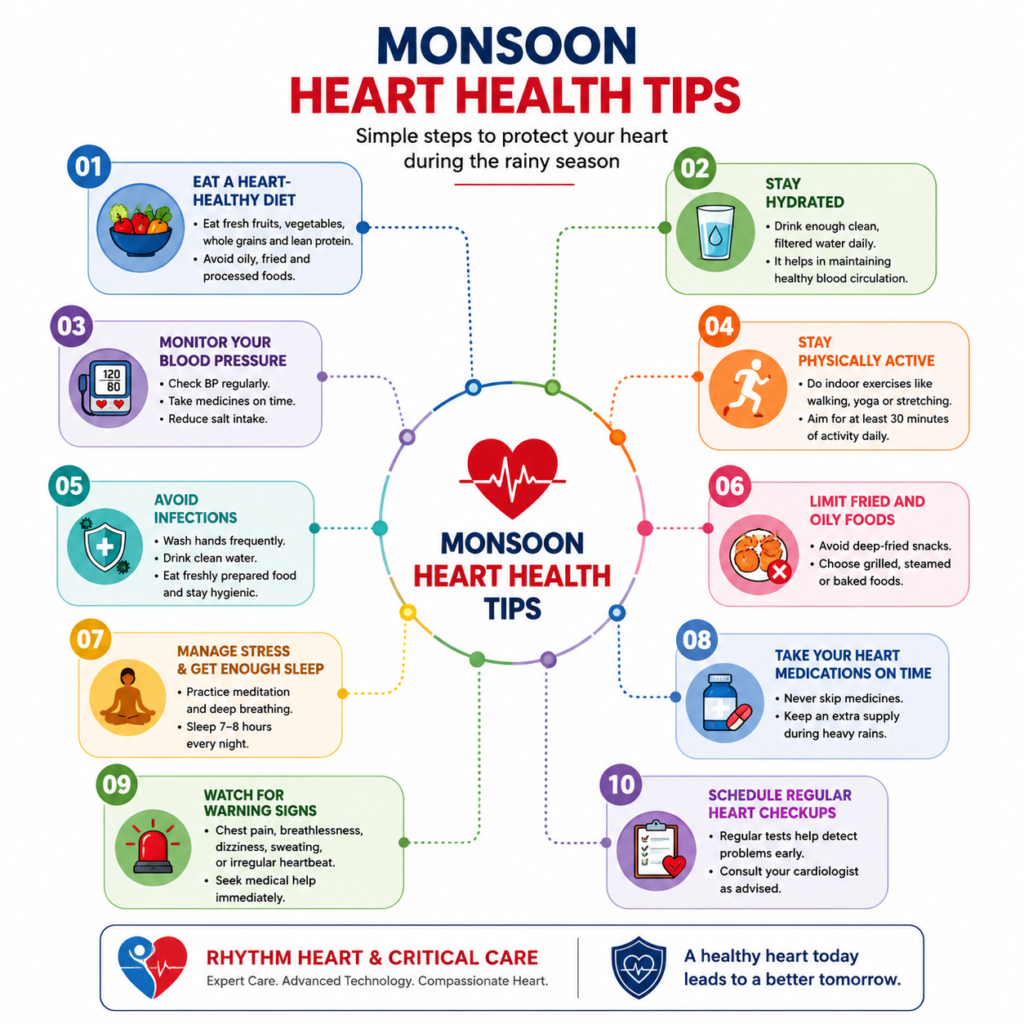
Seasonal weather changes influence the way your body functions. During the monsoon, humidity levels rise and temperatures fluctuate, forcing the heart to work harder to regulate body temperature and maintain healthy blood circulation.
At the same time, many people become less active, consume more fried snacks, and are exposed to viral and bacterial infections.
These factors may increase blood pressure, worsen existing heart conditions, and place additional stress on the cardiovascular system.
People with hypertension, diabetes, obesity, or a family history of heart disease should be especially cautious during this season.
Taking preventive steps can significantly reduce the risk of serious heart-related problems.
1. Eat a Heart-Healthy Monsoon Diet
Nutrition plays a major role in maintaining heart health. During the monsoon, digestive problems and food contamination become more common, making it important to choose fresh and hygienically prepared meals.
A balanced diet rich in vitamins, minerals, and fiber helps strengthen your immune system while reducing the risk of heart disease.
Include:
- Fresh seasonal fruits
- Green leafy vegetables (properly washed)
- Whole grains
- Oats
- Brown rice
- Lentils
- Lean protein
- Healthy fats like nuts and seeds
Avoid:
- Deep-fried snacks
- Excess salt
- Processed foods
- Sugary beverages
- Excessive sweets
A balanced diet helps control cholesterol, blood pressure, and body weight.
2. Stay Hydrated
Many people drink less water during rainy weather because they don’t feel thirsty. However, proper hydration is essential for maintaining healthy blood circulation and supporting overall heart function.
Drinking enough clean water also helps your body regulate temperature and reduces the risk of dehydration-related complications.
However, dehydration can affect blood circulation and increase stress on the heart.
Drink enough clean, filtered water throughout the day unless your doctor has advised fluid restriction due to heart failure.
3. Monitor Your Blood Pressure Regularly
Humidity and weather changes can influence blood pressure. People with hypertension may experience fluctuations during seasonal changes, making regular monitoring even more important.
Keeping track of your blood pressure allows early detection of any abnormal changes and helps prevent serious complications.
If you have hypertension:
- Check your BP regularly.
- Take medications on time.
- Reduce sodium intake.
- Avoid skipping medical appointments.
Keeping your blood pressure under control lowers the risk of heart attack and stroke.
4. Stay Physically Active
Rainy weather often keeps people indoors, but physical activity remains essential for maintaining a healthy heart.
Regular exercise improves blood circulation, helps control weight, and reduces stress levels. Even simple indoor workouts can keep your heart strong and improve overall fitness.
Good indoor exercises include:
- Walking indoors
- Yoga
- Stretching
- Light aerobic exercises
- Stationary cycling
Aim for at least 30 minutes of moderate exercise most days of the week.
5. Avoid Monsoon Infections
The rainy season increases the risk of viral, bacterial, and fungal infections.
These illnesses can weaken your immune system and place additional stress on your heart, particularly if you already have cardiovascular disease.
Maintaining good hygiene is one of the simplest ways to stay healthy during the monsoon.
Protect yourself by:
- Washing hands frequently
- Drinking clean water
- Eating freshly prepared food
- Avoiding street food during heavy rains
- Wearing clean, dry clothes
People with heart disease should seek medical advice if they develop fever, cough, or breathing difficulties.
6. Limit Fried and Oily Foods
Monsoon cravings often lead people to consume more fried snacks and fast food.
While these foods may be tempting, excessive intake can increase cholesterol levels and contribute to weight gain.
Choosing healthier cooking methods helps protect your heart and supports better overall health.
Rainy weather often increases cravings for pakoras, samosas, and other fried snacks.
While enjoying these occasionally is fine, frequent consumption may increase:
- Cholesterol levels
- Weight gain
- Blood pressure
- Risk of heart disease
Choose grilled, steamed, or baked foods whenever possible.
7. Manage Stress and Get Enough Sleep
Stress and lack of sleep can negatively affect your heart by increasing blood pressure and heart rate.
The gloomy weather during the rainy season may also affect mood and energy levels. Maintaining good mental health and a consistent sleep routine is important for overall cardiovascular wellness.
Practice:
- Meditation
- Deep breathing
- Reading
- Listening to relaxing music
- Maintaining a regular sleep schedule
Adults should aim for 7–8 hours of quality sleep every night.
8. Take Your Heart Medications on Time
If you have a heart condition, taking medications exactly as prescribed is crucial.
Skipping doses or stopping medicines without medical advice can increase the risk of serious complications. During heavy rains, it’s also wise to keep an adequate supply of essential medications at home.
If you have a heart condition:
- Never skip medications.
- Keep an extra supply during heavy rains.
- Carry your prescriptions when traveling.
- Consult your doctor before making any changes.
Medication adherence significantly reduces complications.
9. Watch for Warning Signs
Recognizing the early warning signs of heart problems can save lives. Many people ignore symptoms, assuming they are caused by fatigue or indigestion, which may delay treatment.
If symptoms are severe or persistent, seek emergency medical care without delay.
Seek immediate medical attention if you experience:
- Chest pain or pressure
- Shortness of breath
- Severe sweating
- Pain spreading to the arm, neck, jaw, or back
- Sudden dizziness
- Fainting
- Irregular heartbeat
Early treatment can save lives.
10. Schedule Regular Heart Checkups
Regular heart checkups help identify risk factors before they develop into serious cardiovascular conditions.
Preventive screenings are especially beneficial for people over 40 and those with diabetes, high blood pressure, obesity, or a family history of heart disease.
Early diagnosis allows timely treatment and better long-term heart health.
Regular tests may include:
- Blood pressure monitoring
- ECG
- 2D Echo
- Blood sugar test
- Cholesterol profile
- Cardiac consultation
People over 40 or those with diabetes, hypertension, obesity, or a family history of heart disease should have regular checkups.
Foods That Support Heart Health During Monsoon
Eating the right foods during the rainy season is essential for maintaining a healthy heart.
The increased humidity and higher risk of infections can affect your overall well-being, making a balanced and nutritious diet even more important.
Choose fresh, home-cooked meals prepared with hygienic ingredients, and avoid stale or uncovered food to reduce the risk of foodborne illnesses.
A heart-friendly diet not only supports cardiovascular health but also helps strengthen your immune system during the monsoon.
Include these nutritious foods in your daily meals:
- Apples
- Pomegranates
- Guava
- Papaya
- Oats
- Whole wheat
- Brown rice
- Moong dal
- Almonds
- Walnuts
- Flaxseeds
- Green tea
- Fresh vegetable soups
Who Should Be Extra Careful During the Monsoon?
While everyone should take care of their health during the rainy season, some people are at a higher risk of developing heart-related complications.
Weather changes, increased humidity, infections, and fluctuations in blood pressure can put additional strain on the cardiovascular system.
If you fall into any of the following categories, it is important to follow your doctor’s advice, maintain a healthy lifestyle, and seek medical attention if you experience any unusual symptoms.
The following groups should be especially cautious during the monsoon:
- Heart disease patients
- People with high blood pressure
- Diabetic patients
- Senior citizens
- Smokers
- Obese individuals
- People with high cholesterol
These groups are at a higher risk of cardiovascular complications during seasonal weather changes.
Importance of Preventive Heart Checkups During the Monsoon
Many heart conditions develop gradually and may not show noticeable symptoms in their early stages.
During the monsoon, changes in weather, humidity, and daily routines can place additional stress on the cardiovascular system, making preventive health screenings even more important.
Regular heart checkups help identify potential problems before they become serious, allowing doctors to recommend timely treatment and lifestyle changes.
A preventive heart checkup is especially important for people over the age of 40, as well as those with high blood pressure, diabetes, obesity, high cholesterol, or a family history of heart disease.
Even if you feel healthy, routine screening can help detect silent heart conditions that might otherwise go unnoticed.
A comprehensive heart evaluation may include:
- Blood Pressure Monitoring
- Electrocardiogram (ECG)
- 2D Echocardiography (2D Echo)
- Treadmill Test (TMT), if recommended
- Blood Sugar Test
- Lipid Profile (Cholesterol Test)
- Cardiology Consultation
Dr. Manish Juneja, a leading interventional cardiologist and founder of Rhythm Heart & Critical Care, strongly emphasizes the importance of preventive heart checkups, especially during seasonal weather changes like the monsoon.
With extensive experience in diagnosing and treating complex heart conditions, Dr. Juneja believes that early detection is one of the most effective ways to prevent serious cardiovascular complications.
Monsoon Heart Care Tips from Dr. Manish Juneja
According to Dr. Manish Juneja, an experienced interventional cardiologist, seasonal weather changes can have a significant impact on heart health, particularly in people with high blood pressure, diabetes, high cholesterol, or a history of heart disease.
During the monsoon, increased humidity, fluctuations in temperature, and a higher risk of infections may place additional strain on the cardiovascular system.
Following a heart-healthy lifestyle and seeking timely medical care can help reduce the risk of serious complications.
FAQs
1. Does the rainy season affect heart health?
Yes. Changes in humidity, temperature, and lifestyle during the monsoon can influence blood pressure and place additional stress on the heart, especially in people with existing heart conditions.
2. Can humidity increase the risk of heart problems?
High humidity may make the heart work harder to regulate body temperature, which can be challenging for people with cardiovascular disease.
3. What foods should heart patients avoid during the monsoon?
Heart patients should limit fried foods, processed snacks, excessive salt, sugary drinks, and high-fat meals.
4. Is walking safe during the rainy season?
Yes, but avoid walking in heavy rain or waterlogged areas. Indoor walking or other indoor exercises are good alternatives.
5. How can I reduce my heart attack risk during the monsoon?
Maintain a healthy diet, stay active, control blood pressure, take medications as prescribed, manage stress, and seek prompt medical attention if you experience warning signs.
6. How can I prevent heart problems during the rainy season?
Maintain a healthy diet, stay hydrated, exercise regularly, monitor your blood pressure, take prescribed medications, manage stress, and attend regular heart checkups.
7. What are the warning signs of a heart attack that should not be ignored?
Seek immediate medical attention if you experience chest pain, shortness of breath, excessive sweating, dizziness, pain spreading to the arm or jaw, nausea, or an irregular heartbeat.
8. Can monsoon infections affect heart health?
Yes. Viral and bacterial infections during the rainy season can increase inflammation and put additional stress on the heart, especially in older adults and people with existing cardiovascular diseases.
9. How often should heart patients check their blood pressure during the monsoon?
People with hypertension should monitor their blood pressure regularly, follow their doctor’s advice, and report any unusual fluctuations or symptoms promptly.
10. Who should be extra careful about heart health during the rainy season?
Senior citizens, people with heart disease, high blood pressure, diabetes, obesity, high cholesterol, smokers, and those with a family history of heart disease should be especially cautious during the monsoon.
Conclusion
The monsoon season is a time to enjoy the refreshing weather, but it is also important to prioritize your heart health. Simple lifestyle changes such as eating a balanced diet, staying active, managing stress, monitoring blood pressure, and attending regular heart checkups can significantly reduce your risk of heart disease.
If you have high blood pressure, diabetes, high cholesterol, or a history of heart disease, don’t ignore regular heart screenings. Early diagnosis is one of the most effective ways to prevent serious cardiac complications.
At Rhythm Heart & Critical Care, our experienced cardiology team is dedicated to providing advanced heart care, preventive screenings, and personalized treatment plans to help you maintain a healthy heart in every season.
Whether you need a routine cardiac evaluation or expert treatment for a heart condition, we are here to support you at every step of your heart health journey.