TAVI (Transcatheter Aortic Valve Implantation) is a minimally invasive procedure used to replace a diseased aortic valve, most commonly in patients with aortic stenosis.
Because TAVI does not usually require open-heart surgery, recovery is often quicker than traditional surgical valve replacement.
Still, recovery varies from person to person. Age, overall health, heart function, other medical conditions, and the complexity of the procedure can all affect how quickly someone returns to normal activities.
How Long Does Recovery Take After TAVI?
Many patients start walking within a day after TAVI and may leave the hospital within 1–3 days, depending on their condition and the hospital’s protocol.
Most people can gradually return to normal daily activities over the next 1–2 weeks. Complete recovery may take several weeks, particularly in older adults or patients who had significant symptoms before the procedure.
Your cardiologist will provide a personalized recovery plan based on your heart health and progress.
TAVI Recovery Timeline
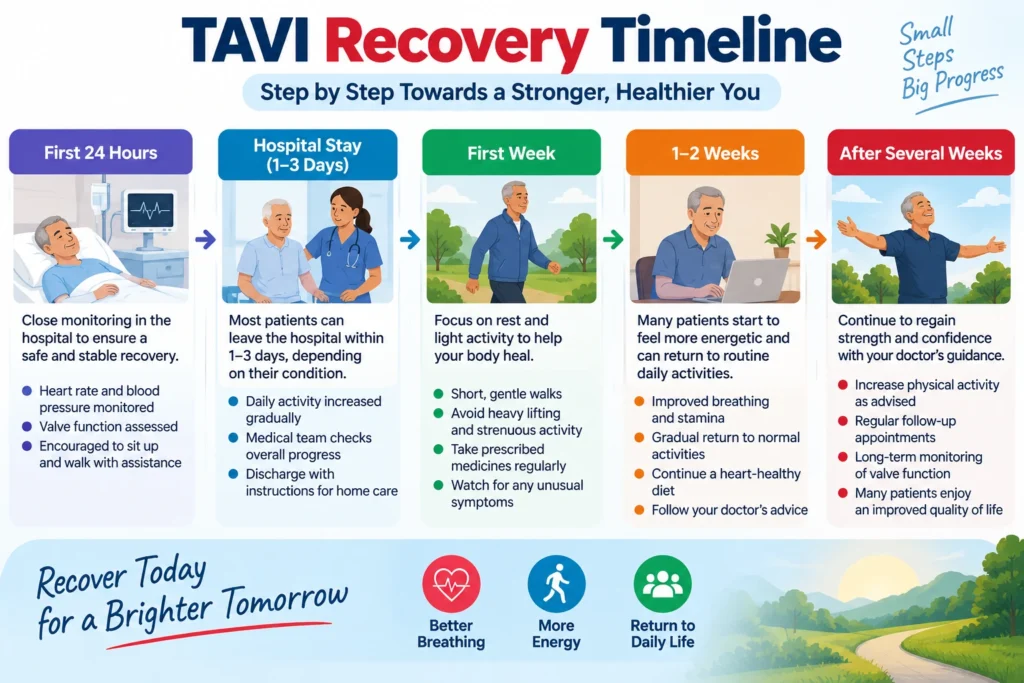
Recovery after TAVI usually progresses step by step, with most patients gradually increasing their activity as their strength and confidence return.
The exact timeline can vary depending on age, overall health, heart function, and any other medical conditions.
First 24 Hours
After the procedure, the medical team monitors your heart rhythm, blood pressure, valve function, and the catheter insertion site. You may be encouraged to sit up and walk with assistance.
First Week
You should focus on rest and light activity. Short walks can help improve circulation and gradually rebuild strength. Avoid heavy lifting and strenuous exercise unless your doctor allows it.
1–2 Weeks
Many patients feel more energetic and can return to routine activities. Some people may also notice improvement in symptoms such as breathlessness and tiredness.
After Several Weeks
As recovery progresses, your doctor may allow you to increase physical activity. Follow-up appointments are important to check the new valve and overall heart function.
Tips for a Smooth TAVI Recovery
Following your cardiologist’s instructions and taking your prescribed medicines regularly can help support a steady recovery.
A balanced diet, gentle physical activity, adequate rest, and timely follow-up visits are also important for a smooth recovery.
- Take prescribed medicines exactly as directed.
- Start with short, gentle walks and increase activity gradually.
- Keep the catheter insertion area clean and monitor it for unusual swelling or bleeding.
- Follow your recommended heart-healthy diet.
- Avoid heavy lifting until your doctor gives you clearance.
- Attend all scheduled follow-up appointments.
- Contact your healthcare team if you develop concerning symptoms.
When Should You Contact Your Doctor?
Seek medical advice if you experience chest pain, severe breathlessness, fainting, persistent dizziness, unusual bleeding, increasing swelling at the catheter site, fever, or a rapid or irregular heartbeat.
These symptoms should not be ignored after TAVI.
Why Choose Dr. Manish Juneja for TAVI?
Dr. Manish Juneja is an experienced interventional cardiologist with expertise in advanced cardiac procedures, including TAVI.
His approach focuses on careful patient evaluation, selecting the right treatment option, and providing personalized care throughout the procedure and recovery.
Patients benefit from a structured treatment plan, modern interventional techniques, and close follow-up after TAVI to monitor heart health and valve function.
Conclusion
TAVI recovery time is generally shorter than recovery from traditional open-heart valve surgery.
Many patients can walk within a day, leave the hospital within a few days, and gradually return to normal activities over the following weeks.
FAQs
1. How many days does it take to recover from TAVI?
Many patients resume light daily activities within a few days, while broader recovery commonly takes a few weeks.
2. How long do you stay in the hospital after TAVI?
Hospital stay is often around 1–3 days, but it depends on your recovery and medical condition.
3. Can I walk after TAVI?
Yes. Patients are generally encouraged to begin gentle walking soon after the procedure under medical supervision.
4. When can I return to normal activities after TAVI?
Many people gradually return to routine activities within 1–2 weeks, but your doctor should confirm when specific activities are safe.
5. Can I climb stairs after TAVI?
Light stair climbing may be possible once you are stable, but follow your cardiologist’s specific instructions.
6. When can I drive after TAVI?
The timing varies depending on your recovery, medications, and doctor’s advice. Do not drive until your doctor says it is safe.
7. Is tiredness normal after TAVI?
Mild tiredness can occur during recovery. It should gradually improve as your body adjusts and your heart function improves.
8. Can I exercise after TAVI?
Light walking is usually encouraged. More strenuous exercise should be restarted gradually and only after medical clearance.
9. When is the first follow-up after TAVI?
Your cardiologist will schedule follow-up based on your condition, often relatively soon after discharge and again as needed.
10. Does TAVI improve breathing?
For patients whose breathlessness is caused by severe aortic valve disease, successful TAVI can improve symptoms and exercise tolerance over time.
Disclaimer: This article is for informational and educational purposes only and is not a substitute for professional medical advice, diagnosis, or treatment. Always consult your cardiologist before making healthcare decisions.