Gas pain and heart attack symptoms may feel similar, but heart attacks usually involve chest pressure, sweating, and breathlessness. Knowing the difference helps ensure timely medical care and heart safety.
Chest pain is one of the most frightening symptoms because many people have difficulty determining whether it is gas pain or a heart attack. While gas pains are usually related to digestion and trapped gas, heart attack pain can indicate a life threatening situation that requires immediate medical attention.
The Difference Between Gas Pain and Heart Attack is important because both may cause discomfort in the chest, bloating, or pressure. However, Knowing their symptoms can help prevent delays in treatment.
At Dr. Manish Juneja – The Heart Specialist, patients receive accurate diagnosis and advanced cardiac care. Recognized among the Trusted Cardiologists in Nagpur and a Top Rated Cardiologist by Google, Dr. Juneja focuses on early detection and personalized heart treatment for better outcomes.
How to Identify Gas Pain vs Heart Attack
Many people confuse gas pain vs heart attack because both conditions may create chest discomfort or pressure. Gas pain generally develops due to indigestion, overeating, acidity, or trapped air in the digestive tract.
The condition may improve after belching or gas. However, a heart attack occurs when blood flow to the heart is blocked, damaging the heart muscles and causing serious symptoms. Knowing the difference between gas pain and a heart attack can help patients act quickly when serious symptoms occur.
Some people also ask, can gas cause a heart attack? While gas itself does not cause a heart attack, similar symptoms may delay diagnosis and proper medical care if ignored.
10 Important Differences Between Gas Pain and Heart Attack
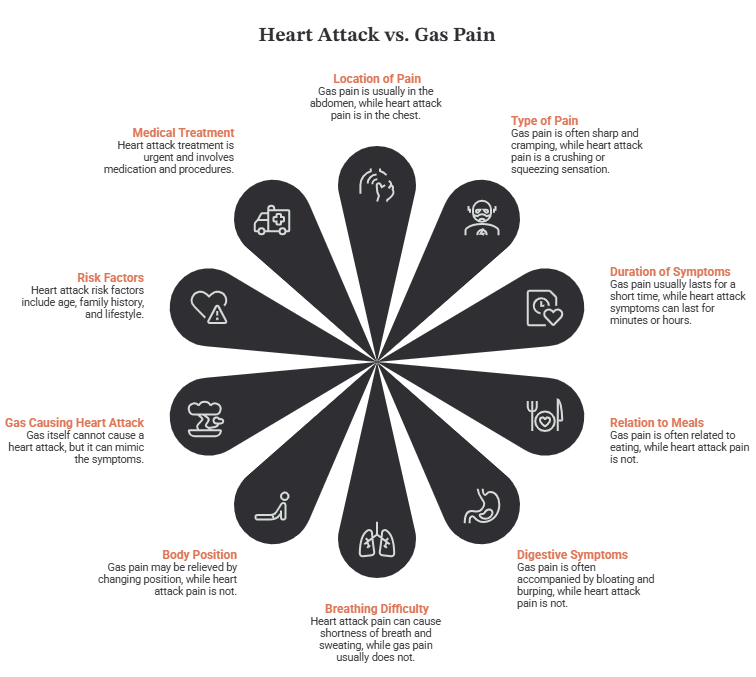
1. Location of Pain
The location of the discomfort is one of the first signs that distinguishes gas pain from a heart attack. Gas pains are usually felt in the stomach or upper abdomen and may change with movement or digestion.
Heart attack pain is usually centered in the chest and may spread to the left arm, neck, shoulder, jaw, or back. Persistent chest pressure should never be ignored, especially in people with diabetes, high blood pressure, or heart disease risk factors.
2. Type of Pain Sensation
The Difference Between Gas Pain and Heart Attack often lies in how the pain feels. Gas pain is commonly sharp, cramping, or bloating related and may fluctuate in intensity. Heart attack pain usually feels heavy, squeezing, crushing, or like intense pressure on the chest.
Patients may describe it as a weight sitting on the chest. Recognizing these differences can help prevent dangerous delays in seeking emergency medical attention.
3. Duration of Symptoms
Gas pain usually lasts a short time and is relieved by digestion, burping, or gas. Symptoms of a heart attack often last longer and can get worse over time. Pain that lasts more than a few minutes, especially if accompanied by sweating or shortness of breath, should be considered an emergency.
Under the care of Dr. Manish Juneja – The Heart Specialist, patients receive timely diagnosis to identify whether chest discomfort is digestive or cardiac in origin.
4. Relation to Meals
A useful way to compare gas pain and heart attacks is to see if the symptoms are diet related. Gas pain often develops after spicy foods, overeating, or indigestion and may improve with digestive remedies.
Heart attack pain is usually unrelated to food and can occur during rest, physical activity, or mental stress. Patients experiencing unexplained chest discomfort should not rely solely on home remedies without proper cardiac evaluation.
5. Associated Digestive Symptoms
Gas pain commonly occurs with bloating, abdominal fullness, acidity, nausea, or frequent burping. These digestive symptoms often help distinguish gas related discomfort from cardiac pain. Heart attacks, however, may occur without digestive complaints and are more likely to involve chest pressure or breathlessness.
The Difference Between Gas Pain and Heart Attack becomes clearer when symptoms are evaluated together rather than focusing only on chest pain alone.
6. Breathing Difficulty and Sweating
Heart attacks frequently involve symptoms beyond pain itself. Shortness of breath, cold sweating, dizziness, and weakness commonly accompany cardiac emergencies. Gas pain rarely causes severe breathlessness or excessive sweating.
Patients may misinterpret these symptoms as acidity or anxiety and delay treatment. Seeking the advice of an angioplasty specialist or an experienced cardiologist can help you avoid complications associated with untreated heart disease.
7. Effect of Body Position
Gas pain often changes with posture or movement. Sitting upright, walking, or changing position may provide relief. Heart attack pain usually remains constant regardless of posture and does not disappear simply by moving or stretching.
Knowing this difference can help you determine whether the cause of your chest discomfort is digestive or cardiac. If the pain persists or worsens, urgent evaluation by a cardiologist is required.
8. Can Gas Cause a Heart Attack?
A common question patients ask is, can gas cause a heart attack? The answer is no, gas does not directly trigger a heart attack. However, gas pain may mimic heart attack symptoms, leading people to ignore serious cardiac warning signs.
This confusion requires prompt diagnosis. Unexplained chest pain, especially if you have shortness of breath or sweating, should not be considered an upset stomach and should be evaluated by an experienced cardiologist.
9. Risk Factors Matter
The difference between gas pain and a heart attack also depends on your personal medical history.
People with diabetes, obesity, a history of smoking, high cholesterol or high blood pressure are at increased risk of cardiovascular disease. Chest pain should always be carefully evaluated in these patients.
Dr. Manish Juneja – The Heart Specialist, known among the Trusted Cardiologists in Nagpur, emphasizes early cardiac screening to prevent severe complications and improve long term heart health.
10. Response to Medical Treatment
Gas pain often improves with antacids, hydration, or digestive care. Heart attack symptoms do not usually improve with stomach medications and require emergency treatment such as ECG, angiography, or angioplasty.
Delaying treatment increases the risk of permanent heart muscle damage. Being aware of gas pain vs heart attack helps patients seek the correct medical care at the right time.
When Should You See a Cardiologist?
Do not self diagnose chest pain, especially if symptoms are severe or recur. Patients who experience chest tightness, arm pain, dizziness, sweating, or unexplained discomfort should contact their cardiologist immediately.
Modern diagnostic tests such as ECG, TMT, 2D Echo, and angiography help determine the exact cause of symptoms. Early diagnosis not only protects heart function but also reduces the risk of heart attack and emergency hospitalization.
Conclusion
Confusing gas pain with a heart attack can delay life saving treatment. Gastrointestinal discomfort is usually harmless, but heart attack symptoms are a medical emergency.
Knowing the difference between gas pain and a heart attack and recognizing the warning signs can help protect your health and save lives.
If you or your loved one experiences persistent chest discomfort or symptoms of heart disease, consult Dr. Manish Juneja – The Heart Specialist, trusted as one of the Top Rated Cardiologist by Google and a Trusted angioplasty doctor for advanced cardiac care.
Contact Us and Book Your Appointment today for expert diagnosis and personalized heart treatment at Dr. Manish Juneja’s clinic.
FAQ’s
1. What is the main difference between gas pain and a heart attack?
The main Difference Between Gas Pain and Heart Attack is that gas pain is usually related to digestion and bloating, while a heart attack occurs due to blocked blood flow to the heart and requires immediate medical attention.
2. Can gas pain feel like a heart attack?
Yes, gas pain can sometimes mimic heart attack symptoms because both may cause chest discomfort, pressure, or pain. However, heart attack pain is often more severe and accompanied by other warning signs.
3. Can gas cause a heart attack?
No, can gas cause a heart attack is a common question, but gas itself does not cause heart attacks. However, mistaking heart attack symptoms for gas pain may delay treatment.
4. How do I know if my chest pain is gas or heart related?
Gas pain often improves after burping or passing gas, while heart attack pain may persist and spread to the arm, jaw, shoulder, or back.
5. Does heart attack pain always occur on the left side?
No, heart attack pain can occur in the center of the chest and may spread to the left arm, neck, jaw, or upper back.
6. What symptoms suggest a heart attack instead of gas pain?
Symptoms such as chest pressure, sweating, breathlessness, nausea, dizziness, and arm pain are more commonly associated with a heart attack.
7. Can indigestion or acidity be confused with a heart attack?
Yes, indigestion and acidity can sometimes resemble heart attack symptoms, making professional medical evaluation important for proper diagnosis.
8. How long does gas pain usually last?
Gas pain is generally temporary and often improves within minutes or hours after digestion or passing gas.
9. When should I see a cardiologist for chest pain?
You should consult a cardiologist if chest pain is severe, recurrent, associated with breathlessness, or does not improve with digestive remedies.
10. Where can I get expert heart evaluation in Nagpur?
For chest pain assessment and advanced cardiac care, consult Dr. Manish Juneja – The Heart Specialist, recognized among the Trusted Cardiologists in Nagpur and Top Rated Cardiologist by Google.