Fractional Flow Reserve (FFR) is a specialised test that helps cardiologists determine whether a narrowing in a coronary artery is significantly reducing blood flow to the heart muscle.
It can help doctors decide whether a patient may benefit from angioplasty and stenting or whether medication is a more appropriate option.
Unlike a test that only shows how narrow an artery looks, FFR measures the effect of that narrowing on blood flow.
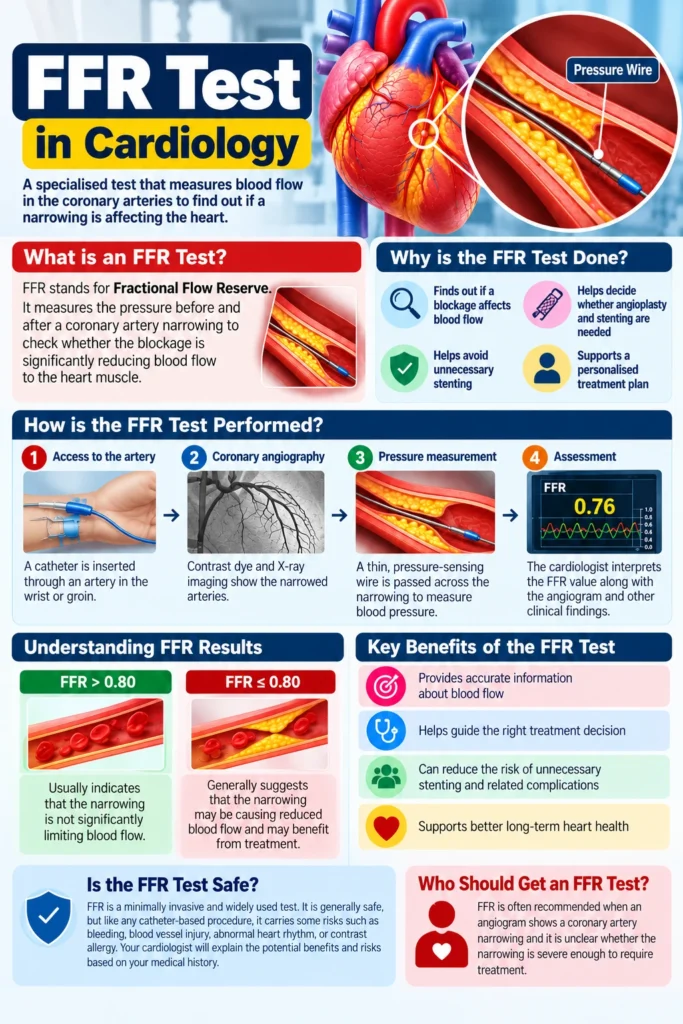
What Is an FFR Test?
FFR stands for Fractional Flow Reserve. During coronary angiography, a cardiologist uses a thin pressure-sensing wire to measure blood pressure before and after a narrowed section of a coronary artery.
The result helps assess whether the blockage is limiting blood supply to the heart.
An FFR value of 0.80 or below generally indicates a narrowing that may benefit from treatment, although the cardiologist considers the patient’s symptoms, other test results, and overall condition before making a decision.
Why Is an FFR Test Done?
A cardiologist may recommend FFR when an angiogram shows a coronary artery narrowing and it is unclear whether that narrowing is severe enough to require treatment.
The test can help to:
- Assess whether a coronary artery blockage affects blood flow.
- Guide decisions about angioplasty and stent placement.
- Avoid unnecessary stenting when a narrowing does not significantly restrict blood flow.
- Support a personalised treatment plan for coronary artery disease.
How Is the FFR Test Performed?
FFR is usually performed in a cardiac catheterisation laboratory during coronary angiography.
- Access to the artery: The doctor inserts a catheter through an artery in the wrist or groin.
- Coronary angiography: Contrast dye and X-ray imaging help identify narrowed coronary arteries.
- Pressure measurement: A specialised wire passes through the catheter and across the narrowed area to measure pressure.
- Assessment: The cardiologist interprets the FFR reading alongside the angiogram and the patient’s clinical findings.
The test is minimally invasive and is generally performed under local anaesthesia. Medication may be given temporarily to help measure blood flow under conditions required for the test.
Is the FFR Test Safe?
FFR is widely used in interventional cardiology, but it carries some risks because it involves a catheter-based procedure.
Possible complications include bleeding at the access site, blood vessel injury, abnormal heart rhythm, or a reaction to contrast dye.
Some patients may experience temporary chest discomfort or breathlessness from the medication used during testing.
Your cardiologist will explain the potential benefits and risks based on your medical history.
FFR Test vs. Coronary Angiography
Coronary angiography shows the location and appearance of narrowed arteries. FFR provides additional information about whether a narrowing is actually restricting blood flow.
These tests complement each other: angiography shows the anatomy, while FFR helps assess the narrowing’s functional significance.
FFR Testing with Dr. Manish Juneja in Nagpur
Dr. Manish Juneja is an interventional cardiologist associated with Rhythm Heart & Critical Care in Nagpur. His areas of expertise include coronary angiography, angioplasty, and advanced cardiac care.
Patients with coronary artery disease can consult a cardiologist to understand their test results and determine whether FFR assessment may be appropriate. The decision depends on the patient’s symptoms, angiography findings, and overall heart health.
Visit drmanishjuneja.com to learn more.
Conclusion
The FFR test helps cardiologists determine whether a coronary artery narrowing significantly affects blood flow to the heart.
By providing information beyond the angiogram alone, it can support better-informed decisions about medication, angioplasty, and stent placement.
FAQs
1. What Is an FFR Test in Cardiology?
FFR is a pressure-based test that assesses whether a narrowed coronary artery significantly limits blood flow to the heart muscle.
2. What Is the Normal FFR Value?
An FFR value above 0.80 generally suggests that the narrowing is not causing significant blood flow limitation. The result must be interpreted in its clinical context.
3. Why Do Doctors Recommend an FFR Test?
Doctors may recommend FFR when angiography identifies a narrowing but its effect on blood flow is uncertain.
4. Is the FFR Test Painful?
The procedure is generally performed under local anaesthesia. Patients may feel pressure at the catheter insertion site or temporary discomfort from medication used during testing.
5. How Long Does an FFR Test Take?
The time varies depending on the complexity of the procedure and whether other tests or treatments are performed at the same time.
6. Is FFR Performed During Angiography?
Yes. FFR is commonly measured during coronary angiography using a specialised pressure-sensing wire.
7. Does an Abnormal FFR Result Mean I Need a Stent?
Not necessarily. A low FFR value may support angioplasty and stenting, but the cardiologist considers symptoms, artery anatomy, other findings, and available treatment options.
8. What Are the Risks of an FFR Test?
Possible risks include bleeding, blood vessel injury, abnormal heart rhythm, contrast dye reactions, and temporary side effects from medication.
9. What Is the Difference Between FFR and IVUS?
FFR measures the pressure difference across a coronary narrowing to assess its effect on blood flow. IVUS uses ultrasound from inside the artery to show its structure and plaque characteristics.
10. Which Cardiologist Should I Consult for an FFR Test in Nagpur?
Consult an interventional cardiologist who can assess your symptoms and angiography findings. Dr. Manish Juneja, associated with Rhythm Heart & Critical Care in Nagpur, provides interventional cardiac care. You can visit his website for more information.
Disclaimer: This article is for educational purposes only and does not replace professional medical advice. A cardiologist should determine whether FFR testing is appropriate for an individual patient.