A healthy heart beats in a regular rhythm, but when this rhythm becomes too slow or irregular, it can affect blood flow to the body and brain. A Pacemaker for Heart is a small medical device that helps regulate abnormal heartbeats and ensures the heart maintains a steady rhythm.
Many people who feel dizzy, tired, or faint might not realize they have heart rhythm problems. Thanks to progress in heart care, pacemakers are now safe, dependable, and can even save lives.
Under the guidance of Dr. Manish Juneja – The Heart Specialist, patients receive accurate diagnosis and advanced care.
As one of the nagpur heart specialist doctor Manish Juneja focuses on restoring heart rhythm and improving quality of life through expert treatment.
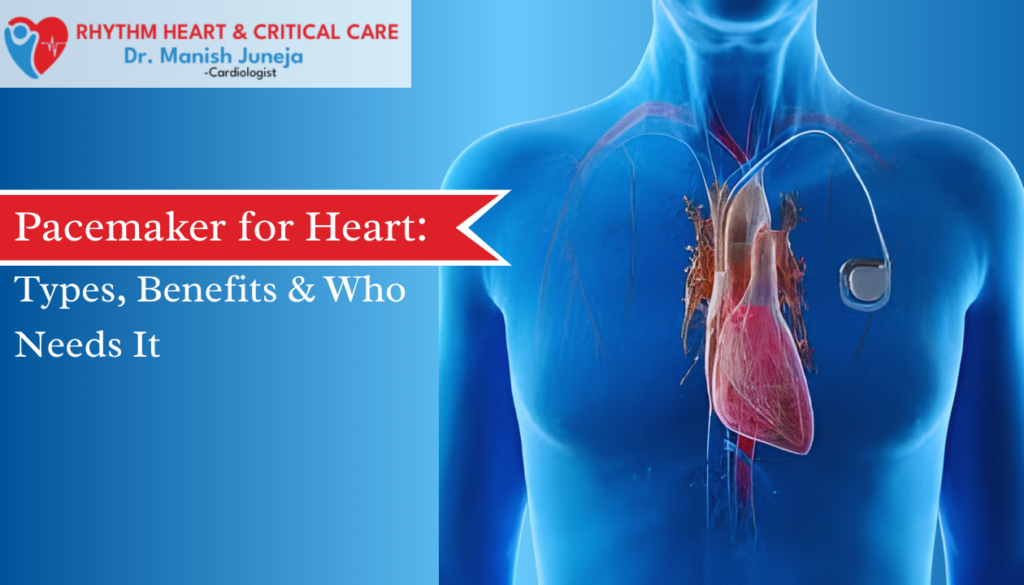
What Is a Pacemaker for Heart and Why Is It Needed?
A Pacemaker for Heart is implanted when the heart’s electrical system fails to maintain a normal heartbeat. Conditions like bradycardia, heart block, or certain arrhythmias can cause the heart to beat too slowly, leading to weakness, breathlessness, or blackouts.
A pacemaker gives soft electrical signals to help the heart beat steadily and at the correct speed. People who don’t get better with medicine usually find this treatment very helpful.
At the clinic of Dr. Manish Juneja – The Heart Specialist, advanced tools are used to detect heart rhythm issues early. This early detection by one of the Best heart specialist doctor in nagpur stops problems from getting worse and helps keep the heart healthy for a long time.
Types of Pacemakers and Their Role
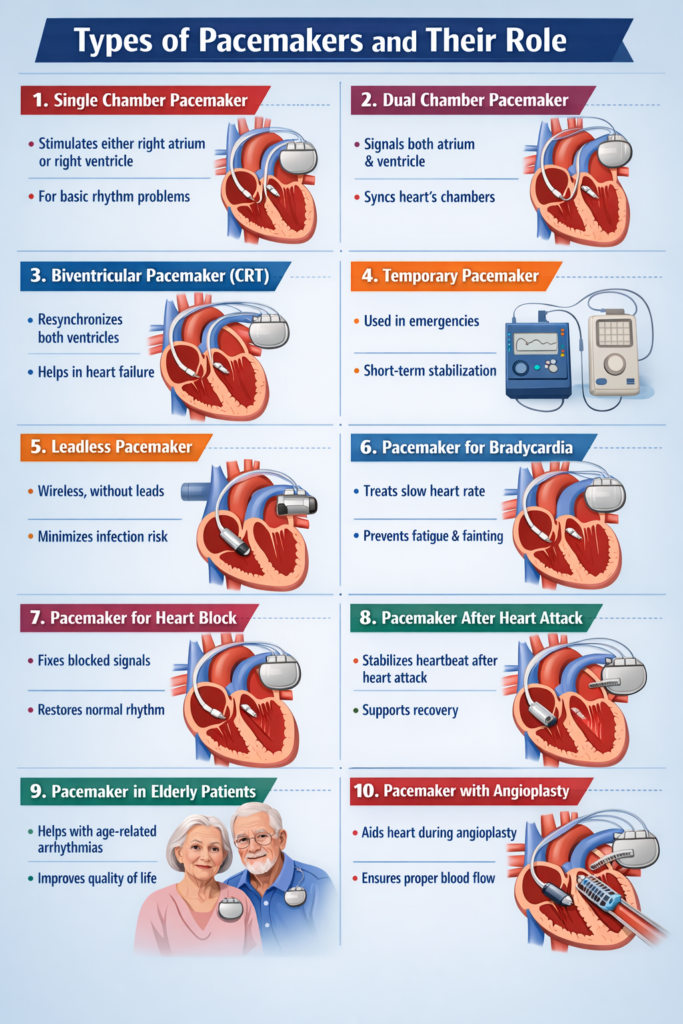
1. Single Chamber Pacemaker
A single chamber pacemaker is designed to stimulate either the right atrium or the right ventricle of the heart.
It is often advised for patients who have basic heart rhythm problems and only need support for one part of the heart.
This kind of pacemaker helps keep the heartbeat regular, lowers symptoms such as feeling lightheaded, and makes the heart’s rhythm more stable overall.
2. Dual Chamber Pacemaker
A dual chamber pacemaker works by sending electrical signals to both the atrium and ventricle, helping them beat in a coordinated manner.
This closely mimics the heart’s natural pacing system and is especially beneficial for patients with heart block or more complex rhythm disorders.
It improves blood circulation and reduces fatigue and breathlessness.
3. Biventricular Pacemaker (CRT)
A biventricular pacemaker, also called Cardiac Resynchronization Therapy (CRT), is often used for people who have heart failure.
It makes sure both sides of the heart beat at the same time, which helps the heart pump blood better.
This can make it easier to breathe, reduce swelling, and lessen feelings of tiredness, leading to a better overall quality of life.
4. Temporary Pacemaker
A temporary pacemaker is used in emergency situations or for short term heart rhythm disturbances.
It helps stabilize the heart rate until the underlying condition improves or a permanent pacemaker is implanted.
This type is often used after heart surgery, severe infections, or acute heart rhythm problems to prevent dangerous complications.
5. Leadless Pacemaker
Leadless pacemakers are a newer type of heart technology. These devices are put directly into the heart without using any wires or leads. They help lower the chances of infection, problems from movement, and any discomfort from the device.
Leadless pacemakers work well for certain patients who need only a little help with their heart rhythm.
6. Pacemaker for Bradycardia
Bradycardia is when the heart doesn’t beat fast enough, which can lead to feeling tired, lightheaded, or even faint. A pacemaker is a device that helps control the heart’s rhythm and makes sure blood flows properly to important organs.
Getting a pacemaker can help a person feel more energetic and stop unexpected blackouts that happen because of the slow heartbeat.
7. Pacemaker for Heart Block
Heart block occurs when electrical signals between the heart’s chambers are delayed or blocked completely. A pacemaker restores proper electrical communication, allowing the heart to beat normally.
This prevents complications such as severe weakness, fainting, and sudden cardiac events, ensuring long term heart rhythm stability.
8. Pacemaker After Heart Attack
Some patients experience irregular heartbeats after a heart attack because the heart’s electrical system is damaged.
A pacemaker can help keep the heartbeat steady and support the heart’s recovery. It lowers the chance of more problems and helps the heart work better while it heals.
9. Pacemaker in Elderly Patients
As people age, the heart’s natural pacing system may weaken, leading to irregular or slow heartbeats.
Pacemakers are highly beneficial for elderly patients, helping them remain active, independent, and symptom-free. With proper care, older individuals can safely enjoy an improved quality of life after implantation.
10. Pacemaker with Angioplasty
In some cases, patients undergoing angioplasty may also require a pacemaker to manage rhythm disorders.
When used together with angioplasty, a pacemaker helps keep the heart beating steadily and ensures good blood flow.
With the care of Dr. Manish Juneja, who is considered one of the best angioplasty doctors, patients get full and modern heart treatments all in one place.
Benefits of Pacemaker for Heart & Who Should Consider It
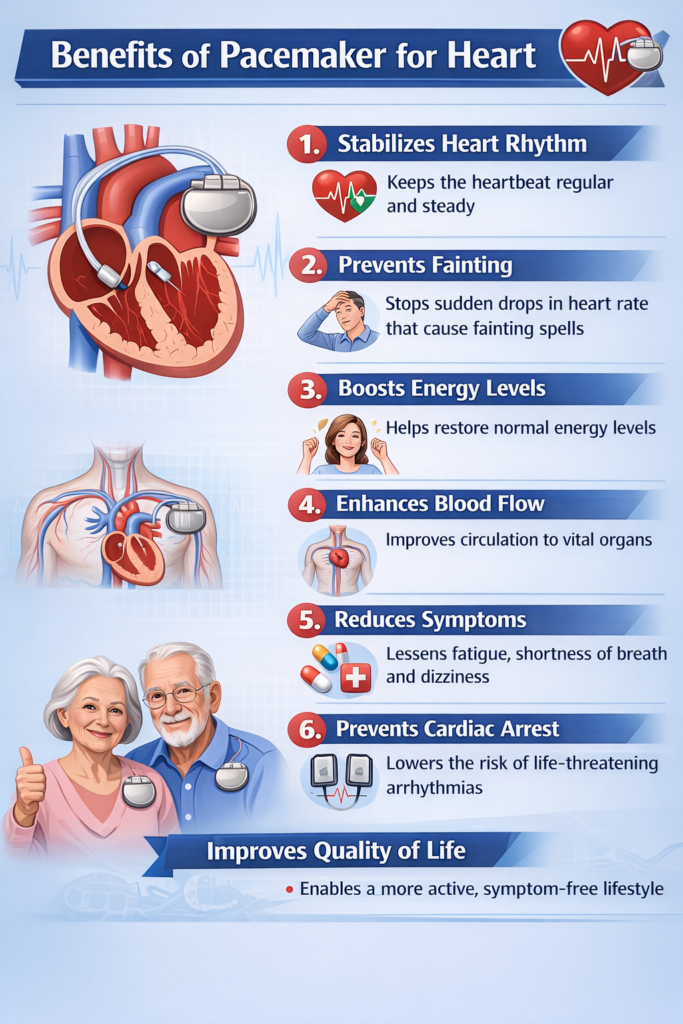
A pacemaker helps improve blood flow, makes people feel less tired and less likely to faint, and greatly improves their overall life. If someone often has a very slow heartbeat, faints a lot, or has problems with their heart rhythm, they should see a doctor who specializes in heart issues.
With expert care from Dr. Manish Juneja – The Heart Specialist, patients receive personalized treatment using advanced technology.
Recognized as one of the Best Cardiologists in Nagpur and Best Rated Cardiologist by Google, Dr. Juneja combines experience with compassionate care.
Conclusion
If you or someone you care about feels dizzy, weak, or has an irregular heartbeat without knowing why, don’t overlook these symptoms.
Getting help early can make a big difference. Talk to Dr. Manish Juneja, a top heart specialist in Nagpur, for expert evaluation and advanced Pacemaker for Heart treatment.
Book your appointment today at drmanishjuneja.com and take the first step towards a healthier, stronger heart.
FAQ’s
1. What is a pacemaker for heart and why is it used?
A pacemaker for heart is a small medical device implanted to regulate abnormal heartbeats. It helps maintain a steady heart rhythm in patients with slow or irregular heart rates, improving blood circulation and overall heart function.
2. Who needs a pacemaker for heart?
Patients with bradycardia, heart block, fainting spells, or serious rhythm disorders may need a pacemaker. A cardiologist evaluates symptoms, ECG, and heart tests before recommending pacemaker implantation.
3. What are the different types of pacemakers for heart?
Types of pacemakers for heart include single-chamber, dual-chamber, biventricular (CRT), temporary, and leadless pacemakers. The choice depends on the patient’s heart condition and rhythm abnormality.
4. Is pacemaker implantation a major surgery?
Pacemaker implantation is a minimally invasive procedure. It usually takes 1 – 2 hours and most patients can return home within a day under expert care from a heart specialist.
5. What are the benefits of a pacemaker for heart patients?
A pacemaker improves heart rhythm, prevents fainting, reduces fatigue, enhances quality of life, and lowers the risk of serious heart complications like heart failure or cardiac arrest.
6. How long does a pacemaker last?
Most pacemakers last between 7 to 15 years, depending on usage and type. Regular follow-ups with a cardiologist help monitor battery life and device performance.
7. Can a person live a normal life with a pacemaker?
Yes, most patients live a normal and active life after pacemaker implantation. Daily activities, travel, and light exercise are usually safe with proper medical guidance.
8. Are there any risks associated with pacemaker implantation?
Pacemaker implantation is generally safe. Minor risks like infection or swelling are rare and can be managed effectively when performed by an experienced cardiologist.
9. Can pacemakers be used after a heart attack or angioplasty?
Yes, some patients may require a pacemaker after a heart attack or angioplasty to manage rhythm issues. A heart specialist decides based on the patient’s condition.
10. Why choose Dr. Manish Juneja for pacemaker treatment?
Dr. Manish Juneja – The Heart Specialist, is one of the Best Cardiologists in Nagpur and a Best Rated Cardiologist by Google, offering advanced pacemaker care with personalized treatment and expert cardiac management.
Reference:
https://my.clevelandclinic.org/health/treatments/17360-permanent-pacemaker