Heat waves increase heart health risks by causing dehydration, high blood pressure, and strain on the cardiovascular system, leading to potential complications.”
We often hear about the dangers of heatwaves causing sunburn, dehydration, or exhaustion, but did you know extreme heat can put serious stress on your heart, too?
As temperatures rise across India and other parts of the world, it’s important to understand how heat waves affect heart health, especially for people already dealing with heart conditions. Let’s explore why hot weather isn’t just uncomfortable, it can also be dangerous for your heart.

Why Your Heart Works Harder in the Heat
When your body gets too hot, it tries to cool down by pushing more blood toward the skin and increasing sweat production. To make this happen, your heart has to pump faster and harder, putting it under extra strain.
This can lead to:
- Lower blood pressure due to expanded blood vessels
- Fluid loss from sweating, which can cause electrolyte imbalances
- Increased risk of irregular heartbeats (arrhythmias)
- Worsening of existing conditions like high blood pressure or heart failure
A study from the American Heart Association even found that hospitalizations for heart-related problems rise sharply during heat waves.
Who’s Most at Risk?
Not everyone is equally affected by extreme heat. More vulnerable people include:
- Adults over 60
- Those with existing heart conditions like hypertension, heart failure, or diabetes
- People on medications such as diuretics or beta-blockers
- Outdoor workers or athletes who spend hours in the sun
If you fall into one of these groups, taking extra precautions during summer is a must. And if you’re managing a heart condition, speak to a heart specialist like Dr. Manish Juneja to discuss how heat might affect your treatment plan.
Signs of Heat-Related Heart Trouble
It’s important to recognize when heat might be impacting your heart. Be alert if you experience:
- Fast or irregular heartbeat
- Chest pain or discomfort
- Dizziness or fainting
- Unusual shortness of breath
- Feeling overly tired without reason
Don’t ignore these symptoms—they could be signs of something serious. Contact a cardiologist or visit the nearest hospital immediately if you notice them.
Smart Ways to Stay Safe in the Heat
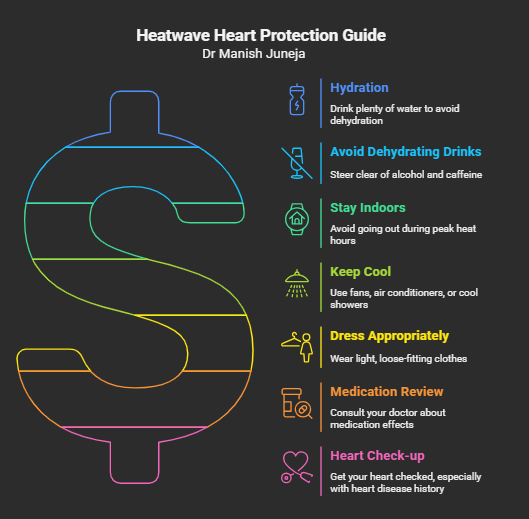
Here are some simple yet effective ways to protect your heart during a heatwave:
- Drink plenty of water – Avoid dehydration by sipping water throughout the day.
- Avoid alcohol and caffeine – These can dehydrate you quickly.
- Stay indoors during peak heat – Try to avoid going out between 11 AM and 4 PM.
- Keep your surroundings cool – Use fans, air conditioners, or take cool showers.
- Dress for the weather – Choose light, loose-fitting clothes.
- Talk to your doctor about your medication – Some drugs may increase heat sensitivity.
- Get your heart checked – Especially important if you have a history of heart disease.
You can explore the Preventive Cardiology services offered by Dr. Manish Juneja to stay one step ahead.
Need Expert Advice?
If you or a loved one is living with a heart condition,or even if you just want peace of mind during the hot season, it’s a great idea to schedule a check-up. Dr. Manish Juneja, a senior interventional cardiologist in Nagpur, offers comprehensive care with over 13 years of experience treating heart conditions.
Conclusion
Heat waves aren’t just a summer inconvenience, they can pose serious risks to your heart health. But with the right precautions, awareness, and support from your doctor, you can enjoy the season safely.
Stay cool, stay hydrated, and keep your heart healthy!
FAQ’s
1. How do heat waves affect heart health?
Heat waves increase strain on the heart by raising heart rate, causing dehydration, and affecting blood pressure levels.
2. Why does the heart work harder in hot weather?
The heart pumps more blood to the skin to cool the body, increasing workload and stress on the cardiovascular system.
3. Who is most at risk during heat waves?
Elderly individuals, heart patients, diabetics, and people on certain medications are more vulnerable to heat-related heart issues.
4. Can heat waves trigger heart attacks?
Yes, extreme heat can increase the risk of heart attacks due to dehydration, electrolyte imbalance, and added cardiac stress.
5. What are the warning signs of heat-related heart problems?
Symptoms include chest pain, dizziness, irregular heartbeat, shortness of breath, and excessive fatigue.
6. How can I protect my heart during a heat wave?
Stay hydrated, avoid peak sun hours, wear light clothing, and keep your body cool with proper ventilation or air conditioning.
7. Does dehydration affect heart health?
Yes, dehydration reduces blood volume, making the heart work harder and increasing the risk of complications.
8. Should heart patients take extra precautions in summer?
Absolutely, they should monitor symptoms, stay cool, and consult their doctor to adjust medications if needed.
9. Is it safe to exercise during a heat wave?
Exercise should be limited or done during cooler hours like early morning or evening to avoid heat stress.
10. When should I see a doctor during extreme heat?
Seek immediate medical help if you experience chest pain, fainting, or severe breathlessness during hot weather.