Stress and Heart Pain is becoming a common concern among Indian adults due to fast-paced lifestyles, work pressure, poor sleep, and emotional stress. Many patients experience chest discomfort, tightness, or heaviness during stressful situations and often confuse it with a heart attack.
Stress can affect your nervous system and hormones, which in turn can influence how your heart works and your blood vessels.
At Dr. Manish Juneja, heart specialist doctor in nagpur we often see people who experience heart pain that starts or gets worse because of stress. Knowing how stress is linked to heart pain can help you act early and avoid serious heart problems.
How Stress Affects the Heart and Causes Pain
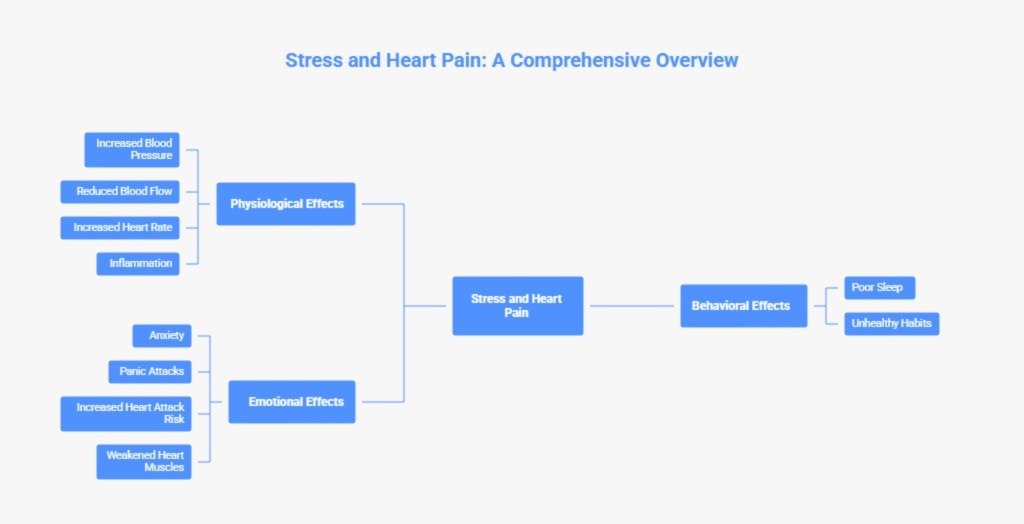
Stress and heart pain are connected because when you’re stressed, your body releases hormones like cortisol and adrenaline. These hormones make your heart beat faster and your blood pressure go up. If this happens often, the blood vessels get narrower, and less blood flows to the heart, causing chest pain or a feeling of discomfort. Stress can also lead to inflammation, which makes the heart have to work harder than it should.
According to Best Cardiologists in Nagpur, unmanaged stress can increase the risk of angina, arrhythmias, and even heart attacks. Recognizing stress-related heart symptoms early is crucial for long-term heart health.
10 Ways Stress Can Trigger Heart Pain
1. Increased Blood Pressure
When stress keeps happening all the time, your body stays ready for danger, which makes blood pressure stay high for a long time. This ongoing pressure makes the heart work harder and harms the walls of the arteries.
As time goes on, the heart has a harder time moving blood properly, which can cause chest pain or discomfort. People who already have high blood pressure are more likely to be affected and should talk to a heart specialist early.
2. Reduced Blood Flow to the Heart
Stress causes blood vessels to tighten, which restricts the flow of oxygen-rich blood to the heart. When the heart does not receive enough oxygen, it may respond with pain or heaviness in the chest.
This stress-related pain often appears during emotional pressure rather than physical exertion and should never be ignored, especially in people with heart disease risk factors.
3. Increased Heart Rate
When you’re stressed, your body releases hormones like adrenaline, which make your heart beat faster than usual. If your heart keeps beating too fast for a long time, it needs more oxygen but doesn’t work as well.
This can lead to feelings like a racing heartbeat, chest pain, or trouble breathing. If you often have fast heartbeats because of stress, it might mean there’s a bigger problem with your heart that needs to be checked by a doctor.
4. Inflammation of Blood Vessels
Long term stress increases inflammation throughout the body, including the blood vessels. Inflamed arteries become stiff and narrow, making it harder for blood to flow smoothly.
This increases the risk of plaque buildup and coronary artery disease. Over time, inflamed vessels reduce oxygen supply to the heart, leading to recurring chest pain and increased cardiovascular risk.
5. Stress-Induced Angina
In people with existing heart disease, emotional stress can trigger angina even without physical activity.
Stress increases heart workload and restricts blood flow, causing sudden chest pain or tightness. This type of pain may appear during anxiety, anger, or emotional upset and should be taken seriously, as it may indicate worsening heart health.
6. Poor Sleep Due to Stress
Stress can mess up your sleep, which stops your heart from getting the rest it needs to heal. When you don’t sleep well, your blood pressure goes up, your body releases more stress chemicals, and there’s more inflammation inside you. All of these things together can lead to chest pain, a heartbeat that’s not steady, and a higher chance of heart problems. Getting enough good sleep is really important for keeping your heart healthy.
7. Unhealthy Coping Habits
Many people respond to stress by smoking, overeating, drinking alcohol, or avoiding physical activity. These habits directly damage the heart and blood vessels. Smoking reduces oxygen supply, unhealthy foods increase cholesterol, and inactivity weakens heart muscles.
Together, these behaviors significantly increase the risk of heart pain, heart attacks, and the need for cardiac procedures.
8. Anxiety and Panic Attacks
Severe stress can cause anxiety or panic attacks that feel similar to heart problems. Symptoms like chest tightness, rapid breathing, sweating, and dizziness can be frightening.
While panic attacks are not always heart-related, they should never be ignored. A proper heart evaluation helps rule out serious conditions and ensures peace of mind.
9. Increased Risk of Heart Attack
Chronic stress raises cholesterol levels, blood pressure, and inflammation, which are key contributors to heart attacks.
Stress also increases blood clot formation, raising the risk of blocked arteries.
In some cases, stress related chest pain is an early warning sign of a heart attack and requires immediate medical attention to prevent life-threatening complications.
10. Weakening of Heart Muscles
Continuous stress makes the heart work harder over time, which slowly weakens the heart muscle. As the heart’s ability to pump blood becomes weaker, it is less effective at delivering oxygen to the body.
This can lead to feelings of tiredness, difficulty breathing, and pain in the chest. If not managed, long-term stress can lead to heart failure and other serious heart issues.
When to See a Cardiologist for Stress Related Heart Pain
If you often feel chest pain, a tight feeling, racing heartbeats, or have trouble breathing when you’re stressed, don’t ignore these signs. Getting help early can stop things from getting worse.
Conclusion
Stress and Heart Pain should never be taken lightly. While stress is a part of life, its impact on your heart can be dangerous if ignored. Simple lifestyle changes, stress management, and timely medical care can protect your heart and improve quality of life.
If you or your loved one is experiencing heart-related symptoms, book a consultation today with Dr. Manish Juneja, one of the Best Rated Cardiologists in Nagpur, and take the first step toward a healthier, stress-free heart.
FAQ’s
1. Can stress and anxiety cause heart pain?
Yes, stress and anxiety can cause heart pain by increasing heart rate, blood pressure, and tightening blood vessels. This reduces oxygen supply to the heart, leading to chest discomfort or pain that often feels similar to heart-related issues.
2. What is the difference between stress pain and a heart attack?
The difference between stress pain and a heart attack is that stress related pain usually comes and goes and occurs during anxiety, while a heart attack causes persistent chest pain that may spread to the arm, jaw, or back and needs immediate medical attention.
3. Can stress cause chest pain and heart palpitations?
Yes, stress can cause chest pain and heart palpitations. Stress hormones like adrenaline make the heart beat faster, causing fluttering sensations and tightness in the chest, especially during emotional stress or panic episodes.
4. Does emotional stress and heart pain have a connection?
Emotional stress and heart pain are closely connected. Strong emotions such as anger, fear, or sadness can increase heart workload, restrict blood flow, and trigger chest pain, especially in people with existing heart conditions.
5. Can stress cause heart and back pain together?
Yes, stress can cause heart and back pain at the same time. Muscle tension, reduced blood flow, and nerve sensitivity during stress can lead to pain that radiates from the chest to the upper back or shoulders.
6. How does chronic stress and heart pain affect long-term health?
Chronic stress and heart pain can damage blood vessels, raise cholesterol, and increase inflammation. Over time, this significantly raises the risk of heart disease, heart attacks, and long-term cardiovascular complications.
7. Can stress and depression cause heart pain?
Yes, stress and depression can cause heart pain by altering hormone levels and increasing inflammation in the body. Depression also reduces physical activity and sleep quality, which further weakens heart health.
8. Why does stress and anxiety cause chest and heart pain?
Stress and anxiety activate the body’s fight-or-flight response, tightening chest muscles and blood vessels. This leads to chest and heart pain, shortness of breath, and sometimes dizziness or sweating.
9. Can high stress lead to heart palpitations and chest pain?
High stress can lead to heart palpitations and chest pain by overstimulating the nervous system. Frequent palpitations during stress should be evaluated by a cardiologist to rule out underlying heart rhythm problems.
10. When should I see a cardiologist for heart pain from stress?
You should consult a cardiologist if stress and heart pain are frequent, severe, or accompanied by symptoms like breathlessness, sweating, or arm pain. A proper heart check helps rule out serious conditions and provides peace of mind.
Reference: