For patients with aortic stenosis or other aortic valve problems, finding the right TAVI specialist is an important part of treatment planning.
TAVI (Transcatheter Aortic Valve Implantation) is a minimally invasive procedure that replaces a diseased aortic valve without traditional open-heart surgery.
A specialist evaluates the patient’s heart condition, overall health, valve anatomy, and treatment needs before deciding whether TAVI is appropriate.
What Does a TAVI Specialist Do?
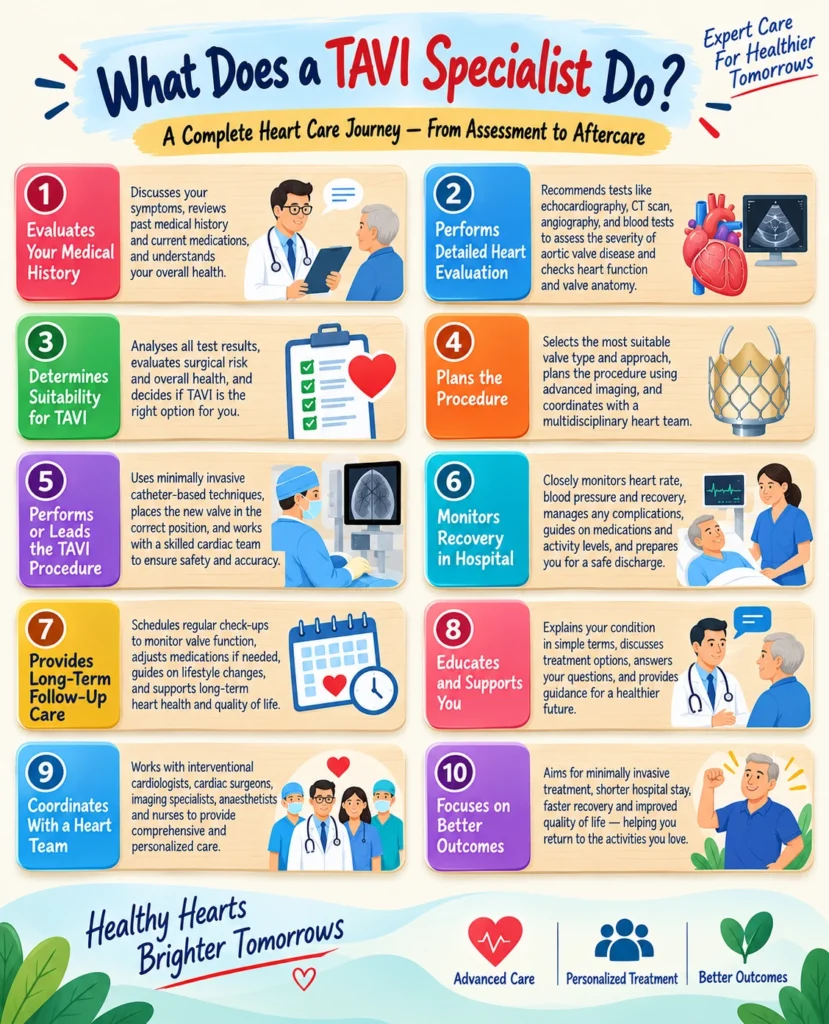
A TAVI specialist is an experienced cardiologist who evaluates and treats patients with structural heart and valve conditions. Their role involves more than performing the procedure.
Before TAVI, the specialist may review echocardiography, CT scans, angiography, blood tests, and other investigations.
This helps the heart team understand the condition of the aortic valve and select an appropriate treatment approach.
When May TAVI Be Recommended?
TAVI is commonly considered for patients with severe aortic stenosis, particularly when the narrowed valve affects blood flow and causes symptoms such as:
- Breathlessness
- Chest discomfort
- Dizziness or fainting
- Unusual tiredness
- Reduced ability to perform daily activities
The suitability of TAVI depends on several factors, including age, symptoms, heart function, valve anatomy, surgical risk, and other medical conditions.
Why Choose a TAVI Specialist in Nagpur?
Choosing a specialist with experience in advanced interventional cardiology can help ensure that the patient receives proper evaluation before and after the procedure.
A good TAVI care plan should include detailed assessment, appropriate procedure planning, careful monitoring, and follow-up care.
Patients should also discuss the expected benefits, possible risks, recovery period, and alternative treatment options with their cardiologist.
TAVI Treatment in Nagpur
Dr. Manish Juneja provides advanced interventional cardiac care in Nagpur, including TAVI for suitable patients with aortic valve disease.
His approach involves evaluating each patient’s condition and discussing an appropriate treatment plan based on individual medical needs.
For patients considering TAVI, a consultation can help determine whether the procedure is suitable and what to expect during recovery.
Conclusion
Finding the right TAVI specialist in Nagpur involves looking beyond the procedure itself. Proper diagnosis, detailed treatment planning, experienced cardiac care, and follow-up all play an important role in the patient’s treatment journey.
If you have been diagnosed with aortic stenosis, consult a qualified cardiologist to understand whether TAVI or another valve replacement option is appropriate for you.
Disclaimer: This article is for informational and educational purposes only and is not a substitute for professional medical advice, diagnosis, or treatment. Always consult a qualified cardiologist before making healthcare decisions.
FAQs
1. What is TAVI?
TAVI is a minimally invasive procedure used to replace a diseased aortic valve using a catheter rather than traditional open-heart surgery.
2. Who needs TAVI?
TAVI may be considered for patients with severe aortic stenosis or certain aortic valve conditions, depending on their individual medical assessment.
3. Is TAVI suitable for elderly patients?
TAVI may be an option for many older patients, but suitability depends on overall health, valve anatomy, surgical risk, and other factors.
4. How long does TAVI take?
The procedure itself generally takes a few hours, although preparation, monitoring, and recovery require additional time.
5. How long is the hospital stay after TAVI?
Many patients stay in the hospital for a few days, depending on their recovery and medical condition.
6. Is TAVI a safe procedure?
TAVI is an established treatment, but like any medical procedure, it has potential risks. Your cardiologist can explain the risks relevant to your condition.
7. What tests are required before TAVI?
Doctors may recommend echocardiography, CT imaging, ECG, blood tests, and other assessments before treatment.
8. How long does recovery take after TAVI?
Recovery varies between patients. Many people gradually return to normal activities within the following weeks.
9. Can TAVI replace open-heart valve surgery?
For selected patients, TAVI can be an alternative to surgical aortic valve replacement. The appropriate option depends on individual clinical factors.
10. How can I find a TAVI specialist in Nagpur?
Look for a cardiologist with experience in interventional and structural heart procedures and discuss your diagnosis, treatment options, and expected outcomes during consultation.