Heart blockage occurs when the coronary arteries that supply blood to the heart become narrowed or blocked, usually due to plaque buildup.
This can reduce the oxygen reaching the heart muscle and increase the risk of a heart attack. Recognizing the warning signs early can help you seek medical care in time.
Symptoms may become noticeable during activities such as walking, climbing stairs, or exercising, when the heart needs more oxygen.
However, some people may experience warning signs even at rest, while others may have no noticeable symptoms until a serious cardiac event occurs.
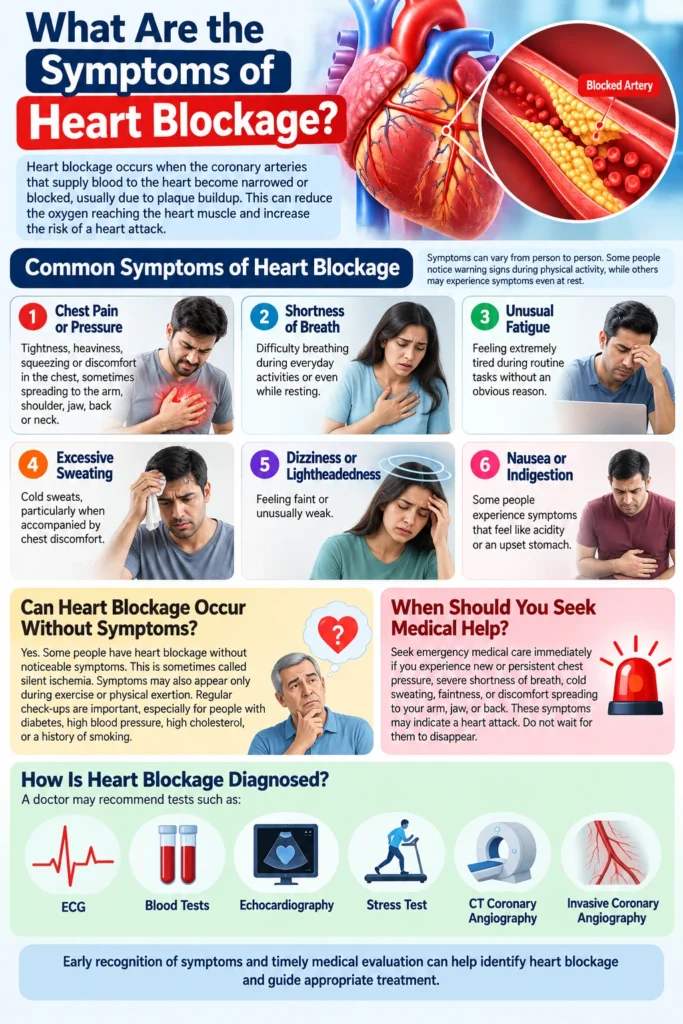
Common Symptoms of Heart Blockage
Symptoms can vary from person to person. Some people notice warning signs during physical activity, while others may experience symptoms even at rest.
- Chest pain or pressure: Tightness, heaviness, squeezing, or discomfort in the chest, sometimes spreading to the arm, shoulder, jaw, back, or neck.
- Shortness of breath: Difficulty breathing during everyday activities or even while resting.
- Unusual fatigue: Feeling extremely tired during routine tasks without an obvious reason.
- Excessive sweating: Cold sweats, particularly when accompanied by chest discomfort.
- Dizziness or lightheadedness: Feeling faint or unusually weak.
- Nausea or indigestion-like discomfort: Some people experience symptoms that feel like acidity or an upset stomach.
Not everyone experiences all these symptoms. People with diabetes and older adults may have less obvious warning signs.
Can Heart Blockage Occur Without Symptoms?
Yes. Some people have coronary artery disease without noticeable symptoms. This is sometimes called silent ischemia.
In other cases, symptoms may appear only during exercise or physical exertion.
Regular medical check-ups are especially important for people with diabetes, high blood pressure, high cholesterol, or a history of smoking.
When Should You Seek Medical Help?
Seek emergency medical care immediately if you experience new or persistent chest pressure, severe shortness of breath, cold sweating, faintness, or discomfort spreading to your arm, jaw, or back. These symptoms may indicate a heart attack. Do not wait for them to disappear or attempt to diagnose the problem yourself.
A doctor may recommend tests such as an ECG, blood tests, echocardiography, a stress test, CT coronary angiography, or invasive coronary angiography, depending on your symptoms and clinical assessment.
Consult Dr. Manish Juneja for Heart Care in Nagpur
Dr. Manish Juneja is an interventional cardiologist in Nagpur associated with Rhythm Heart & Critical Care. His areas of expertise include coronary angiography, angioplasty, and advanced cardiac care.
If you are experiencing possible symptoms of heart disease, a cardiologist can assess your condition and recommend suitable investigations or treatment based on your needs.
Learn more about his services at drmanishjuneja.com.
Conclusion
Chest discomfort, breathlessness, unusual fatigue, and cold sweating can be warning signs of heart blockage.
These symptoms should never be ignored, especially if they are new, worsening, or occur with physical activity. Early medical evaluation can help identify heart problems and guide timely treatment.
FAQs
1. What Are the First Signs of Heart Blockage?
Early signs may include chest discomfort, shortness of breath, unusual tiredness, and discomfort during physical activity.
2. Can Heart Blockage Cause Chest Pain?
Yes. Reduced blood flow to the heart can cause chest pain, tightness, pressure, or heaviness, sometimes spreading to the arm, jaw, shoulder, or back.
3. Can Heart Blockage Occur Without Symptoms?
Yes. Some people have reduced blood flow to the heart without noticeable symptoms, a condition known as silent ischemia.
4. Can Heart Blockage Cause Shortness of Breath?
Yes. Narrowed coronary arteries can reduce the oxygen supply to the heart and may cause breathlessness, particularly during physical activity.
5. Can Heart Blockage Cause Dizziness or Weakness?
Dizziness, lightheadedness, or unusual weakness can occur with heart problems, although these symptoms may also have other causes.
6. How Can I Tell If Chest Pain Is Heart-Related or Gas?
Heart-related discomfort may feel like pressure or tightness and can spread to the arm, jaw, or back. Gas can cause abdominal discomfort, but symptoms can overlap. Seek urgent medical care if a heart problem is possible.
7. Which Tests Can Detect Heart Blockage?
Depending on your symptoms, a doctor may recommend an ECG, blood tests, echocardiography, a stress test, CT coronary angiography, or invasive coronary angiography.
8. Can Heart Blockage Be Treated With Medicines?
Medicines can help manage symptoms and reduce cardiovascular risks. Some patients may also need angioplasty with stenting or bypass surgery, depending on the severity and location of the blockage.
9. Who Has a Higher Risk of Heart Blockage?
People with diabetes, high blood pressure, high cholesterol, smoking habits, obesity, or a family history of heart disease may have a higher risk.
10. When Should I Consult a Cardiologist for Heart Blockage Symptoms?
Consult a cardiologist if you experience recurring chest discomfort, breathlessness during routine activities, or unexplained fatigue. For new or persistent chest pressure, severe breathlessness, cold sweating, or pain spreading to the arm or jaw, seek emergency medical care immediately.
Disclaimer: This article is for educational purposes only and does not replace professional medical advice, diagnosis, or treatment. Seek emergency care if you suspect a heart attack.