Heart valve disease can make even simple daily activities, such as walking, climbing stairs, or carrying groceries, feel exhausting.
Among these conditions, aortic stenosis is one of the most common and serious valve disorders, particularly in older adults.
If left untreated, it can lead to heart failure, irregular heart rhythms, and life-threatening complications.
Fortunately, advances in interventional cardiology have introduced a less invasive treatment known as Transcatheter Aortic Valve Implantation (TAVI), also called Transcatheter Aortic Valve Replacement (TAVR).
Unlike traditional open-heart surgery, TAVI allows doctors to replace a damaged aortic valve through a catheter, avoiding the need to open the chest in many patients.
However, TAVI is not the right choice for everyone. In this guide, we’ll explain who is eligible for TAVI, how doctors decide if the procedure is appropriate, and what factors influence treatment decisions.
What Is TAVI?
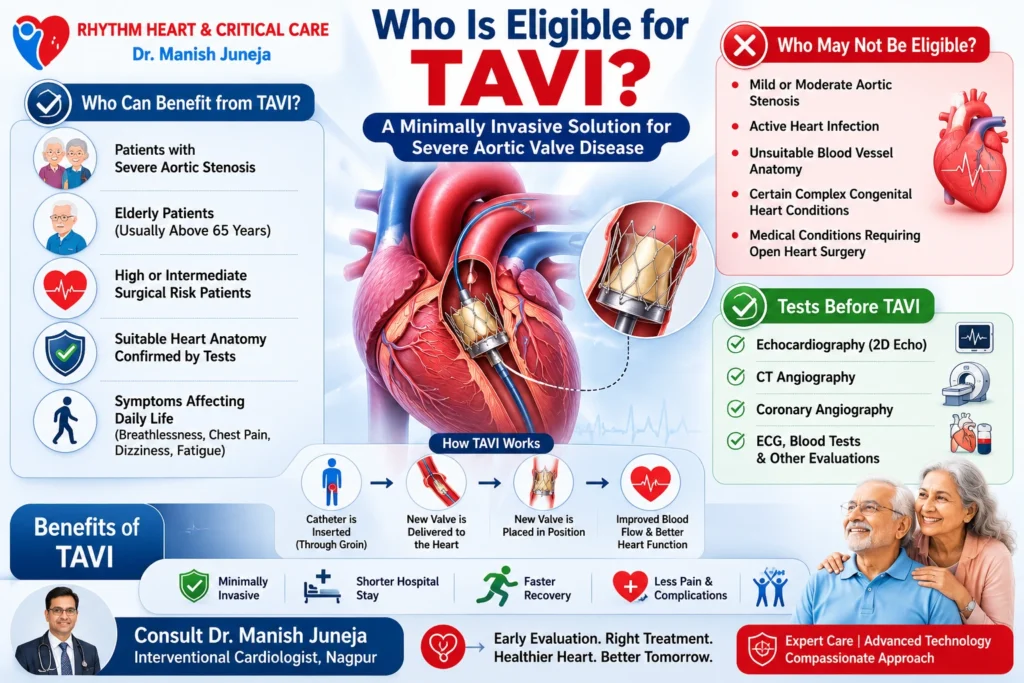
TAVI is a minimally invasive procedure used to replace a narrowed or damaged aortic valve. During the procedure, a new artificial valve is delivered to the heart through a thin catheter, usually inserted through an artery in the groin.
Once in position, the new valve begins functioning immediately, restoring healthy blood flow from the heart to the rest of the body.
Because TAVI avoids many of the challenges associated with open-heart surgery, it has become an excellent treatment option for carefully selected patients, particularly older adults and those with additional medical conditions.
Why Is Patient Selection So Important?
Although TAVI offers many advantages, not every patient with aortic valve disease requires this procedure.
The decision depends on several medical factors, including the severity of valve disease, the patient’s overall health, age, anatomy, and surgical risk.
Choosing the right treatment is essential because the Good option differs from one person to another. A comprehensive heart evaluation helps ensure that patients receive the safest and most effective care.
Who Is Eligible for TAVI?
Not every patient with aortic valve disease requires TAVI, and the procedure is recommended only after a detailed medical evaluation.
Cardiologists assess factors such as the severity of aortic stenosis, age, overall health, heart anatomy, and surgical risk to determine whether TAVI is the most suitable treatment option.
1. Patients with Severe Aortic Stenosis
The most common reason for TAVI is severe symptomatic aortic stenosis. This condition develops when the aortic valve becomes stiff and narrowed, making it difficult for blood to leave the heart.
Common symptoms include:
- Chest pain
- Shortness of breath
- Dizziness
- Fainting episodes
- Fatigue during routine activities
- Reduced exercise capacity
Patients who experience these symptoms should not delay medical evaluation, as untreated severe aortic stenosis can become life-threatening.
2. Older Adults
Many TAVI candidates are over the age of 65 or 70 years. As people age, the risks associated with major surgery may increase because of other health conditions.
For many elderly patients, TAVI offers several advantages:
- Smaller incision
- Shorter hospital stay
- Faster recovery
- Reduced surgical trauma
- Earlier return to daily activities
3. Patients at High or Intermediate Surgical Risk
Some individuals are considered high-risk candidates for conventional open-heart surgery due to existing medical conditions such as:
- Chronic kidney disease
- Chronic lung disease
- Previous heart surgery
- Diabetes
- Frailty
- Multiple medical illnesses
For these patients, TAVI may provide a safer and less invasive alternative.
4. Patients with Suitable Heart Anatomy
Not every patient’s heart anatomy is appropriate for TAVI. Before recommending the procedure, cardiologists perform detailed imaging tests to evaluate:
- Aortic valve size
- Calcium deposits
- Coronary artery anatomy
- Blood vessel size
- Overall heart function
These assessments help determine whether the new valve can be implanted safely.
5. Patients with Symptoms Affecting Daily Life
People who experience symptoms that interfere with normal activities may benefit from TAVI. As aortic stenosis progresses, even simple tasks such as walking, climbing stairs, or doing household work can become difficult.
These symptoms may include:
- Walking short distances causes breathlessness
- Frequent dizziness
- Chest discomfort during physical activity
- Extreme fatigue
- Reduced ability to perform daily tasks
Treating severe valve disease early can significantly improve both quality of life and long-term outcomes.
Tests Performed Before TAVI
Before recommending TAVI, your cardiologist may advise several investigations to assess your overall heart health.
These tests help assess the severity of aortic valve disease, evaluate overall heart function, and identify any conditions that may affect the safety or success of the procedure.
Common tests include:
- Echocardiography (2D Echo)
- CT Angiography
- Coronary Angiography
- Electrocardiogram (ECG)
- Blood Tests
- Chest X-ray
- Kidney Function Tests
These investigations help determine the severity of valve disease and ensure the safest treatment approach.
Benefits of TAVI for Eligible Patients
When performed in the right patients, TAVI offers several important benefits.Because the procedure is minimally invasive, it reduces surgical trauma and allows many patients to recover more quickly
These include:
- Minimally invasive procedure
- No large chest incision
- Shorter recovery time
- Less postoperative pain
- Lower hospital stay
- Faster return to everyday life
- Improved quality of life
- Relief from symptoms such as breathlessness and chest pain
Many patients notice a significant improvement in their energy levels and physical activity within weeks after the procedure.
Why Choose Dr. Manish Juneja for TAVI?
Choosing an experienced interventional cardiologist is one of the most important decisions when considering TAVI. Every patient requires a detailed evaluation to determine whether the procedure is appropriate and to plan treatment safely.
Dr. Manish Juneja is a leading Interventional Cardiologist in Nagpur with expertise in advanced structural heart procedures, including TAVI (Transcatheter Aortic Valve Implantation), coronary angiography, angioplasty, pacemaker implantation, and heart failure management.
With extensive experience in minimally invasive cardiac interventions, he focuses on providing evidence-based, patient-centered care using modern diagnostic technology and personalized treatment plans.
Dr. Juneja believes that successful heart treatment begins with an accurate diagnosis and a clear understanding of each patient’s unique medical condition.
By carefully assessing every case, he recommends the treatment option that offers the great long-term outcome while prioritizing patient safety and quality of life.
Conclusion
TAVI has transformed the treatment of severe aortic stenosis by offering a minimally invasive alternative to open-heart surgery for carefully selected patients.
However, eligibility depends on several factors, including the severity of valve disease, overall health, heart anatomy, and surgical risk.
If you are experiencing symptoms such as chest pain, shortness of breath, dizziness, or fatigue, don’t ignore them.
Early diagnosis and timely treatment can make a significant difference. Consulting an experienced interventional cardiologist like Dr. Manish Juneja can help you understand your treatment options and determine whether TAVI is the right choice for your heart health.