Undergoing angioplasty can help restore blood flow through a narrowed or blocked coronary artery.
However, the procedure is only one part of long-term heart care. Your daily food choices, physical activity, medications, and management of conditions such as diabetes, high blood pressure, and high cholesterol also matter.
After angioplasty, it is generally better to focus on an overall heart-healthy eating pattern rather than simply avoiding one or two foods.
Current American Heart Association guidance emphasizes vegetables and fruits, whole grains, healthy protein sources, unsaturated fats, minimally processed foods, and lower sodium and added sugar intake.
This guide explains foods to avoid after angioplasty, healthier alternatives, and practical dietary habits that can support your heart health.
Why Does Diet Matter After Angioplasty?
Angioplasty opens a narrowed coronary artery, often with the placement of a stent to help keep the artery open. However, angioplasty does not remove the underlying risk factors that contributed to coronary artery disease.
A healthy diet can help with weight management and control of cholesterol, blood pressure, and blood sugar.
NHS guidance also recommends a diet low in fat and salt following coronary angioplasty, along with regular physical activity and other lifestyle changes.
The goal is not to follow a highly restrictive diet. Instead, make sustainable changes that you can continue for years.
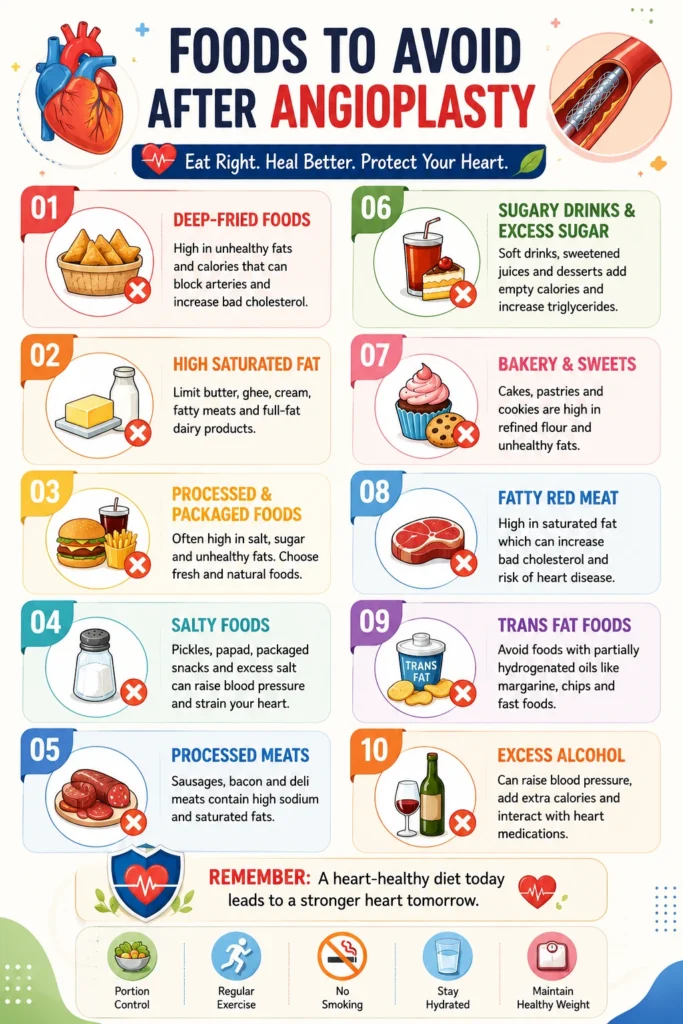
Foods to Avoid or Limit After Angioplasty
1. Deep-Fried and Highly Oily Foods
Foods such as samosas, pakoras, puris, fried chips, French fries, and fried chicken can add substantial amounts of unhealthy fats and calories to the diet.
Frequent consumption of fried foods may make it harder to maintain a heart-healthy eating pattern. Choose steamed, grilled, baked, or lightly sautéed foods instead.
2. Foods High in Saturated Fat
Limit foods that are high in saturated fat, including:
- Butter
- Ghee in large amounts
- Cream
- Full-fat dairy products
- Fatty cuts of meat
- Processed meats
- High-fat cheese
Too much saturated fat can raise LDL cholesterol, which is associated with a higher risk of heart disease and stroke. Replacing saturated fats with healthier unsaturated fats is recommended as part of a heart-healthy diet.
3. Processed and Packaged Foods
Processed foods can be convenient, but many packaged snacks and ready-to-eat meals contain high amounts of sodium, saturated fat, and added sugar.
Try to limit:
- Packaged namkeen
- Chips
- Instant noodles
- Processed snacks
- Packaged baked goods
- Ready-to-eat meals
Check nutrition labels when possible and choose products with lower sodium, saturated fat, and added sugar.
4. Salty Foods
Too much sodium can contribute to higher blood pressure, which is an important cardiovascular risk factor.
Limit foods such as:
- Pickles
- Papad
- Salted nuts
- Packaged soups
- Salty snacks
- Processed meats
- Restaurant foods with high sodium
Instead of adding extra salt, use herbs, spices, lemon, garlic, or other natural flavorings.
5. Processed Meats
Processed meats such as sausages, bacon, salami, and other cured meats should be limited.
These foods can contain significant amounts of sodium and saturated fat. Consider replacing them with healthier protein sources such as beans, lentils, fish, or skinless poultry.
6. Sugary Drinks and Excess Added Sugar
Regular consumption of sugary beverages can add a large amount of added sugar without providing much nutritional value.
Limit:
- Soft drinks
- Sweetened packaged juices
- Energy drinks
- Sweetened tea and coffee
- Milkshakes
- Sugary desserts
Water should generally be the preferred beverage. The AHA recommends minimizing added sugars as part of a heart-healthy dietary pattern.
7. Bakery and Highly Processed Sweets
Cakes, pastries, cookies, doughnuts, cream-filled desserts, and similar foods can contain significant amounts of saturated fat, added sugar, and refined carbohydrates.
You do not necessarily need to eliminate every sweet food forever, but these items should be occasional rather than everyday choices.
8. Fatty Red Meat
Large portions of fatty red meat can increase saturated fat intake. If you eat meat, choose leaner cuts and trim visible fat.
You can also include plant-based protein sources such as dal, beans, chickpeas, and other legumes, which can help add fiber and variety to your diet.
9. Foods Made With Trans Fats or Partially Hydrogenated Oils
Avoid foods containing partially hydrogenated oils whenever possible. These are sources of industrial trans fats and are not considered heart-healthy.
When buying packaged foods, check the ingredient list and choose products without partially hydrogenated oils.
10. Excess Alcohol
Alcohol should not be used as a heart-health strategy. If you do drink alcohol, discuss the appropriate amount with your doctor, particularly if you take heart medications or have other medical conditions.
The AHA advises people who do not drink alcohol not to start and recommends limiting intake for those who do drink.
What Should You Eat After Angioplasty?
Avoiding unhealthy foods is only half of the picture. A balanced diet should include a variety of nutritious foods.
Include More:
- Fresh vegetables
- Whole fruits
- Whole grains
- Dal and other legumes
- Beans and chickpeas
- Nuts and seeds in appropriate portions
- Fish, where suitable
- Lean protein
- Low-fat or reduced-fat dairy options
- Healthy unsaturated oils
The AHA recommends emphasizing vegetables and fruits, whole grains, healthy protein sources, minimally processed foods, and unsaturated fats.
A Simple Indian Heart-Healthy Plate
You do not need complicated recipes to improve your diet. A simple meal could include:
Half the plate: vegetables and salad
One-quarter: whole grains such as roti made with whole-wheat flour or brown rice
One-quarter: dal, beans, fish, or another lean protein source
Portion sizes should be adjusted according to your individual calorie needs, activity level, diabetes status, kidney function, and doctor’s advice.
Foods to Avoid After Angioplasty: Quick Checklist
| Limit or Avoid | Better Choices |
| Deep-fried foods | Grilled or steamed foods |
| Excess ghee and butter | Unsaturated plant oils in appropriate amounts |
| Processed meats | Fish, legumes, or lean protein |
| Salty packaged snacks | Unsalted nuts and fresh foods |
| Sugary drinks | Water |
| Refined sweets | Whole fruit |
| Highly processed foods | Minimally processed foods |
| Fatty meat | Lean cuts or plant proteins |
| Foods with trans fats | Foods without partially hydrogenated oils |
| Excess alcohol | Water or other non-alcoholic beverages |
Other Lifestyle Changes After Angioplasty
Food is important, but recovery involves more than diet. Your medical team may recommend cardiac rehabilitation, regular physical activity, weight management, smoking cessation, and control of blood pressure, cholesterol, and diabetes.
Medication adherence is also extremely important after stent placement. Do not stop or change prescribed antiplatelet or other heart medicines without speaking to your doctor. NHS guidance specifically emphasizes following the prescribed medication schedule after angioplasty.
Why Choose Dr. Manish Juneja for Cardiac Care?
Dietary changes are an important part of heart disease management, but every patient has different medical needs.
A person who has undergone angioplasty may also have high cholesterol, diabetes, hypertension, kidney disease, or other conditions that influence dietary recommendations.
Dr. Manish Juneja is an experienced Interventional Cardiologist in Nagpur providing advanced cardiac care, including coronary angiography, angioplasty, TAVI, pacemaker implantation, and heart failure management. He focuses on evidence-based, patient-centered treatment and personalized cardiac care.
For patients recovering after angioplasty, an individualized plan can help address cardiovascular risk factors alongside appropriate medications, follow-up, diet, and lifestyle changes.
FAQs
1. Can I eat rice after angioplasty?
Yes. Rice can be part of a balanced diet. Choose appropriate portions and consider whole-grain options such as brown rice when suitable.
2. Can I eat roti after angioplasty?
Yes. Whole-wheat roti can be included as part of a balanced heart-healthy meal.
3. Can I eat fruits after angioplasty?
Yes. Whole fruits are generally a healthy choice and provide fiber and essential nutrients.
4. Can I drink tea or coffee after angioplasty?
Many people can continue drinking tea or coffee in moderation, but your doctor may advise differently based on your health and symptoms.
5. Can I eat eggs after angioplasty?
Eggs may be included in a balanced diet for many people, but your overall diet and cholesterol levels should be considered.
6. Can I eat sweets after angioplasty?
Sweets should be limited because many contain added sugar and unhealthy fats. Occasional small portions may fit into an otherwise healthy diet.
7. Is ghee safe after angioplasty?
Ghee is high in saturated fat, so it is better to use it sparingly and follow your cardiologist or dietitian’s advice.
8. Can I eat spicy food after angioplasty?
Spices themselves are not necessarily harmful to the heart. The bigger concern is often the amount of salt, oil, butter, or ghee used in the preparation.
9. How much salt should I eat after angioplasty?
Your ideal sodium intake depends on your health conditions and doctor’s advice. In general, reducing salty and highly processed foods is an important part of a heart-healthy diet.
10. Can I return to my normal diet after angioplasty?
You can usually enjoy a varied diet, but it is important to make long-term heart-healthy choices and limit foods high in saturated fat, sodium, added sugar, and excessive processing.
Conclusion
Knowing which foods to avoid after angioplasty can help you build healthier habits and support long-term cardiovascular health.
Rather than following a temporary crash diet, focus on vegetables, fruits, whole grains, legumes, healthy proteins, and minimally processed foods while limiting excess salt, saturated fat, added sugar, and highly processed foods.
Remember that diet is only one part of recovery. Continue your prescribed medicines, attend follow-up appointments, participate in cardiac rehabilitation when recommended, and stay physically active according to your doctor’s guidance.
If you have recently undergone angioplasty or have concerns about your heart health, consult Dr. Manish Juneja or your treating cardiologist for advice tailored to your medical condition.