Aortic valve disease, especially severe aortic stenosis, can make everyday activities such as walking, climbing stairs, or even performing simple household tasks difficult.
As the condition progresses, the heart has to work harder to pump blood, increasing the risk of heart failure and other serious complications.
Fortunately, modern cardiology offers two highly effective treatment options: Transcatheter Aortic Valve Implantation (TAVI) and Surgical Aortic Valve Replacement (SAVR).
Both procedures replace a damaged aortic valve, but they differ in how they are performed, the recovery process, and the type of patients they are most suitable for.
If you or a loved one has been diagnosed with aortic stenosis, understanding the differences between TAVI vs SAVR can help you make an informed treatment decision with your cardiologist.
What Is TAVI?
Transcatheter Aortic Valve Implantation (TAVI) is a minimally invasive procedure used to replace a diseased aortic valve without opening the chest.
A replacement valve is delivered through a thin catheter, most commonly inserted through an artery in the groin, and positioned inside the damaged valve.
Because the procedure does not require traditional open-heart surgery, it generally results in less pain, a shorter hospital stay, and quicker recovery for eligible patients.
What Is SAVR?
Surgical Aortic Valve Replacement (SAVR) is the traditional treatment for severe aortic stenosis. During this operation, a cardiac surgeon opens the chest, removes the damaged valve, and replaces it with either a mechanical or biological valve.
SAVR has been performed successfully for many decades and remains an excellent option for many patients, particularly younger individuals and those who require additional heart surgery.
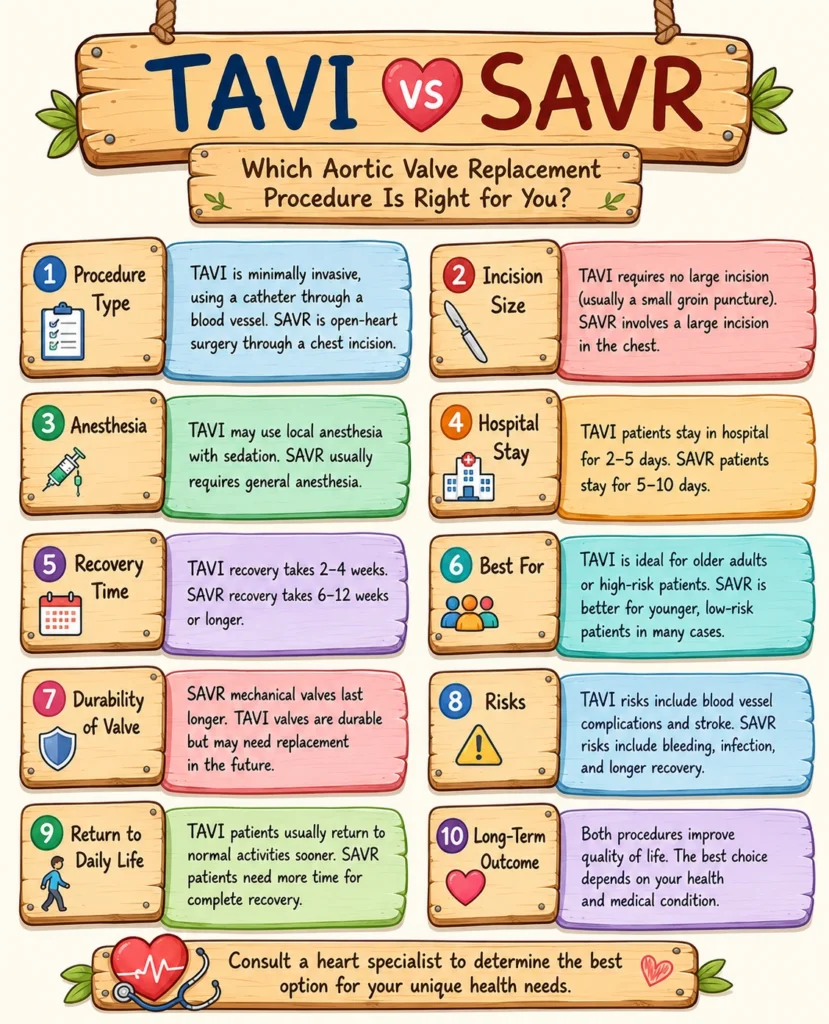
TAVI vs SAVR: Key Differences
| Feature | TAVI | SAVR |
| Procedure Type | Minimally invasive | Open-heart surgery |
| Chest Incision | No large incision | Large chest incision |
| General Anesthesia | Sometimes required | Usually required |
| Hospital Stay | 2–5 days | 5–10 days |
| Recovery Time | 2–4 weeks | 6–12 weeks |
| Good For | Older adults or higher-risk patients | Younger and low-risk patients in many cases |
| Blood Loss | Minimal | Higher than TAVI |
| Return to Daily Activities | Faster | Longer recovery |
Who Is a Good Candidate for TAVI?
TAVI is commonly recommended for patients who meet specific medical criteria after a comprehensive heart evaluation.
The final decision is based on a detailed assessment by a multidisciplinary Heart Team to ensure the safest and most effective treatment for each patient.
TAVI is commonly recommended for patients who:
- Have severe symptomatic aortic stenosis
- Are older adults
- Have intermediate or high surgical risk
- Have suitable heart and blood vessel anatomy
- Prefer a minimally invasive treatment after specialist evaluation
A comprehensive assessment is necessary before deciding if TAVI is appropriate.
Who Is a Good Candidate for SAVR?
SAVR is often recommended for patients who can safely undergo open-heart surgery and are expected to benefit from the long-term durability of a surgically implanted valve.
SAVR may be recommended for patients who:
- Are younger with a longer life expectancy
- Have low surgical risk
- Need additional heart procedures, such as coronary artery bypass surgery
- Have anatomical conditions that make TAVI unsuitable
- Require a mechanical valve for long-term durability
Your cardiologist and cardiac surgeon will recommend the most suitable option based on your individual condition.
Risks of TAVI
Although TAVI is considered a safe and minimally invasive procedure for many patients, understanding the potential risks helps patients make informed decisions and prepare for appropriate post-procedure care.
Like any heart procedure, TAVI carries some risks, including:
- Bleeding
- Stroke
- Infection
- Heart rhythm abnormalities
- Need for a pacemaker
- Blood vessel complications
- Valve leakage in some patients
Fortunately, advances in technology and operator experience have significantly improved the safety of TAVI.
Risks of SAVR
SAVR is a well-established and highly effective procedure, but like any major open-heart surgery, it carries certain risks that patients should understand before treatment.
Potential risks of SAVR include:
- Bleeding
- Infection
- Stroke
- Longer recovery period
- Temporary discomfort after surgery
- Risks related to general anesthesia
Your healthcare team will explain these risks before surgery.
Recovery: TAVI vs SAVR
Recovery differs significantly between the two procedures.Patients who undergo TAVI often begin walking within a day and may return to normal daily activities within a few weeks.
Patients recovering from SAVR usually require several weeks of healing because of the chest incision.
Cardiac rehabilitation is commonly recommended to improve strength and heart function after surgery.
Regardless of the treatment, following medical advice, taking prescribed medications, and attending follow-up appointments are essential for long-term success.
Which Procedure Is Better?
There is no single answer because every patient is different.TAVI may be the better option for many older adults and patients at increased surgical risk, while SAVR remains highly effective for younger patients or those with specific medical needs.
The right choice should always be based on a detailed evaluation by a multidisciplinary heart team rather than age alone.
Why Choose Dr. Manish Juneja for Advanced Valve Care?
Selecting the right heart specialist is just as important as choosing the right treatment. Patients with aortic valve disease require a careful assessment to determine whether TAVI or SAVR is the most appropriate option.
Dr. Manish Juneja is a leading Interventional Cardiologist in Nagpur with expertise in advanced structural heart interventions, including TAVI (Transcatheter Aortic Valve Implantation), coronary angiography, angioplasty, pacemaker implantation, and heart failure management.
With years of experience in minimally invasive cardiac procedures, he provides evidence-based, patient-focused care using advanced diagnostic technology and personalized treatment plans.
Dr. Juneja works closely with patients and the heart team to evaluate every aspect of their condition before recommending the most suitable treatment.
His goal is to deliver safe, effective care that improves heart function, relieves symptoms, and enhances long-term quality of life.
FAQs
1. Is TAVI better than SAVR?
Neither procedure is universally better. TAVI is often preferred for eligible older adults or patients at higher surgical risk, while SAVR may be more suitable for younger patients or those requiring additional heart surgery.
2. Which procedure has a faster recovery?
TAVI generally offers a shorter recovery period. Many patients resume normal activities within a few weeks, whereas recovery after SAVR usually takes several weeks longer.
3. Is TAVI safer than open-heart surgery?
For carefully selected patients, TAVI has been shown to be a safe and effective alternative. The choice depends on your overall health, anatomy, and medical evaluation.
4. How long do replacement valves last?
Both TAVI and surgical valves are designed to last for many years. Valve durability depends on factors such as the type of valve, age, and overall health.
5. Can younger patients undergo TAVI?
Some younger patients may be suitable candidates for TAVI, but the decision depends on individual clinical factors. Your cardiologist will recommend the effective treatment after a complete evaluation.
6. Which procedure is less invasive: TAVI or SAVR?
TAVI is minimally invasive and performed through a catheter, while SAVR requires open-heart surgery with a chest incision.
7. Can TAVI and SAVR provide the same long-term results?
Yes. Both procedures are effective for treating severe aortic stenosis when performed in appropriately selected patients.
8. How do doctors decide whether I need TAVI or SAVR?
Doctors assess your age, overall health, heart anatomy, surgical risk, and test results before recommending the most suitable treatment.
9. How long will I stay in the hospital after TAVI or SAVR?
Most TAVI patients stay 2–5 days, while SAVR patients usually stay 5–10 days, depending on recovery.
10. Can I return to a normal lifestyle after valve replacement?
Yes. Most patients can return to normal daily activities after recovery by following their cardiologist’s advice and maintaining a heart-healthy lifestyle.
Conclusion
Both TAVI and SAVR are highly effective treatments for severe aortic stenosis. While TAVI offers a minimally invasive approach with quicker recovery, SAVR continues to provide excellent long-term results, particularly for younger and lower-risk patients.
The Quality treatment is not determined by the procedure itself but by choosing the option that matches your medical condition, lifestyle, and long-term health goals.
If you have been diagnosed with aortic valve disease, consulting an experienced interventional cardiologist like Dr. Manish Juneja can help you understand your options and make the right decision for your heart health.
Note: This article is for informational purposes only and is not a substitute for professional medical advice, diagnosis, or treatment. Always consult your doctor or a qualified cardiologist before making any healthcare decisions.