
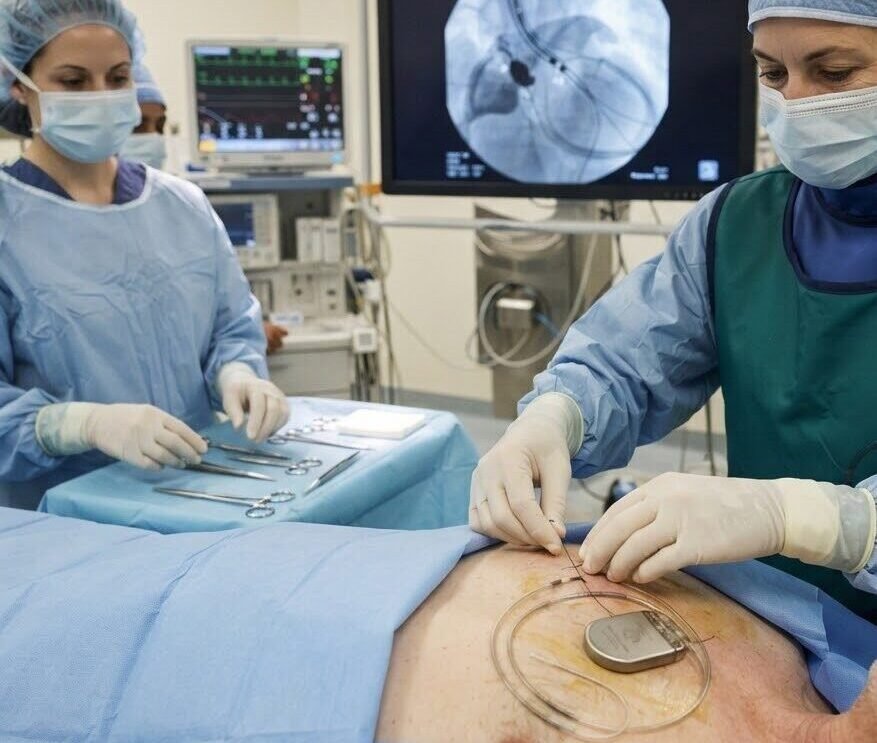
An Implantable Cardioverter-Defibrillator (ICD) is a small device implanted in the chest to continuously monitor the heart’s rhythm. It can detect certain dangerous fast heart rhythms and deliver electrical therapy when required. Unlike a conventional pacemaker, an ICD is primarily designed to protect against potentially life-threatening ventricular arrhythmias.
ICD therapy may be considered for selected patients who have a high risk of sudden cardiac arrest, certain ventricular arrhythmias, or specific heart conditions associated with an increased risk of dangerous rhythms. Dr. Manish Juneja’s practice includes advanced heart-failure therapies and pacemakers/devices.
When May an ICD Be Recommended?
An ICD may be considered in patients with:
- Previous life-threatening ventricular arrhythmia
- Certain cases of cardiac arrest
- Significant reduction in heart-pumping function
- Certain cardiomyopathies associated with sudden cardiac death risk
- Recurrent ventricular tachycardia (VT)
The need for an ICD is determined after considering the patient’s heart function, rhythm history, medical condition, and overall risk.
How Does an ICD Work?
The ICD continuously observes the heart’s electrical activity. When it identifies a dangerous rhythm, it can provide different forms of therapy:
- Anti-tachycardia pacing: Small electrical impulses may stop some fast rhythms.
- Cardioversion: A controlled electrical shock can help restore a normal rhythm.
- Defibrillation: A stronger shock can be delivered for certain life-threatening rhythms.
Modern ICDs can also store information about detected rhythm events, which can be reviewed during device follow-up.
How Is ICD Implantation Performed?
1. Cardiac Evaluation
The cardiologist reviews ECG, echocardiography, rhythm-monitoring reports, medical history, and other relevant investigations.
2. Lead Placement
After appropriate anesthesia, one or more leads may be guided through a blood vessel into the heart.
3. Device Implantation
The ICD generator is placed beneath the skin, generally below the collarbone, and connected to the leads.
4. Programming and Testing
The device is programmed according to the patient’s clinical requirements and checked before completion of the procedure.
5. Follow-Up
Regular device checks help monitor battery status, lead performance, and any rhythm events recorded by the ICD.
Benefits of ICD Therapy
For appropriately selected patients, an ICD can:
- Detect dangerous heart rhythms automatically
- Provide life-saving electrical therapy when required
- Reduce the risk associated with certain ventricular arrhythmias
- Continuously monitor cardiac rhythm
- Support long-term rhythm management
An ICD does not eliminate the underlying heart condition, so medicines and regular cardiac follow-up may still be necessary.
Precautions After ICD Implantation
1. Allow the Implant Site to Heal
Follow wound-care instructions and avoid unnecessary pressure on the implantation area during the initial recovery period.
2. Gradually Resume Arm Movement
Follow your cardiologist’s advice regarding movement of the arm on the implantation side, particularly during the early healing period.
3. Follow Your Medication Plan
Continue prescribed cardiac medicines as directed. Do not discontinue medicines simply because an ICD has been implanted.
4. Attend Device Follow-Ups
Regular checks are important for reviewing the ICD’s battery, leads, programmed settings, and stored rhythm information.
5. Inform Doctors About Your ICD
Always tell healthcare professionals that you have an ICD before undergoing medical procedures or diagnostic tests. Carry your device identification card when travelling or seeking medical care.
6. Know When to Seek Medical Help
Contact your medical team if you experience repeated ICD shocks, fainting, severe chest discomfort, breathing difficulty, or signs of infection around the device.
Possible Risks
ICD implantation is a minimally invasive procedure, but possible complications include bleeding, infection, blood-vessel injury, lead displacement, or device-related problems. The individual risks depend on the patient’s health and the type of ICD being implanted.
Why Choose Dr. Manish Juneja for ICD & Device Care in Nagpur?
Dr. Manish Juneja is a Senior Consultant Cardiologist and Interventional Cardiologist with more than 10 years of experience in interventional cardiology. His professional profile specifically includes advanced heart failure therapies and pacemakers, while his cardiac-device services discuss defibrillator therapy for life-threatening arrhythmias.
The choice of ICD is made after detailed assessment of the patient’s heart function, rhythm history, and risk of serious arrhythmias.