
Intra-Aortic Balloon Pump (IABP) is a temporary mechanical circulatory support used in selected patients when the heart is not pumping enough blood.
It can provide support during certain serious cardiac conditions and high-risk situations while the underlying problem is treated.
Dr. Manish Juneja provides interventional cardiac care in Nagpur and has experience with advanced cardiac procedures.
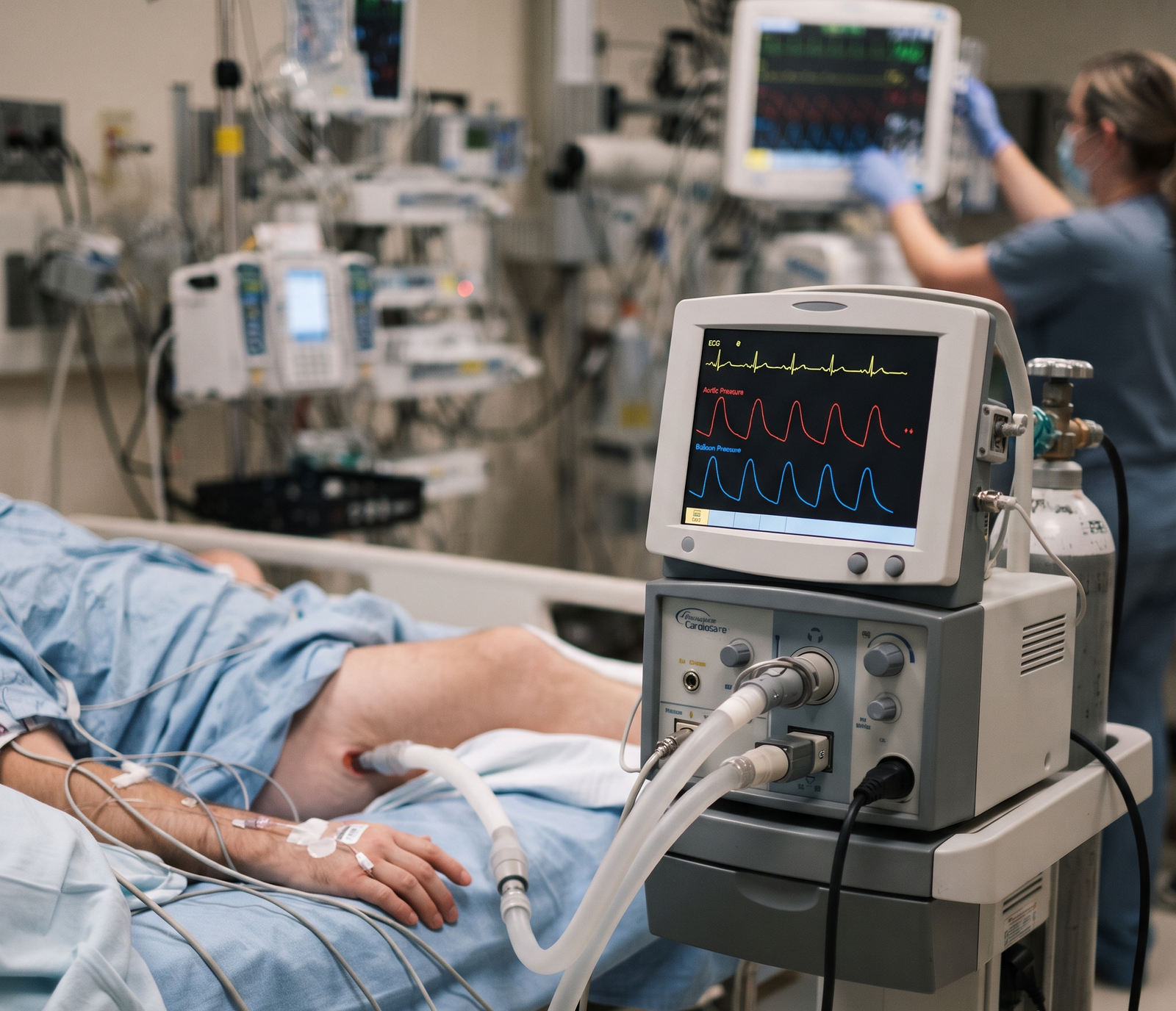
What is an Intra-Aortic Balloon Pump?
An IABP is a thin catheter with a balloon that is positioned inside the aorta. The balloon inflates and deflates in coordination with the heartbeat to support blood circulation and reduce the workload on the heart.
It is generally used for temporary cardiac support under close medical monitoring.
When is IABP Used?
IABP may be considered in selected patients with:
- Cardiogenic shock
- Severe reduction in heart pumping function
- Certain complicated heart attack situations
- Low blood pressure caused by poor cardiac output
- Selected high-risk cardiac procedures
The need for IABP depends on the patient’s clinical condition, heart function, blood pressure, and response to other treatments.
How Does IABP Work?
The balloon catheter is introduced through a blood vessel and guided into the aorta. It inflates and deflates at specific points during the cardiac cycle. This helps support coronary blood flow while reducing the workload on the heart.
The patient remains under continuous cardiac and blood-pressure monitoring while IABP support is being provided.
Benefits of IABP Support
- Provides temporary circulatory support
- Helps reduce cardiac workload
- Supports blood flow to the heart
- Can be used during selected cardiac emergencies
- Provides additional support while treating the underlying heart condition
Precautions During IABP Support
Continuous Cardiac Monitoring
Heart rhythm, blood pressure, oxygen levels, and other vital signs require regular monitoring.
Monitor the Catheter Site
The insertion area should be checked for bleeding, swelling, or other changes.
Check Limb Circulation
Any change in leg colour, temperature, sensation, or pulse should be reported immediately.
Follow Movement Instructions
Follow the medical team’s instructions regarding positioning and movement while the catheter is in place.
Take Medicines as Advised
Use prescribed medicines and anticoagulation exactly according to the treating team’s instructions.
Report New Symptoms
Chest discomfort, breathing difficulty, bleeding, or sudden weakness should be reported promptly.
Why Choose Dr. Manish Juneja?
Dr. Manish Juneja is a Senior Consultant Cardiologist and Interventional Cardiologist in Nagpur with 10+ years of experience in interventional cardiology. His profile includes expertise in complex coronary interventions, rotablation, intravascular imaging, advanced heart-failure therapies, and pacemakers.