
Catheter ablation is a minimally invasive procedure used to treat certain abnormal heart rhythms, also known as arrhythmias. It works by identifying the area of the heart responsible for the abnormal electrical signals and treating that tissue through a specialized catheter.
It may be considered for selected patients with Atrial Fibrillation (AF), Supraventricular Tachycardia (SVT), or Ventricular Tachycardia (VT) when medication is not sufficient, causes side effects, or when ablation is considered the appropriate treatment option.
Dr. Manish Juneja is a Senior Consultant Cardiologist and Interventional Cardiologist in Nagpur with 10+ years of experience in interventional cardiology.
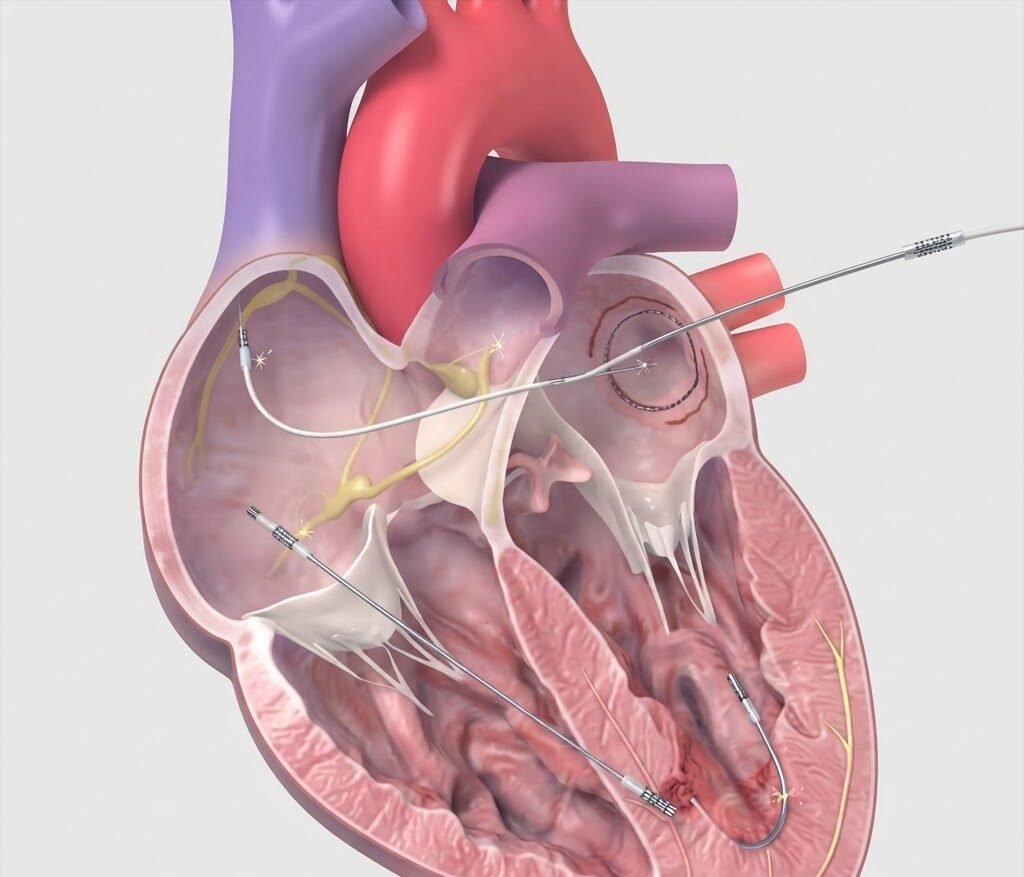
What Is Catheter Ablation?
During catheter ablation, thin flexible catheters are introduced through a blood vessel and guided into the heart. Specialized equipment is used to identify abnormal electrical pathways.
Once the source of the arrhythmia is identified, controlled energy, commonly radiofrequency heat or cryotherapy depending on the procedure, can be used to create small areas of treated tissue that interrupt the abnormal electrical signals.
The exact technique depends on the type of arrhythmia and the patient’s heart condition.
Types of Arrhythmias Treated With Ablation
1. Atrial Fibrillation (AF)
AF is an irregular heart rhythm in which the upper chambers of the heart beat abnormally. Catheter ablation can be considered in selected patients to reduce episodes of atrial fibrillation and improve rhythm control.
2. Supraventricular Tachycardia (SVT)
SVT causes episodes of an unusually fast heartbeat originating above the heart’s ventricles. Ablation can target the abnormal electrical pathway responsible for the rhythm.
3. Ventricular Tachycardia (VT)
VT is a rapid rhythm originating from the heart’s lower chambers. In appropriately selected patients, catheter ablation may be used to reduce recurrent episodes and manage certain ventricular arrhythmias.
When May Catheter Ablation Be Recommended?
A cardiologist may consider ablation when a patient has:
- Recurrent symptomatic arrhythmias
- Palpitations or rapid heartbeat episodes
- Arrhythmias that continue despite medication
- Medication-related side effects
- A rhythm disorder for which ablation is an appropriate treatment option
- Recurrent VT requiring specialized rhythm management
Before recommending the procedure, the cardiologist evaluates the type of arrhythmia, symptoms, heart function, previous investigations, and overall health.
How Is Catheter Ablation Performed?
1. Electrical Assessment
Previous ECG, Holter monitoring, electrophysiology findings, and other cardiac investigations may be reviewed to understand the rhythm disorder.
2. Catheter Introduction
After appropriate anesthesia, thin catheters are introduced through a blood vessel and guided into the heart.
3. Mapping the Abnormal Rhythm
The catheters record electrical signals and help create a map of the heart’s electrical activity. This allows the cardiologist to identify the area responsible for the abnormal rhythm.
4. Ablation
Once the target area is identified, controlled energy is delivered to the selected tissue to interrupt the abnormal electrical pathway.
5. Rhythm Assessment
The heart rhythm is reassessed after ablation to evaluate the immediate result of the procedure.
Benefits of Catheter Ablation
For appropriately selected patients, catheter ablation may:
- Reduce the frequency of certain arrhythmia episodes
- Improve symptoms such as palpitations
- Help restore or maintain a more regular heart rhythm
- Reduce dependence on some rhythm-control medicines in selected cases
- Improve quality of life
The expected outcome depends on the type of arrhythmia and individual patient factors.
Is Catheter Ablation Safe?
Catheter ablation is a commonly performed minimally invasive cardiac procedure, but it is not completely free of risks. Possible complications can include bleeding or bruising at the catheter insertion site, blood-vessel complications, infection, abnormal heart rhythms, or other procedure-specific complications.
The risks differ between AF, SVT, and VT ablation. Your cardiologist will discuss the expected benefits and individual risks before treatment.
Precautions Before and After Catheter Ablation
1. Follow Medication Instructions
Tell your doctor about all medicines you take. Continue or temporarily stop medicines only according to the specific instructions given by your cardiology team.
2. Follow Pre-Procedure Instructions
Follow the advised instructions regarding fasting, investigations, and arrival time before the procedure.
3. Protect the Catheter Site
After the procedure, keep the access area clean and monitor it for increasing swelling, bleeding, or significant pain.
4. Give Your Body Time to Recover
Avoid heavy lifting and strenuous activities until your cardiologist advises that you can resume them.
5. Keep Track of Your Heart Rhythm
Some patients may notice occasional palpitations during recovery. Keep track of persistent or worsening symptoms and discuss them during follow-up.
6. Do Not Miss Follow-Up
Attend your scheduled appointments so your cardiologist can assess your rhythm, review medicines, and determine whether further monitoring is required.