
Chronic Total Occlusion (CTO) intervention is an advanced coronary procedure used to treat a coronary artery that has been completely blocked for a long period, generally three months or more. A chronic total blockage can reduce blood flow to the heart and may cause symptoms such as chest pain, breathlessness, or reduced exercise tolerance.
CTO intervention is more technically challenging than routine angioplasty and requires specialized techniques and careful assessment of the coronary anatomy.
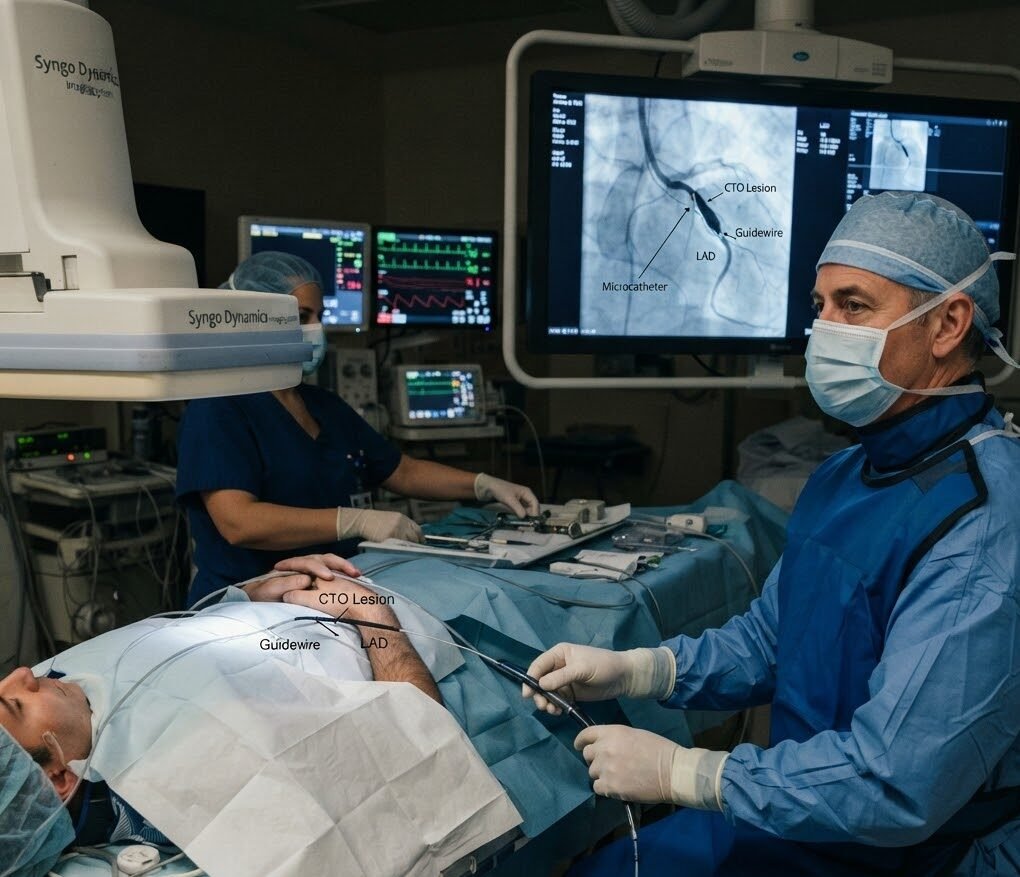
Dr. Manish Juneja, an experienced interventional cardiologist in Nagpur, provides advanced cardiac care and performs complex coronary interventions based on individual patient requirements.
What Is Chronic Total Occlusion (CTO)?
A Chronic Total Occlusion means a coronary artery is completely blocked for an extended period. Because there is no direct blood flow through the blocked segment, treating a CTO can be more complex than treating a partially narrowed artery.
In some patients, the heart develops small alternative blood vessels called collaterals, which may provide blood to the affected heart muscle. However, these vessels may not always provide adequate blood flow.
When Is CTO Intervention Recommended?
CTO intervention may be considered for selected patients who have:
- Persistent chest pain or angina
- Breathlessness or reduced exercise tolerance
- Evidence of reduced blood supply to the heart
- A completely blocked coronary artery on angiography
- Symptoms that continue despite medical treatment
The decision depends on the patient’s symptoms, heart function, coronary anatomy, and expected benefit from opening the blocked artery.
How Is CTO Intervention Performed?
1. Coronary Angiography
The cardiologist first studies the blocked artery and surrounding blood vessels through coronary angiography.
2. Crossing the Blockage
Specialized guidewires and catheters are carefully used to cross the chronic blockage. Depending on the anatomy, different CTO techniques may be selected.
3. Balloon Angioplasty
Once the blockage is successfully crossed, a balloon may be used to prepare and widen the treated segment.
4. Stent Placement
A coronary stent may be placed to help keep the artery open and maintain blood flow.
5. Final Assessment
The cardiologist checks the blood flow and treatment result before completing the procedure.
Benefits of CTO Intervention
For appropriately selected patients, successful CTO intervention may help:
- Improve blood flow to the heart muscle
- Reduce symptoms such as angina
- Improve exercise capacity
- Improve quality of life
- Support better management of complex coronary artery disease
The expected benefits vary depending on the patient’s condition and coronary anatomy.
Why Is CTO Intervention Complex?
A chronic total blockage can contain hard or fibrotic tissue, making it difficult to pass a conventional guidewire. The artery may also have developed collateral blood vessels over time.
For this reason, CTO procedures require careful planning, specialized equipment, and experience in complex coronary intervention. In selected cases, advanced imaging techniques such as IVUS or OCT may also assist during treatment.
Risks and Precautions
CTO intervention is an invasive cardiac procedure and, like other coronary interventions, carries potential risks. These may include bleeding at the catheter site, blood vessel complications, abnormal heart rhythm, contrast-related reactions, or other procedure-related complications.
Before the procedure, your cardiologist will assess your medical history, medications, kidney function, coronary anatomy, and overall health to determine the most appropriate treatment approach.
Precautions After CTO Intervention
1. Take Prescribed Medicines Regularly
After CTO intervention, take all prescribed medicines according to your cardiologist’s instructions. Do not stop antiplatelet or other heart medicines on your own, especially if a stent has been placed.
2. Care for the Catheter Insertion Site
Keep the catheter insertion area clean and follow the care instructions provided by your medical team. Contact your doctor if you notice unusual bleeding, increasing swelling, severe pain, or other changes at the site.
3. Avoid Heavy Physical Activity Initially
Give your body adequate time to recover after the procedure. Avoid heavy lifting and strenuous exercise initially, and gradually return to normal activities according to your cardiologist’s recommendations.
4. Attend Follow-Up Appointments
Regular follow-up is important after CTO intervention. Your cardiologist can assess your recovery, review medications, monitor heart health, and recommend additional tests or treatment if required.
5. Follow a Heart-Healthy Lifestyle
Maintain a healthy lifestyle after the procedure by following a balanced diet, staying physically active as advised, and managing conditions such as high blood pressure, diabetes, and high cholesterol.
6. Report Warning Symptoms Promptly
Do not ignore new or severe symptoms after the procedure. Seek medical attention for severe chest pain, significant breathlessness, fainting, persistent bleeding, or other unusual symptoms.