
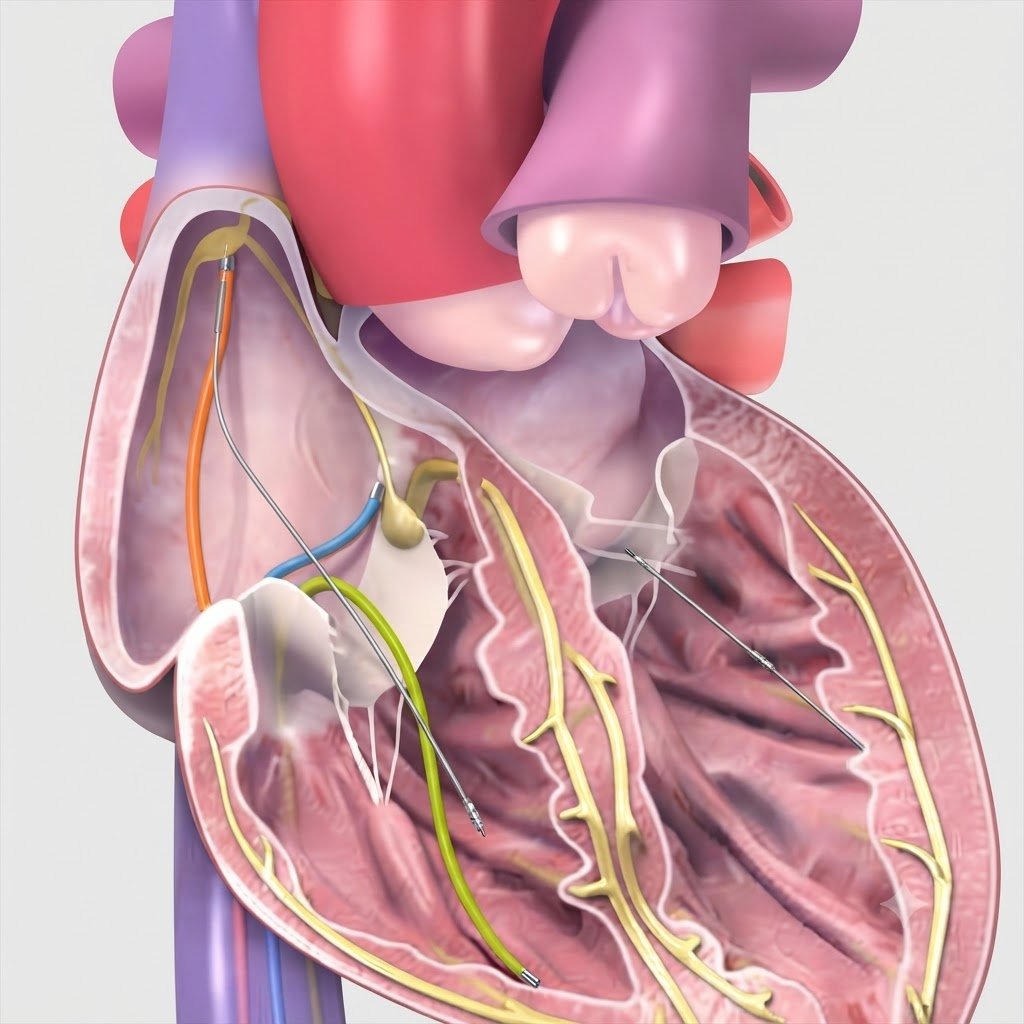
A Diagnostic Electrophysiology Study (EPS) is a specialized cardiac test used to investigate abnormal heart rhythms and problems with the heart’s electrical system. Unlike a routine ECG, EPS records electrical signals directly from inside the heart using thin electrode catheters.
The test can help identify the source of certain arrhythmias and guide the cardiologist in selecting appropriate treatment. In some patients, EPS may also help determine whether catheter ablation or another rhythm-management procedure could be beneficial.
When Is an EPS Test Recommended?
A cardiologist may suggest an electrophysiology study for patients experiencing:
- Recurrent palpitations or rapid heartbeat
- Unexplained fainting or dizziness
- Suspected abnormal heart rhythms
- Certain conduction problems
- Recurrent arrhythmias despite medication
- Evaluation before a planned ablation procedure
The need for EPS depends on symptoms, previous test results, medical history, and the suspected rhythm disorder.
What Is DVT?
Deep Vein Thrombosis (DVT) occurs when a blood clot forms in a deep vein, usually in the lower leg or thigh. Common symptoms may include:
- Swelling in one leg
- Leg pain or tenderness
- Warmth around the affected area
- Red or discolored skin
DVT requires timely medical evaluation because a clot can sometimes travel to the lungs and cause a potentially serious condition called pulmonary embolism.
How Is a Diagnostic EPS Performed?
1. Pre-Procedure Assessment
Your medical history, previous ECG or Holter reports, medications, and other relevant investigations are reviewed before the procedure.
2. Catheter Placement
After local anesthesia, thin electrode catheters are introduced through a blood vessel, usually from the groin, and guided into the heart.
3. Electrical Mapping
The catheters record electrical signals from different areas of the heart. The cardiologist studies these signals to understand how electrical impulses are travelling through the heart.
4. Arrhythmia Evaluation
Controlled electrical stimulation may be performed when required to identify or reproduce a particular rhythm abnormality under continuous monitoring.
5. Treatment Decision
The results help determine the nature of the rhythm problem and whether medicines, monitoring, catheter ablation, or another treatment may be appropriate.
How Is a Diagnostic EPS Performed?
1. Pre-Procedure Assessment
Your medical history, previous ECG or Holter reports, medications, and other relevant investigations are reviewed before the procedure.
2. Catheter Placement
After local anesthesia, thin electrode catheters are introduced through a blood vessel, usually from the groin, and guided into the heart.
3. Electrical Mapping
The catheters record electrical signals from different areas of the heart. The cardiologist studies these signals to understand how electrical impulses are travelling through the heart.
4. Arrhythmia Evaluation
Controlled electrical stimulation may be performed when required to identify or reproduce a particular rhythm abnormality under continuous monitoring.
5. Treatment Decision
The results help determine the nature of the rhythm problem and whether medicines, monitoring, catheter ablation, or another treatment may be appropriate.
Benefits of Electrophysiology Study
- Provides direct information about the heart’s electrical activity
- Helps identify the origin of certain arrhythmias
- Supports accurate rhythm diagnosis
- Helps in planning appropriate treatment
- Can assist in deciding whether catheter ablation is suitable
- May provide information not obtained through routine ECG or Holter monitoring
Is EPS Safe?
EPS is an invasive procedure performed under continuous cardiac monitoring. Like other catheter-based procedures, it may have potential risks such as bleeding or bruising at the catheter site, infection, blood-vessel complications, or temporary changes in heart rhythm.
Your cardiologist will explain the expected benefits and possible risks based on your individual condition before the procedure.
Precautions Before and After EPS
1. Follow Fasting Instructions
Follow the specific instructions given by your medical team regarding food and fluids before the procedure.
2. Inform the Doctor About Your Medicines
Tell your cardiologist about all medicines, supplements, allergies, and existing medical conditions. Do not stop medicines unless advised.
3. Keep the Access Site Protected
After EPS, follow the instructions for caring for the catheter insertion area and watch for unusual bleeding or swelling.
4. Take Adequate
Rest
Avoid strenuous exercise and heavy lifting for the period recommended by your doctor after the procedure.
5. Watch for Unusual Symptoms
Seek medical advice if you experience significant bleeding, severe chest discomfort, breathing difficulty, fainting, or other concerning symptoms.
6. Follow the Treatment Plan
Attend follow-up appointments and follow the cardiologist’s recommendations regarding medicines, further investigations, or rhythm treatment.