
Holter monitoring (24–72 hr) and event recorder tests are advanced cardiac diagnostic procedures used to continuously monitor and record the heart’s electrical activity over an extended period.
Unlike a standard ECG, which records heart activity for only a few seconds, Holter monitoring provides continuous ECG recording for 24 to 72 hours during normal daily activities.
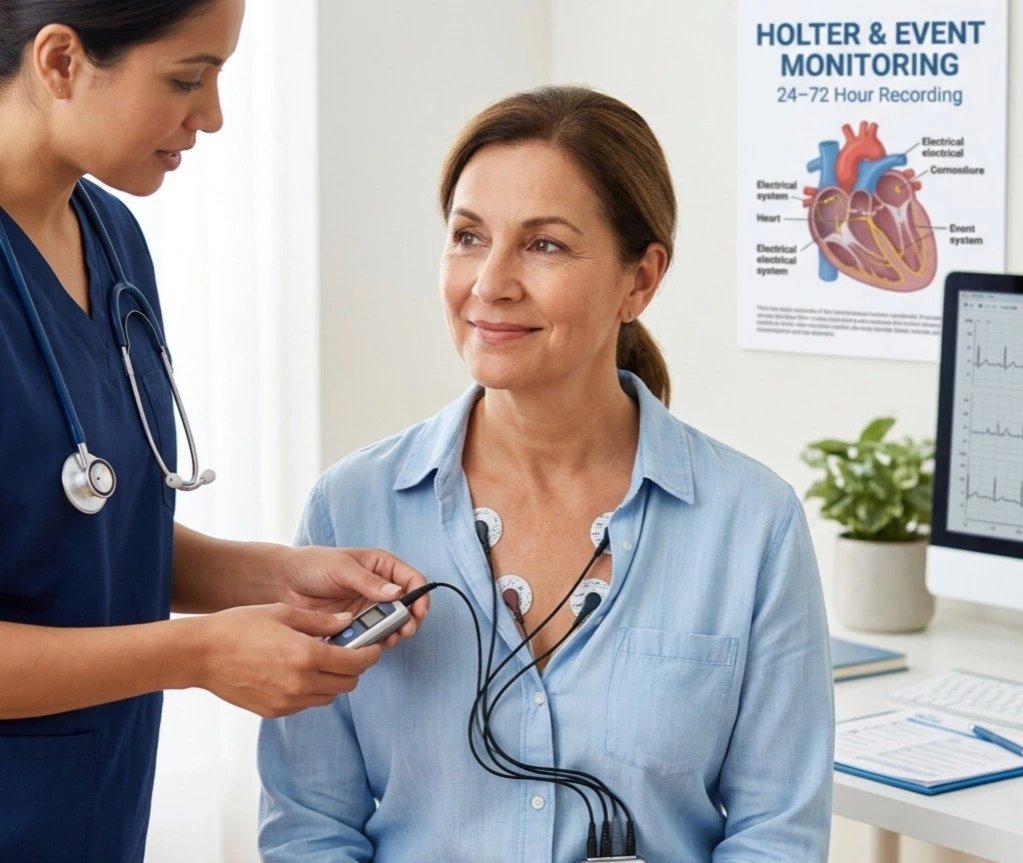
An event recorder may be recommended for patients with occasional symptoms that do not occur daily, helping capture irregular heart rhythms when symptoms arise.
These tests are highly effective in detecting arrhythmias, silent heart abnormalities, and intermittent cardiac problems that may not appear during a routine ECG examination.
Uses of Holter Monitoring (24–72 Hr) ± Event Recorder
A cardiologist may recommend Holter monitoring or an event recorder for several reasons, including:
Detecting Irregular Heart Rhythms (Arrhythmias)
Helps identify abnormal heartbeats such as atrial fibrillation, tachycardia, bradycardia, and other rhythm disturbances that may not appear during a standard ECG.
Evaluating Unexplained Symptoms
Useful for patients experiencing dizziness, palpitations, fainting, chest discomfort, or shortness of breath where the cause remains unclear.
Monitoring Heart Function After Cardiac Treatment
Assists doctors in evaluating recovery after a heart attack, cardiac procedures, pacemaker placement, or medication changes.
Assessing Intermittent Heart Problems
An event recorder may be advised when symptoms occur occasionally and are difficult to capture through routine ECG or short-term monitoring.
How is Holter Monitoring (24 – 72 Hr) ± Event Recorder Performed?
1. Preparation
- Avoid applying lotions, oils, or creams on the chest to ensure proper attachment of electrodes.
- Wear loose and comfortable clothing.
- The doctor or technician will explain how to wear and manage the monitoring device.
2. Attaching the Monitor
- Small adhesive electrodes are placed on the chest and connected to a portable recording device.
- The monitor is worn on a belt, strap, or pocket and continuously records heart activity for 24 to 72 hours or as advised by the doctor.
3. Daily Activities During Monitoring
- Patients are encouraged to continue their normal daily routine to capture real-life heart activity.
- Bathing or swimming should generally be avoided unless specifically advised otherwise.
- A symptom diary may be provided to record episodes of dizziness, palpitations, chest pain, or unusual sensations along with the time they occur.
4. Event Recorder Usage
- If symptoms occur infrequently, an event recorder may be prescribed.
- The patient may activate the recorder when symptoms appear, or some devices automatically record abnormal heart rhythms for further analysis.
5. Removing the Monitor
- After the prescribed monitoring period, the device is returned to the clinic.
- A cardiologist reviews the recorded ECG data and compares it with the patient’s symptom diary to identify abnormalities.
What Happens After the Test?
The recorded heart activity is carefully analyzed by the cardiologist. If irregular heart rhythms or other cardiac abnormalities are detected, additional tests, medications, or treatment plans may be recommended. If symptoms continue despite normal results, longer-duration monitoring or further cardiac evaluation may be advised.
Risks and Precautions
Holter monitoring and event recorder tests are non-invasive, painless, and generally safe procedures.
Some precautions include:
- Mild skin irritation may occur due to adhesive electrodes.
- Avoid exposing the device to water unless instructed.
- Ensure electrodes remain properly attached throughout the monitoring period.
Precautions After Holter Monitoring (24–72 Hr) ± Event Recorder
1. Resume Normal Activities
After removal of the monitoring device, patients can safely return to regular daily activities, including bathing, exercise, and work.
2. Check for Skin Irritation
Mild redness or irritation may occur where the electrodes were attached. Keep the area clean and use a soothing lotion if needed.
3. Monitor Symptoms
Continue observing and noting any symptoms such as dizziness, chest discomfort, palpitations, or irregular heartbeats and inform your doctor if they persist.
4. Follow Up with Your Doctor
Attend your scheduled follow-up appointment to review the monitoring results and discuss any further investigations or treatment plans.
5. Avoid Self-Diagnosis
Do not attempt to interpret the recorded data on your own. Wait for the cardiologist’s professional analysis and recommendations.
6. Follow Medical Advice
If medications, lifestyle modifications, or additional cardiac tests are advised based on the results, follow them carefully to maintain long-term heart health.