
Coronary angiography is a specialized diagnostic procedure used to evaluate the condition of the coronary arteries that supply blood to the heart. It helps identify blockages, narrowing, or abnormalities that may lead to chest pain, heart attacks, or coronary artery disease. Dr. Manish Juneja, one of the leading interventional cardiologists in Nagpur, provides advanced coronary angiography using modern Cath Lab technology to ensure accurate diagnosis and effective treatment planning. With extensive experience in interventional cardiology and complex coronary procedures, Dr. Juneja is committed to delivering high-quality cardiac care.
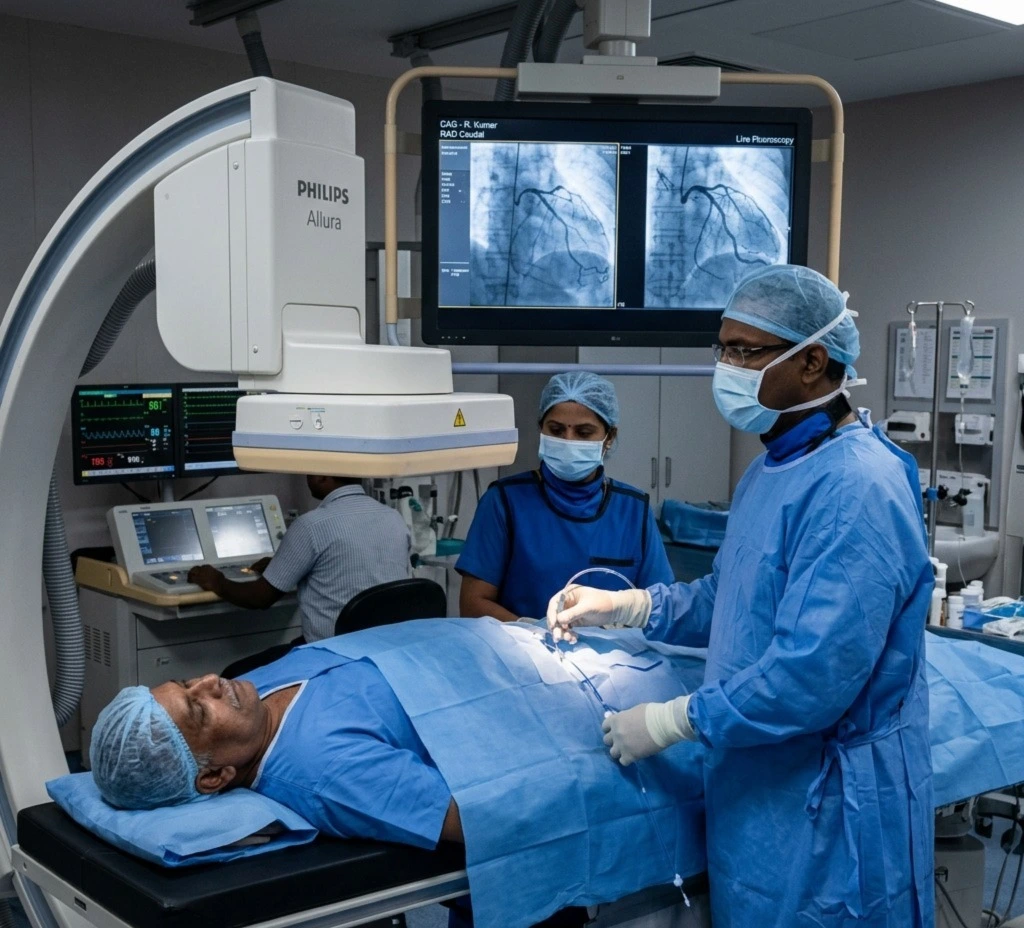
What is Coronary Angiography?
Coronary angiography is a minimally invasive procedure that uses X-ray imaging and contrast dye to visualize the coronary arteries. During the procedure, a thin catheter is inserted through the wrist or groin and guided to the heart. The contrast dye helps cardiologists identify any narrowing or blockage within the arteries.
It is considered the gold standard test for diagnosing coronary artery disease and assessing the severity of arterial blockages.
What is Percutaneous Coronary Intervention (PCI)?
Percutaneous Coronary Intervention (PCI) is a non-surgical procedure performed to treat narrowed or blocked coronary arteries. During the procedure, a thin catheter is inserted through an artery in the wrist or groin and guided to the affected coronary artery.
A small balloon is inflated at the blockage site to widen the artery, and a stent is usually placed to keep the artery open permanently.
PCI is widely used to:
- Treat coronary artery disease (CAD)
- Restore blood flow to the heart
- Relieve chest pain and discomfort
- Treat heart attack patients
- Improve heart function and quality of life
Symptoms That May Indicate Coronary Artery Blockage
Chest Pain or Pressure
Chest pain, also known as angina, is one of the most common symptoms of coronary artery blockage. Patients may feel pressure, heaviness, squeezing, or discomfort in the center or left side of the chest, especially during physical activity or emotional stress.
Tightness in the Chest
A feeling of tightness, fullness, or constriction in the chest can occur when the heart muscle does not receive enough oxygen-rich blood. This symptom may come and go and often worsens with exertion.
Pain Radiating to the Arm, Neck, Jaw, or Back
Heart-related pain may not always remain in the chest. It can spread to the left arm, both arms, shoulders, neck, jaw, or upper back. This type of referred pain is a common warning sign of reduced blood flow to the heart.
Breathlessness
Shortness of breath may occur when the heart is unable to pump blood efficiently due to blocked arteries. Patients may experience difficulty breathing during routine activities, climbing stairs, or even while resting in severe cases.
Fatigue During Exertion
Unusual tiredness or fatigue during everyday activities can indicate that the heart is not receiving enough oxygen. Patients may notice reduced stamina and feel exhausted after minimal physical effort.
Dizziness or Fainting
Insufficient blood flow caused by coronary artery blockage can sometimes lead to dizziness, lightheadedness, or fainting episodes. These symptoms should be evaluated promptly, especially if they occur repeatedly.
Sweating Without Physical Activity
Excessive or unexplained sweating, particularly cold sweats, can be a sign of a heart problem. When accompanied by chest discomfort or breathlessness, it may indicate a serious cardiac condition requiring immediate medical attention.
When is PCI Recommended?
Percutaneous Coronary Intervention (PCI) is recommended for patients with significant coronary artery blockage causing persistent chest pain, shortness of breath, or reduced blood flow to the heart. It is also commonly performed during a heart attack, after abnormal stress test results, or in cases of high-risk coronary artery disease to restore healthy blood circulation and prevent serious cardiac complications.
Risks and Complications of PCI
Although PCI is generally safe, potential risks may include:
- Bleeding at the catheter insertion site
- Blood vessel injury
- Allergic reaction to contrast dye
- Irregular heartbeat
- Blood clot formation
- Stent thrombosis
- Restenosis (re-narrowing of artery)
- Rare risk of heart attack or stroke
Our experienced cardiac team takes every precaution to minimize these risks.
How is the PCI Procedure Performed?
Local Anesthesia
The access site (wrist or groin) is numbed using local anesthesia.
Catheter Insertion
A thin catheter is inserted into the artery and guided toward the coronary arteries.
Coronary Angiography
Contrast dye is injected to identify the location and severity of blockage.
Balloon Angioplasty
A balloon-tipped catheter is inflated to open the blocked artery.
Stent Placement
A drug-eluting or metal stent is placed to keep the artery open and prevent re-narrowing.
Recovery
The catheter is removed, and the patient is monitored for a few hours before discharge.